

Cart abandonment is one of the most common and costly challenges in ecommerce, especially for Shopify store owners trying to improve conversions. A significant portion of shoppers add products to their cart but leave before completing the purchase, which directly affects your revenue and reduces the return on your marketing efforts.
This drop-off usually happens during the checkout stage, where even small issues like unexpected costs, complicated forms, or slow loading speed can create hesitation. In many cases, customers are ready to buy, but friction in the process prevents them from taking the final step.
This is where Shopify checkout optimization plays a critical role. By improving the checkout experience, simplifying the process, and building trust at the right moments, you can effectively reduce cart abandonment on Shopify and improve conversions.
In this guide, you will learn practical and proven strategies to strengthen your checkout flow and turn more carts into successful purchases.
What Is Cart Abandonment and Why Does It Happen in Shopify Stores?
Cart abandonment happens when a customer adds a product to their cart but leaves without completing the purchase. While it may seem like a checkout issue, it is actually influenced by the entire buying journey. Every step, from discovering a product to making the payment, affects whether a customer converts or drops off.
In a typical Shopify user journey, customers move through key stages before completing a purchase:
- Product page
- Add to cart
- Checkout initiation
- Shipping details
- Payment completion
At each stage, even small issues can create hesitation. Most drop-offs happen during the checkout process, where customers are closest to converting but also most sensitive to friction.
The most common friction points include:
- Unexpected costs such as shipping fees or taxes
- Complicated checkout forms with too many fields
- Lack of trust signals, like security badges or reviews
- Unclear delivery timelines that create uncertainty
These challenges are often divided into:
- Micro-frictions such as slow loading or minor UX issues
- Macro-frictions like pricing confusion or lack of trust
To effectively reduce ecommerce cart abandonment, you need to identify exactly where users are dropping off and why. Fixing these friction points helps you improve your Shopify conversion optimization strategy and create a smoother, more reliable checkout experience.
Top Reasons Shoppers Abandon Checkout on Shopify
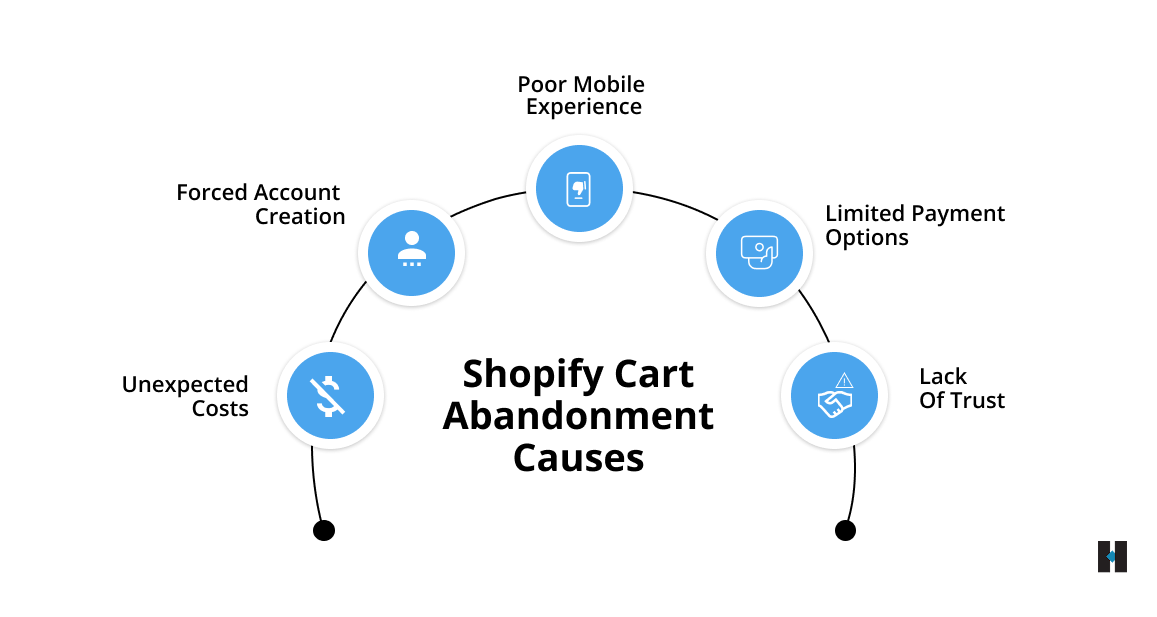
If you are running a Shopify store, cart abandonment is often caused by a few consistent and high-impact issues. These are not random problems, but proven factors that directly influence how your customers behave during checkout. When you understand these causes, you can focus on fixing the right areas and strengthen your Shopify checkout optimization strategy effectively.
- Unexpected Costs at Checkout: You may notice customers dropping off when additional charges like shipping fees or taxes appear at the final step. This creates a negative surprise and breaks their buying intent. To reduce cart abandonment on Shopify, you should display pricing clearly and early in the journey.
- Forced Account Creation: When you require customers to create an account before purchasing, it can slow down the process and add unnecessary friction. Many users prefer a quick checkout experience. Offering a guest checkout option helps you keep the process simple and improves conversions.
- Slow or Poor Mobile Checkout Experience: Since most of your users are likely shopping on mobile devices, even small issues can impact their experience. If your checkout is slow or difficult to navigate, customers may leave before completing the purchase. Optimizing for speed and usability is essential for better results.
- Limited Payment Options: If you do not offer the payment methods your customers prefer, you risk losing them at the final step. You should provide flexible options such as cards, UPI, wallets, and other region-specific methods to support a smoother checkout experience.
- Lack of Trust Signals and Delivery Clarity: When your checkout does not clearly show security badges, return policies, or delivery timelines, customers may hesitate. You need to build confidence by providing clear and visible information that reassures them before they complete the purchase.
By addressing these issues, you can remove key friction points from your checkout flow. This helps you improve your Shopify conversion optimization efforts and creates a smoother, more reliable path for your customers to complete their purchase.
How to Optimize Shopify Checkout to Reduce Cart Abandonment
Improving your checkout is not about making random design changes; it is about understanding how your customers behave and removing the exact points where they hesitate. When you look at your checkout as a decision-making stage rather than just a form, you can apply the right fixes to reduce cart abandonment on Shopify and improve conversions in a measurable way.
Remove Friction Before It Happens
Customers often drop off when they see unexpected costs at the final step. If you show shipping charges or delivery timelines only during checkout, it creates a negative surprise. Instead, you should display this information earlier, such as on the product page or cart. For example, showing “Free delivery above ₹999” or “Delivery in 3–5 days” helps set clear expectations and keeps users moving forward.
Reduce Cognitive Load in Checkout
The more effort a customer has to put in, the higher the chances of abandonment. Long forms, unnecessary fields, or repeated information can slow them down. You should keep your checkout simple by asking only for essential details. Features like autofill, address suggestions, and saved data for returning users can make the process faster and align with effective Shopify checkout best practices.
Optimize for Mobile-First Checkout
Since most of your traffic likely comes from mobile devices, even small usability issues can lead to drop-offs. If buttons are hard to tap or pages take too long to load, users may leave. You should ensure your checkout loads quickly, uses clear CTAs, and allows easy navigation. A smooth mobile experience directly improves your Shopify conversion optimization results.
Build Trust at the Decision Moment
At the payment stage, customers often look for reassurance before completing the purchase. If your checkout does not clearly show security badges, return policies, or customer validation, they may hesitate. You should place these trust signals close to the payment button. For example, adding “Secure Checkout” or “Easy 7-day returns” can increase confidence and reduce last-minute doubts.
Offer Smart Payment Flexibility
Customers prefer using payment methods they are comfortable with. If you offer limited options, you may lose them at the final step. You should include multiple payment methods such as cards, UPI, wallets, and express checkout options. For example, enabling one-click payments for returning users can speed up the process and strengthen your Shopify abandoned cart solutions.
When you apply this framework, you are not just improving design; you are making it easier for your customers to complete their purchase. If your checkout still feels like a drop-off point, it may be time to analyze your flow and optimize it with the right strategy.
Advanced Shopify Tactics To Drive Measurable Results
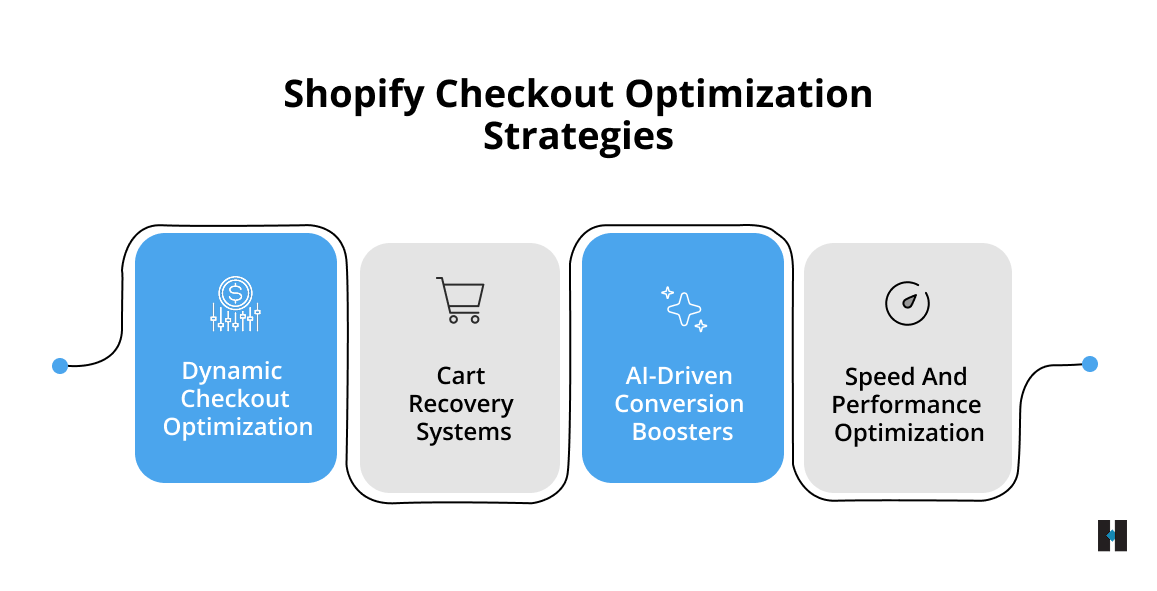
Once you have fixed the basic checkout issues, the next step is to apply advanced tactics that directly improve performance. These strategies are focused on behavior, timing, and personalization, helping you go beyond basic fixes and achieve stronger results from your Shopify checkout optimization efforts.
- Dynamic Checkout Optimization
Not all customers behave the same way, so your checkout should not be one-size-fits-all. You can optimize the experience based on user type. For example, returning customers can be shown faster checkout options like pre-filled details or one-click payments, while new users may need clearer guidance. This helps reduce friction and improve conversions.
- Cart Recovery Systems That Convert
When a customer leaves without completing the purchase, you still have a chance to bring them back. You should set up a structured recovery flow, such as sending an email within the first hour, a reminder after a few hours, and a final follow-up the next day. Adding SMS or WhatsApp reminders can further improve your Shopify abandoned cart recovery results.
- AI-Driven Conversion Boosters
AI tools can help you influence customer decisions in real time. You can use them to show relevant product recommendations, highlight low stock alerts, or offer limited-time discounts during checkout. For example, showing “Only 3 items left” or suggesting complementary products can increase urgency and encourage customers to complete their purchase.
- Speed and Performance Optimization
Checkout speed directly impacts whether a customer completes the purchase. Even a delay of a few seconds can increase drop-offs. You should optimize images, remove unnecessary scripts, and ensure fast loading times across devices. A faster checkout creates a smoother experience and supports better ecommerce checkout optimization.
When you apply these advanced tactics, you move from basic improvements to performance-driven optimization. If you want to see consistent growth, it is important to test, refine, and continuously improve your checkout experience based on real customer behavior.
Shopify Checkout Analytics to Reduce Cart Abandonment
Improving your checkout is not just about making changes; it is about measuring what works and what does not. If you want to reduce cart abandonment on Shopify, you need to track user behavior consistently and use data to guide your decisions. Shopify analytics gives you clear visibility into where customers are dropping off and what might be causing it.
To understand your checkout performance, you should focus on key metrics such as:
- Cart abandonment rate
- Checkout completion rate
- Overall conversion rate
- Time to purchase
These metrics help you identify weak points in your funnel. For example, if you notice that most users leave during the shipping step, it may indicate issues like high delivery costs or unclear timelines. If drop-offs happen at the payment stage, it could point to limited payment options or a lack of trust signals.
You should also use A/B testing to improve your checkout experience in a structured way. Instead of making multiple changes at once, test one element at a time. For instance, you can experiment with shorter forms, different CTA placements, or additional payment methods. This helps you clearly understand what improves your Shopify checkout optimization efforts.
When you rely on data rather than assumptions, your improvements become more effective and measurable. Continuously tracking, testing, and refining your checkout flow will help you build a smoother experience and drive better results over time.
Common Mistakes That Quietly Kill Conversions
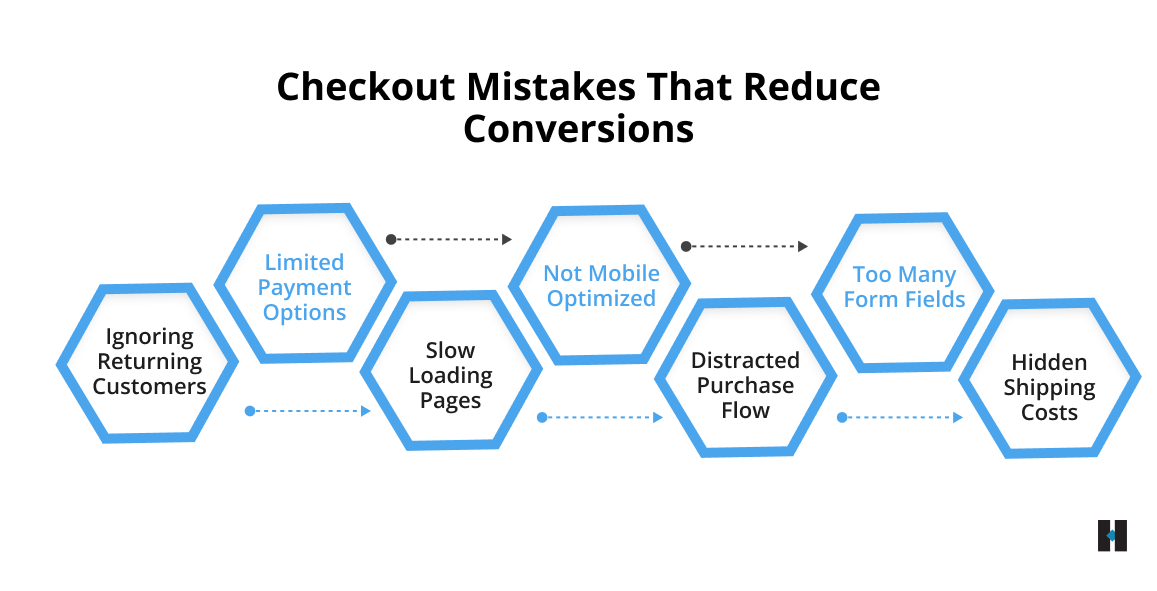
Even when your products and marketing are strong, small mistakes in your checkout experience can quietly reduce your conversions. These issues often go unnoticed but have a direct impact on how your customers behave at the final stage. If you want to improve your Shopify checkout optimization, it is important to identify and fix these gaps early.
- Hiding shipping costs or additional charges until the final step, which creates frustration and leads to sudden drop-offs
- Adding too many form fields or unnecessary steps that make the checkout feel long and complicated
- Including distractions like pop-ups or excessive upsells that interrupt the purchase flow
- Not optimizing your checkout for mobile users, even though most of your traffic comes from mobile devices
- Having slow-loading checkout pages that test customer patience and increase abandonment
- Not offering enough payment options, which limits convenience and reduces trust
- Ignoring returning customers who expect a faster and more seamless checkout experience
Avoiding these mistakes helps you remove hidden friction points and create a smoother path to purchase. If you are looking to improve your checkout performance and build a stronger Shopify conversion optimization strategy, get in touch with the experts at tecHindustan. They will help you identify the right issues and turn more of your traffic into actual sales.
How We Reduced Cart Abandonment for a Shopify Brand
To show how the right strategy drives real results, it helps to look at how we identified and solved checkout challenges using a structured, data-driven approach.
A Shopify-based lifestyle brand we worked with was generating strong traffic through ads and organic channels, but conversions were not keeping up. Many users were adding products to their cart but dropping off during checkout. The problem was not demand, it was the experience.
When our team analyzed the funnel, we identified clear drop-offs at the shipping and payment stages. You could see that customers were facing unexpected costs, limited payment options, and a checkout flow that required extra effort, especially on mobile devices.
What We Improved
Instead of making surface-level changes, we conducted a detailed checkout audit to uncover both micro and macro friction points. Based on this, we implemented focused improvements:
- Introduced early pricing visibility, including shipping costs and delivery timelines on product and cart pages
- Simplified the checkout by reducing form fields and enabling autofill for faster completion
- Added multiple payment options such as UPI, wallets, and express checkout methods
- Optimized the mobile checkout experience with faster loading speed and better button placement
- Strengthened trust signals by adding security badges, return policies, and clear messaging near the payment stage
Each change was designed to make your checkout experience smoother, faster, and more reliable.
What We Achieved After Optimization
Once these improvements were implemented, the results were clearly measurable. Checkout completion rates increased significantly, and overall cart abandonment dropped across devices, with the biggest improvement seen on mobile.
By improving the checkout experience, we helped the brand convert more of its existing traffic into paying customers. This led to higher revenue without increasing marketing spend.
This is what happens when your Shopify checkout optimization is guided by real user behavior and backed by the right strategy.
If you are seeing similar drop-offs in your store, the right approach can help you fix the gaps, improve conversions, and turn missed opportunities into consistent growth with tecHindustan.
Shopify Checkout Optimization Trends to Watch
Checkout is no longer just a final step in the buying journey; it is rapidly evolving into a smart, adaptive experience driven by technology and user behavior. As customer expectations continue to grow, you need to focus on building a checkout flow that is not only fast but also intelligent and responsive. This is where the future of Shopify checkout optimization is heading.
- One of the biggest shifts is AI-driven personalization. Instead of offering the same checkout experience to every user, you can now tailor the flow based on behavior. For example, returning customers can see pre-filled details and faster payment options, while new users can be guided with clearer steps and reassurance. This helps reduce friction and improve conversions.
- One-click checkout and express payment methods are also becoming standard. Features like Shop Pay, wallets, and instant payment options reduce the number of steps required to complete a purchase. When you make the process faster and more convenient, customers are more likely to convert without hesitation.
- Another emerging trend is voice and conversational commerce. Customers are increasingly using voice assistants and chat-based platforms to discover and buy products. This means your checkout experience may extend beyond your website into AI-driven interfaces where decisions are made quickly based on trust and clarity.
As these trends continue to grow, your ability to adapt will define your success. Investing in strong Shopify conversion optimization today will help you stay ahead, deliver better user experiences, and remain competitive in an evolving ecommerce landscape.
Conclusion
Your checkout process is not just the final step in the buying journey; it is where your conversions are truly decided. Even if you bring in the right traffic and offer the right products, a complicated or slow checkout can stop customers from completing their purchase.
By focusing on clear pricing, faster performance, and a simple, user-friendly experience, you can effectively reduce cart abandonment on Shopify and improve your overall conversion rate. Small, well-planned changes in your checkout flow can lead to significant improvements in results.
If you are facing high drop-offs, working with experts can help you identify the exact issues and fix them with the right strategy. Connect with tecHindustan to strengthen your Shopify checkout optimization and turn more visitors into customers.
FAQs
