

Driving visitors to your website may look like progress, but real growth begins when those visitors take action. Many business websites attract steady traffic every day, yet struggle to convert that attention into leads, inquiries, or sales. This gap rarely comes from a weak product or service. More often, it happens because the website is not clearly guiding users toward what they should do next.
When people browse and leave without engaging, it usually points to small but critical issues such as unclear messaging, confusing layouts, slow-loading pages, or poorly placed calls to action. Individually, these may seem minor, but together they strongly affect your website conversion rate and overall performance.
Improving how visitors move through your site does not always require a full redesign. Well-planned changes can significantly increase website conversions while also improving website performance and user experience.
If you want your website traffic to translate into real business outcomes rather than just numbers in analytics, this blog will help you identify and fix what is quietly holding your conversions back.
Practical Ways to Improve Website Conversions
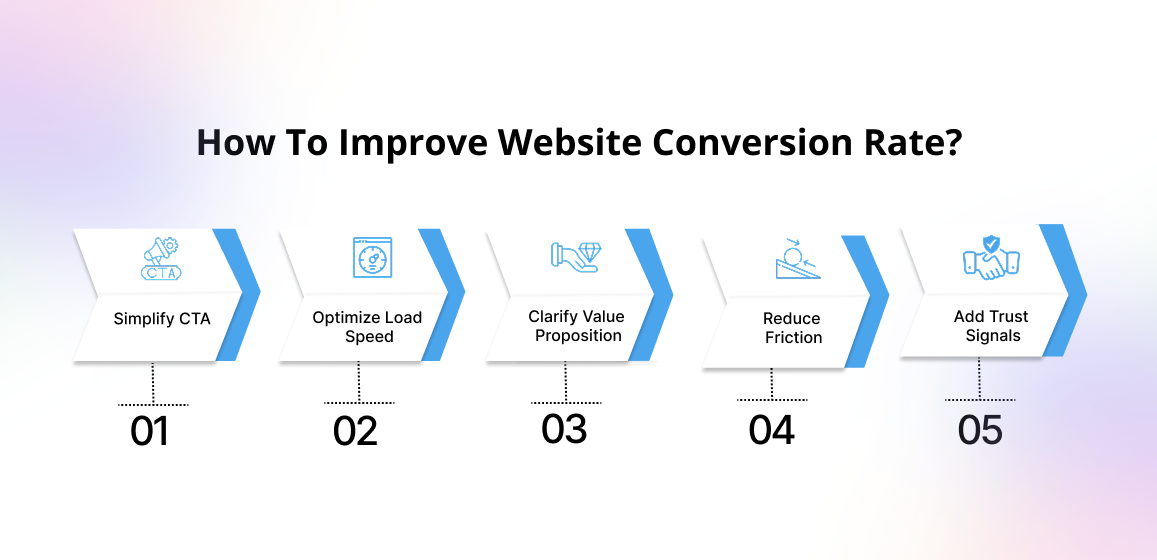
Improving your website’s conversion rate does not always mean changing everything at once. Often, it comes down to fixing a few key areas that quietly influence how visitors think, feel, and act on your site.
Below are practical, proven fixes that help businesses increase website conversions without overcomplicating the process.
These are not technical tricks meant only for developers. They are simple improvements based on how real users behave when browsing, comparing, and deciding.
- Simplify Your Primary Call-to-Action
One of the most common reasons websites fail to convert is confusion. When visitors land on a page filled with multiple buttons, banners, and mixed messages, they are forced to decide what matters most. In many cases, they end up doing nothing. A clear call-to-action helps visitors move forward without mental effort. Instead of showing “Contact Us,” “Learn More,” “View Services,” and “Download Brochure” together, guide users toward one clear next step that matches the purpose of the page. High-converting websites follow a simple principle: one page, one main goal. For example, IKEA’s website does not overwhelm users with dozens of next steps on key pages. Product pages are designed around one main action: adding the item to the cart. Supporting information exists, but it never competes with that primary goal. This focus makes the buying decision feel simple rather than rushed. To improve website conversions, review each important page and ask: What should the visitor do next here? Then design your layout and copy to support only that action. Supporting links can exist, but they should not compete with your main goal. This is one of the fastest ways to improve lead generation without redesigning your entire website.
- Improve Page Load Speed Where It Matters Most
Website speed directly affects both user experience and conversion rate optimization. When a page loads slowly, visitors do not just feel impatient; they begin to doubt the reliability of your business. Even small delays can reduce trust before users consciously notice the problem. Google has reported that when page load time increases from one to three seconds, bounce rates increase significantly. Amazon has also shared that minor speed delays can lead to noticeable revenue loss. These are not just technical concerns; they are real business outcomes. However, improving website performance does not mean chasing perfect speed scores everywhere. The focus should be on pages that influence decisions the most, such as the Homepage, Service pages, Landing pages, and Checkout or contact pages Common speed issues include large images, unnecessary plugins, heavy scripts, and poorly managed third-party tools. Often, removing or optimizing just a few elements can dramatically improve how fast key pages load. If your website feels visually strong but conversions remain low, performance may be silently working against you. Website speed builds trust even before visitors engage with the content. Improving load time where decisions happen makes your website feel more reliable and easier to use, which directly supports higher conversions.
- Make Your Value Proposition Instantly Clear
Visitors decide whether your website is relevant within a few seconds. If they cannot quickly understand what you offer and why it matters to them, they will leave, even if your service is exactly what they need. Many websites struggle here because they focus too much on features instead of outcomes. Phrases like “innovative solutions” or “cutting-edge technology” sound impressive, but rarely tell users how their problem will be solved. A strong value proposition answers three simple questions: What do you do? Who is it for? Why should someone choose you over others? Take Basecamp as an example. Their messaging focuses on helping teams work calmly and clearly. They do not lead with tools or features. They lead with benefit and clarity. To improve your website conversion rate, your messaging should make visitors feel understood before asking them to act. This does not require long explanations. It requires precise and relevant communication. If your website gets traffic but not inquiries, unclear value communication is often the reason. Refining your website messaging through better copy and structure can turn passive visitors into engaged prospects without increasing traffic.
- Reduce Friction in Forms and Checkout
Every extra step you ask a user to take reduces the chance they will complete an action. This is especially true for contact forms, sign-ups, and checkout flows. Many businesses unknowingly harm their own conversion rates by asking for too much information too soon. Ask yourself: Do you really need a phone number for a first inquiry? Does your contact form need ten fields when three would suffice? Companies like Shopify and Stripe are known for their simple and intuitive user experience. Their forms are short, clear, and designed to remove obstacles rather than add them. To increase website conversions, review your forms with a user-first mindset: Remove non-essential fields Break long forms into steps if needed Make error messages clear and helpful Ensure mobile users can fill forms easily Even small changes in form design often result in large improvements in lead generation. If your website gets visitors but form submissions remain low, friction is likely the reason. Simplifying the user journey often unlocks immediate gains without changing your marketing spend.
- Add Trust Signals Where Decisions Are Made
Even when everything else works well, conversions can still fail if visitors do not trust the business behind the website. Trust is not built by design alone. It is built through signals that reduce perceived risk. Common trust signals include: Customer testimonials Client logos Reviews and ratings Certifications Security badges Clear contact information The key is not just having them, but placing them where decisions are made. For example, Amazon integrates reviews directly into product pages, not hidden in a separate section. Airbnb shows ratings right beside booking options. These elements actively influence user behavior. For business websites, placing testimonials near contact forms, pricing sections, and CTAs can significantly improve conversion rates. Even a few genuine client quotes or short case summaries can reassure visitors that others have successfully chosen your service. To improve website conversions, focus on reducing doubt rather than increasing persuasion. When trust is built naturally, users feel safer taking the next step.
How These Fixes Work Together to Lift Conversion Rates
Improving your website conversion rate rarely comes from fixing one issue at a time. Conversions improve when multiple elements work together to support how visitors evaluate, trust, and act on your website.
- Faster page load speed builds trust early and reduces bounce rates before visitors engage with your content.
- Clear value propositions help users quickly understand what you offer and how it solves their problem.
- Focused calls to action guide visitors toward a confident next step instead of creating confusion.
- Simplified forms and checkout flows remove friction that often blocks inquiries or purchases.
- Well-placed trust signals such as testimonials and credentials reduce hesitation at key decision points.
When these conversion rate optimization fixes align, your website becomes easier to use, more credible, and more effective at turning traffic into leads and sales. This approach improves results from existing visitors without increasing ad spend.
If you want clarity on where your website is losing conversions and how to fix it strategically, connect with the tecHindustan team to review your website and identify practical improvements that support consistent business growth.
Mistakes Businesses Make When Trying to Improve Conversions
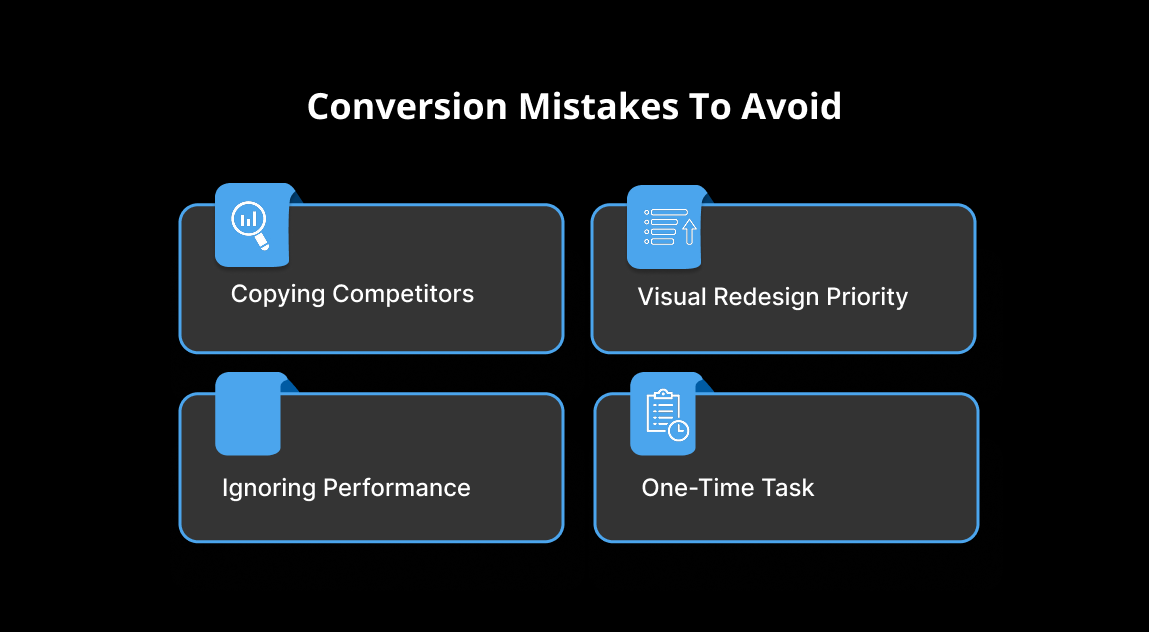
Improving website conversion rates often fails not because of effort, but because the focus is placed in the wrong areas. Many businesses invest time and money yet see little improvement because a few critical gaps go unnoticed.
- Copying competitor websites without understanding your own audience often leads to mismatched messaging and poor user experience. What works for a large brand may confuse your visitors.
- Prioritizing visual redesign over usability, page speed, and clarity can hurt conversions. A clean-looking website still fails if users struggle to find information or take action.
- Ignoring website performance optimization causes slow load times, which increases bounce rates and reduces trust.
- Treating conversion rate optimization as a one-time task rather than an ongoing process leads to declining results as user behavior changes.
Websites that consistently improve conversions review data regularly, test small changes, and adapt based on real user behavior. When optimization is approached as a continuous journey, businesses see stronger engagement, higher lead generation, and more reliable growth over time.
When to Seek Expert Help for Conversion Optimization
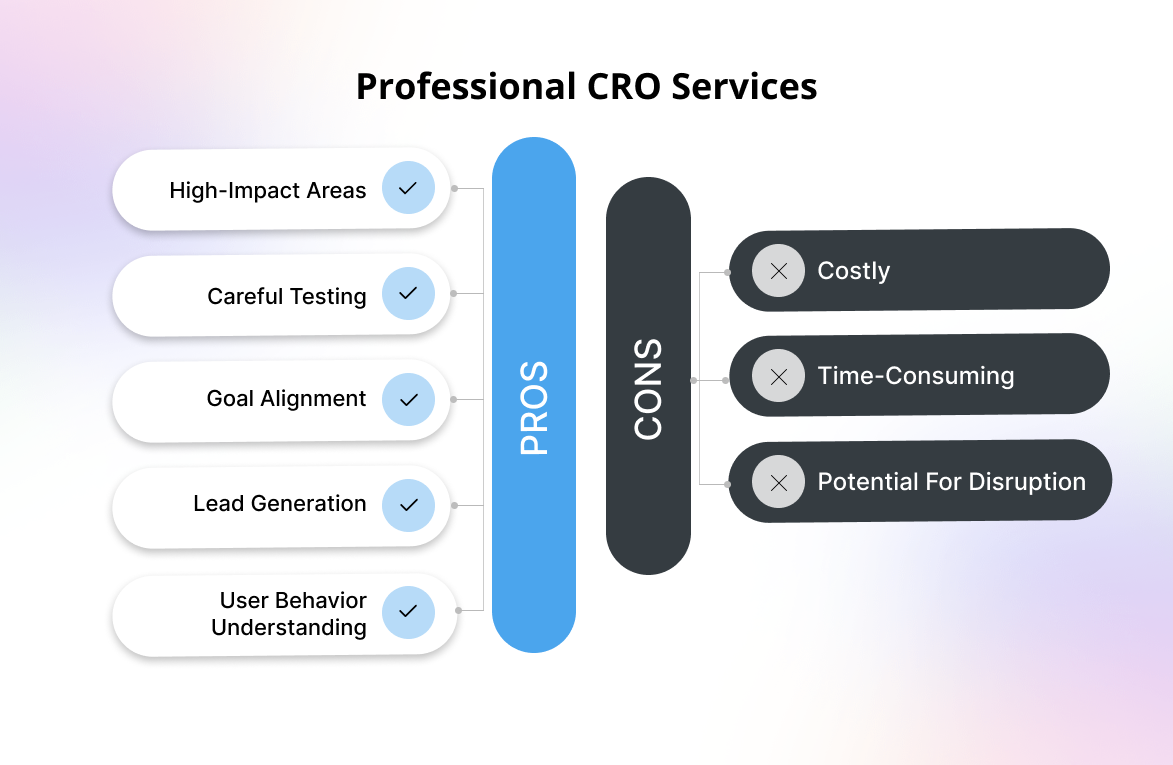
There comes a point where quick internal fixes are no longer enough. If your website traffic is stable but conversions are not improving, or if you are making changes without seeing a measurable impact, expert support becomes non-negotiable.
Signs you may need professional conversion rate optimization services include stagnant lead growth, high bounce rates on key pages, or declining engagement despite steady traffic.
The right team does not overhaul everything at once. Instead, they identify high-impact areas, test changes carefully, and build improvements that align with your business goals.
If you are looking to turn your website into a reliable lead-generating asset rather than just an online presence, working with a team that understands both technology and user behavior can make that transition far more effective.
Conclusion
Improving your website’s conversion rate is not about adding more tools or making your site look more complex. It is about removing barriers that quietly prevent visitors from taking action.
By simplifying CTAs, improving speed, clarifying value, reducing friction, and building trust, you create a website that works with your audience rather than against them. These are small changes, but their impact compounds over time.
The difference is not in how many features your website has, but in how intentionally it is designed to support real user behavior.
If you are aiming to improve website conversions and build a more predictable growth engine from your existing traffic, connecting with experts at tecHindustan, who focus on performance-driven web solutions, can help you achieve clarity, consistency, and long-term results.
FAQs
