

Getting traffic to a Shopify store is important, but traffic alone does not build a profitable ecommerce business. A store can bring in thousands of visitors every month and still struggle to generate sales if those visitors are not moving through the buying journey in the right way.
This is where Shopify Analytics becomes useful for CRO (Conversion Rate Optimization). It helps you understand what shoppers do after they land on your store. Do they view products? Do they add items to the cart? Do they move to checkout? Do they complete the purchase?
These questions matter because CRO is not about making random changes to a website. It is about finding where shoppers hesitate, understanding why they hesitate, and improving those points with better design, clearer messaging, stronger trust signals, and a smoother buying experience.
Many Shopify brands make the mistake of looking only at sales. Sales are important, but they are the final result. If you want to improve conversions, you need to understand what happens before the sale. A drop in revenue may begin with weak engagement on product pages. A low conversion rate may be connected to a poor mobile experience. High add-to-cart activity with low completed checkouts may indicate shipping, payment, or trust issues.
Shopify Analytics gives you the data to read these patterns more clearly. The goal is not to track every number available in the dashboard. The goal is to track the metrics that explain the customer journey and show where your store needs improvement.
Why Does Shopify Analytics Matter for CRO?
Shopify Analytics matters for CRO because it connects store performance with real shopper behavior. It gives you a clearer view of how visitors move through your store, from the first session to the final purchase.
Without analytics, CRO becomes guesswork. You may change the homepage, rewrite product descriptions, add banners, test discounts, or redesign buttons without knowing whether those changes address the real issue.
For example, if your store has strong traffic but low add-to-cart activity, changing the checkout page may not help. The issue is probably occurring earlier, most likely on the product page, in the offer presentation, with pricing clarity, or in the mobile layout.
A good CRO review helps you separate symptoms from causes. Low sales are a symptom. The actual cause may sit at any stage of the customer journey.
Common CRO friction points include:
- Visitors are landing on the wrong pages or coming from low-intent traffic sources.
- Product pages do not clearly explain the value.
- Product images, reviews, or trust signals are not strong enough.
- The Add to Cart button is not visible or persuasive on mobile.
- Cart and checkout pages are raising doubts about shipping, delivery, payment, or returns.
This is why Shopify Analytics is useful. It helps you break the journey into smaller stages and see where the drop-off is happening. Before changing design, copy, pricing, offers, or user experience, you need to know where the friction exists. Shopify Analytics gives you that starting point.
What Metrics Should You Track in Shopify Analytics?
The most important Shopify Analytics metrics for CRO are the ones that show how visitors move from interest to purchase. These include sessions, conversion rate, add-to-cart activity, reached checkout, completed checkout, average order value, sales, orders, product performance, traffic sources, device performance, customer behavior, discounts, and returns.
1. Online store sessions
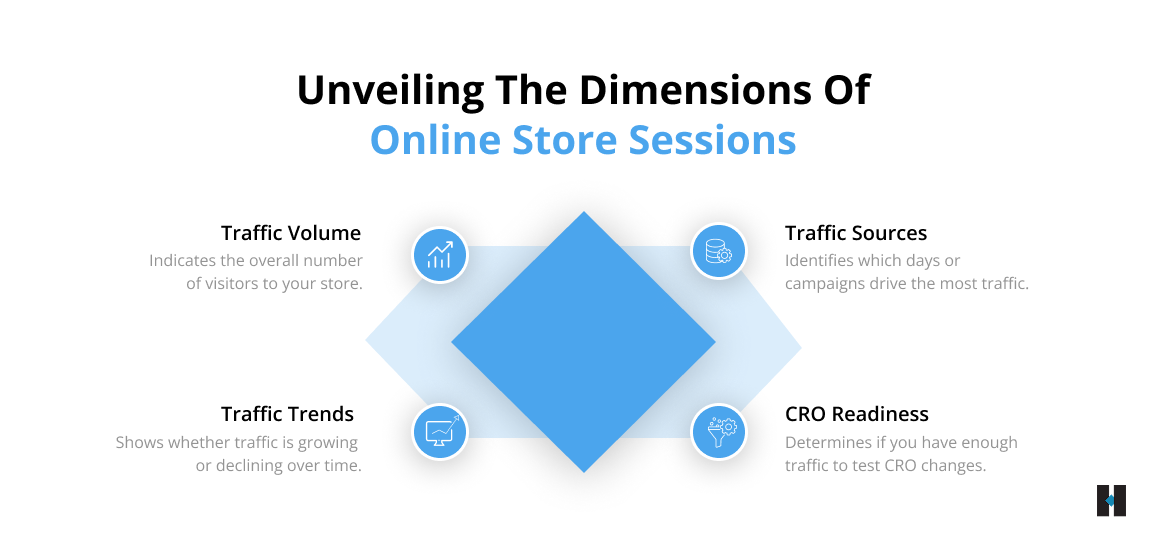
Online store sessions show how many visits your store receives within a selected period. This tells you whether enough people are entering the store to evaluate performance. However, sessions should never be read alone. A store may have high traffic and poor sales if visitors are not relevant or the landing experience does not meet their expectations.
For CRO, sessions help you understand whether your traffic is growing, declining, or shifting because of campaigns, seasonality, or channel performance. More sessions create more opportunities, but conversion improvement starts when you understand what those sessions are doing.
2. Conversion rate
Conversion rate shows the percentage of visitors who complete a purchase. It is one of the most important CRO metrics because it indicates how effectively your store converts visitors into customers.
A low conversion rate does not always mean the store design is poor. It could also mean the traffic is too broad, the offer is unclear, the product price feels high, or users are still comparing options.
Conversion rate becomes more useful when read with supporting metrics:
- If traffic increases but the conversion rate drops, the quality of traffic may be poorer.
- If the add-to-cart activity is strong but completed purchases are low, the issue may be closer to checkout.
- If the conversion rate improves but the revenue stays flat, the average order value may need attention.
3. Add-to-cart activity
Add-to-cart activityis one of the clearest signs of buying interest. When a shopper adds a product to the cart, it indicates that the product page has generated enough interest for the user to take action.
If product views are high but add-to-cart activity is weak, the product page needs closer review. The issue may be unclear product benefits, poor product images, missing reviews, confusing variants, weak CTA placement, unclear shipping details, or a lack of trust.
A strong product page should quickly answer three questions:
- What is this product?
- Why is it worth buying?
- Why should the customer trust this store?
4. Reached checkout
Reached checkout shows how many shoppers move from cart to checkout. If many users add products to the cart but fewer reach checkout, the cart experience may be creating doubt. This can happen when shipping information is unclear, the checkout button is not prominent, the cart looks cluttered, return information is missing, or upsells feel too aggressive.
The cart should reassure the customer and make the next step easy. If it creates more confusion, shoppers may leave even after showing buying intent.
5. Completed checkout
Completed checkout shows how many shoppers actually finish the order. This is where intent becomes revenue. If users reach checkout but do not complete the purchase, friction is happening near the final decision.
Common checkout issues include unexpected shipping costs, limited payment options, long delivery timelines, discount code problems, extra fees, or technical issues during payment. Checkout drop-off deserves serious attention because these shoppers are already close to making a purchase.
6. Average Order Value
Average Order Value (AOV) is the average amount customers spend per order. CRO is not only about increasing the number of orders. It is also about improving the value of each order.
If conversion rate improves but AOV drops, the store may be getting more purchases but less revenue per customer. If AOV increases but conversion rate falls sharply, the offer may feel too expensive or complicated.
AOV can often be improved through relevant bundles, free shipping thresholds, product recommendations, quantity-based offers, premium variants, and post-purchase offers. The key is relevance. Upsells should feel helpful, not forced.
7. Sales and orders
Sales and orders show the commercial impact of your CRO work. A change may increase clicks or add-to-cart activity, but if orders and revenue do not improve, it may not be meaningful. Net sales, discounts, refunds, and returns should also be reviewed, as they indicate the quality of revenue.
A good CRO should not only increase purchases. It should increase better purchases, where customers understand the product clearly and are less likely to return it.
How Do Traffic, Product, and Device Data Reveal CRO Opportunities?
Traffic source data helps you understand where your visitors and customers are coming from. This may include organic search, paid ads, social media, email, referral traffic, and direct visits. Not all traffic converts the same way, so CRO decisions should not be based only on total sessions.
For example, Google Search visitors may have stronger purchase intent because they are actively looking for a product or solution. Social media visitors may need more education because they may be discovering the brand for the first time. Email visitors may convert better because they already know the store. Paid traffic may need tighter alignment between the ad message, landing page, offer, and product presentation.
This matters because sometimes the issue is not the entire website. The problem may be a specific landing page or a specific traffic source.
For CRO, traffic source analysis helps you answer questions such as:
- Which channels bring visitors who actually buy?
- Which channels bring traffic but weak engagement?
- Which landing pages need stronger messaging?
- Which campaigns are bringing low-intent users?
- Which pages need better internal links or product recommendations?
Product performance is equally important. It shows which products are attracting attention, which ones are selling, and which ones need improvement. A product with high views but low sales is often a strong CRO opportunity. Shoppers are interested enough to view the product, but something is stopping them from buying.
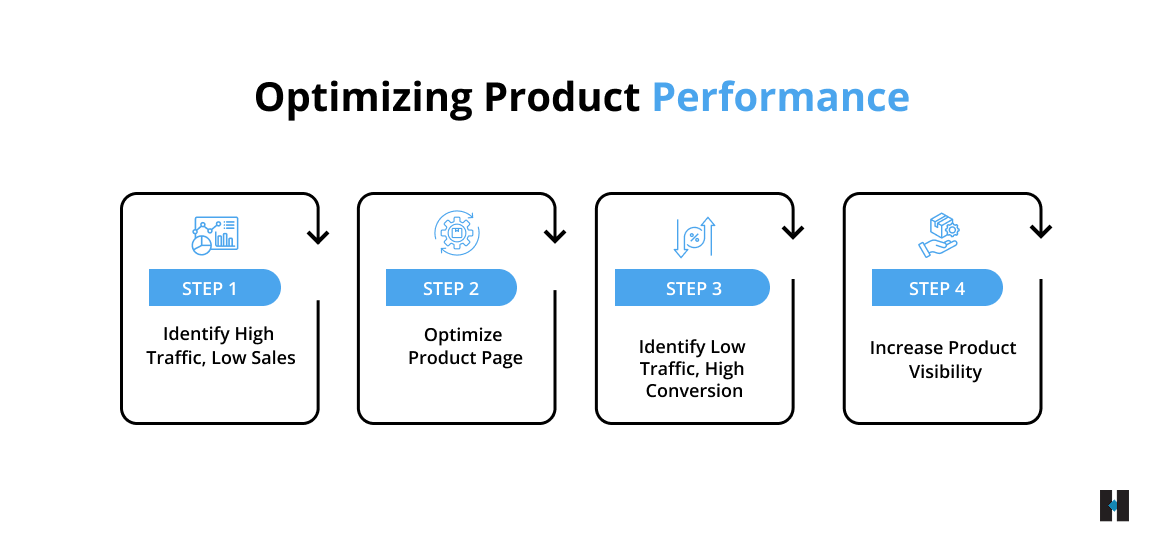
The issue may be pricing, weak copy, unclear sizing, poor images, missing reviews, low trust, confusing variants, or unclear delivery information. In this case, CRO should focus on improving the product page experience before making wider store changes.
A product with low traffic but strong conversion tells a different story. In that case, the page may already be persuasive, but not enough people are seeing it. The CRO action may not be a product page rewrite. It may be a better placement in collections, homepage sections, emails, product recommendations, or paid campaigns.
Device performance is also critical, especially for Shopify stores where mobile traffic is often high. A store may look strong on desktop but feel difficult on mobile. Product images may load slowly, the Add to Cart button may sit too far down the page, reviews may be hidden, text may be hard to read, or variant selection may feel awkward.
If mobile traffic is strong but mobile conversion is weak, the first CRO priority should be the mobile experience. A mobile shopper should be able to understand the product, view images clearly, choose variants easily, read key reassurance points, add to cart, and reach checkout without friction.
What Do Customer Behaviour, Discounts, and Returns Reveal?
CRO should not only focus on the first purchase. A strong Shopify store should also show what happens after a customer buys. New and returning customer data helps you understand whether the store is building long-term value or depending too much on new traffic.
1. Returning Customers Show Long-Term Value
Returning customers are important because they already know the brand. If customers buy once but do not return, the issue may be product satisfaction, delivery experience, email follow-up, customer support, or a weak retention strategy.
If returning customers perform well, the store may benefit from loyalty campaigns, replenishment reminders, bundles, personalized recommendations, or better post-purchase flows.
2. CRO Does Not End at Checkout
This is where CRO goes beyond page design. The buying experience does not end at checkout. Delivery, product quality, communication, and follow-up all influence whether a customer comes back.
3. Discount Data Can Reveal Weak Product Value
Discount data can also reveal important CRO problems. Discounts may improve conversion rate, but they can also hide weak product value. If the store only converts when discounts are active, customers may not be convinced to buy at full price. This can reduce margins and train buyers to wait for promotions.
That is why discounts should be reviewed alongside conversion rate, AOV, net sales, repeat purchases, and profitability. A discount that increases orders but reduces profit may not be a strong CRO win.
In many cases, better bundles, clearer value communication, stronger shipping thresholds, or more relevant product recommendations can create healthier growth.
4. Returns Show Whether Expectations Are Clear
Returns and refunds also show whether customers received what they expected. A high return rate may mean the product page is overpromising, images are misleading, size information is unclear, descriptions lack detail, or customers are buying the wrong item.
5. Good CRO Improves Revenue Quality
A good CRO should help the right customer buy the right product with the right expectations. If CRO increases sales but also increases returns, the store may be improving conversion at the cost of customer satisfaction and revenue quality.
Use Case on How Shopify Analytics Helps Find a CRO Problem
Let’s say a Shopify store is getting a healthy number of visitors every month, but sales are not growing at the same pace. At first, it may look like the store needs more traffic. But when we look more closely at Shopify Analytics, the real issue becomes clearer.
The store has strong session and product page visits, indicating that people are reaching the website and showing interest in the products. However, the add-to-cart rate is low. This suggests the problem may not be traffic. The issue is likely happening on the product page.
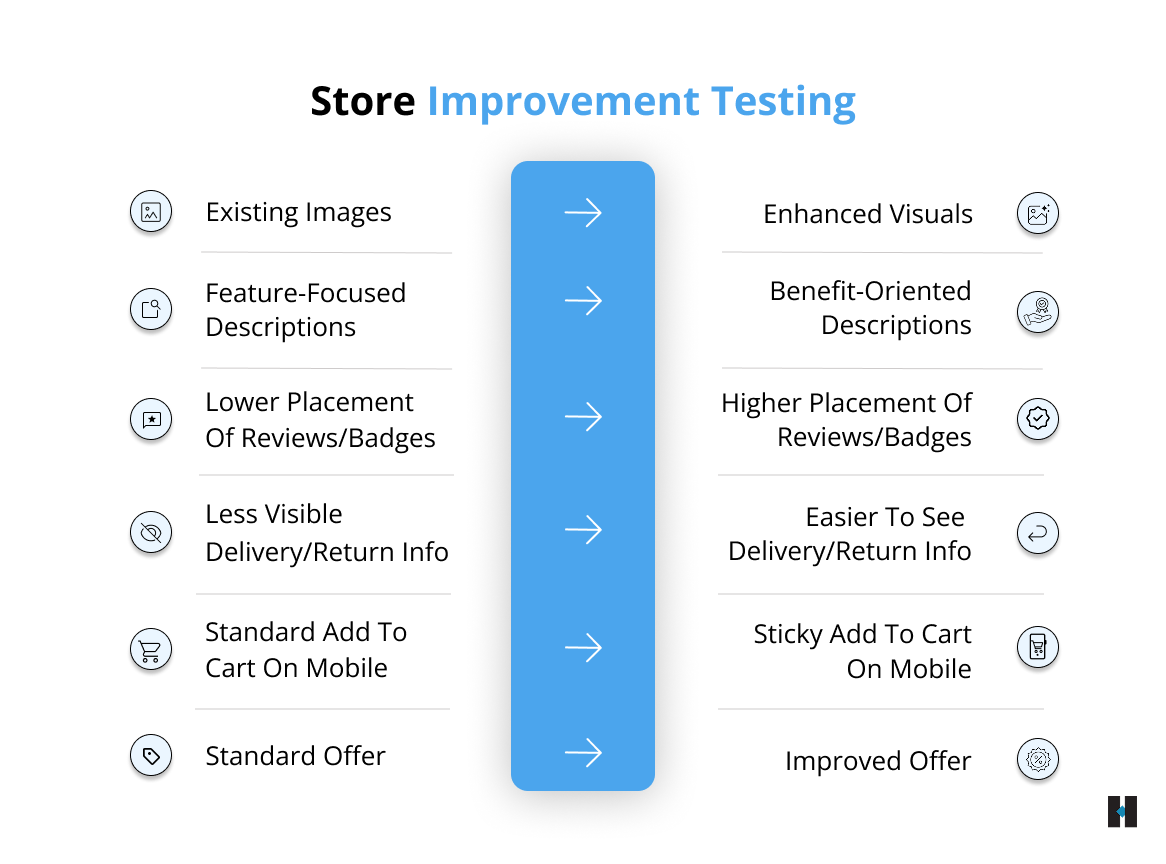
After reviewing the product page, a few potential problems may become apparent. The product images may not clearly show the product in use. The benefits may be written generically. Reviews may be placed too far down the page. Shipping and return information may not be visible near the buying section. The Add to Cart button may also be getting pushed below the fold on mobile.
In this case, the CRO priority should be the product page, not checkout.
The store can test improvements such as:
- Adding clearer product images and lifestyle visuals
- Rewriting the product description around benefits, not just features
- Moving reviews and trust badges higher on the page
- Making delivery and return information easier to see
- Adding a sticky Add to Cart button on mobile
- Improving the offer with bundles or a free shipping threshold
After making these changes, the store should compare the same Shopify Analytics metrics again: add-to-cart rate, reached checkout, completed checkout, conversion rate, AOV, and sales.
If add-to-cart improves, it means the product page becomes more persuasive. If checkout reach also improves, it means more shoppers are moving forward in the funnel. If completed checkout and sales increase, the CRO changes are creating a real business impact.
This is how Shopify Analytics helps store owners move from guesswork to focused action. Instead of randomly changing the homepage, discount, or ad campaign, the data shows exactly where the buying journey needs improvement.
How tecHindustan Turns Shopify Analytics Into CRO Action?
Shopify Analytics becomes valuable when it turns store data into clear CRO action. At tecHindustan, we connect sessions, product engagement, add-to-cart activity, checkout movement, and completed orders with the full customer journey.
If traffic is strong but add-to-cart activity is weak, we review product content, imagery, trust signals, offers, and mobile layout. If carts are abandoned before checkout, we check shipping clarity, cart friction, pricing transparency, and confidence signals. If checkout starts are high but orders are low, we examine payment flow, delivery expectations, and technical issues.
The goal is not to track more numbers, but to use the right insights to improve conversions, average order value, and revenue quality. If you want to turn your Shopify store data into practical CRO improvements, contact tecHindustan and let our team help you build a more conversion-ready ecommerce experience.
Conclusion
Shopify Analytics becomes more useful when brands use it to understand the full buying journey, not just final sales. By tracking sessions, product engagement, add-to-cart activity, checkout movement, AOV, traffic sources, and returns, Shopify brands can identify where shoppers hesitate and what needs to improve.
With the right CRO approach, these insights can help create a smoother shopping experience, stronger product pages, better checkout flow, and more profitable revenue growth. If you want to turn your Shopify store data into clear conversion improvements, explore tecHindustan’s Shopify development services and let our team help you build a more conversion-ready ecommerce store.
FAQs
