

Every DTC brand watches traffic closely. More visitors usually feel like there are more opportunities. More ad clicks, more landing page sessions, more product views, and more people entering the store should ideally mean more sales.
But that is not always what happens.
Many DTC brands in the US reach a point where traffic is coming in, campaigns are running, influencers are posting, emails are going out, and the website looks active. Still, the sales do not grow at the same pace. The store gets visitors, but not enough buyers. The ads bring attention, but the revenue does not justify the spend. The product page gets views, but customers leave before checkout.
This is where conversion rate becomes more than just a number in analytics. It becomes a signal of how well the entire buying journey is working.
A low conversion rate may mean the traffic is not qualified. It may mean the product page is not clear enough. It may mean the price feels too high, the reviews are not strong enough, the mobile experience is slow, or the checkout creates friction. Sometimes, the issue is not one big problem but several small doubts that stop people from completing the purchase.
That is why asking “What is a good conversion rate?” is not as simple as looking for one universal percentage.
A skincare brand selling a $35 product, a supplement brand running subscriptions, a fashion brand with seasonal drops, and a furniture brand selling high-ticket items cannot all be judged by the same number. Their customers behave differently. Their buying cycles are different. Their average order values are different. Their level of trust required before purchase is different.
So before deciding whether your DTC brand’s conversion rate is good, average, or weak, you need to understand what the number is really telling you.
In this blog, we will break down how conversion rate works for DTC brands in the US, which benchmarks are useful, why the “right” number varies by category, and how to improve conversion without relying solely on discounts or increased ad spend.
What Does Conversion Rate Mean?
Conversion rate is the percentage of website visitors who complete a desired action. For a DTC ecommerce brand, the main conversion is usually a purchase.
The formula is simple:
Conversion Rate = Orders ÷ Website Sessions × 100
For example, if your website gets 50,000 sessions in a month and receives 1,500 orders, your conversion rate is:
1,500 ÷ 50,000 × 100 = 3%
That means 3 out of every 100 website sessions turned into a purchase.
For DTC brands, this number matters because the website is the main sales channel. Unlike brands that rely primarily on Amazon, Walmart, or retail stores, DTC brands need their own websites to educate, persuade, and convert customers.
Your site has to answer important questions quickly:
- What is the product?
- Why should someone buy it?
- Is the brand trustworthy?
- Is the price fair?
- How fast is shipping?
- What happens if the customer wants to return it?
- Are other people happy with the product?
If your website answers these questions clearly, conversion rate usually improves. If the website creates confusion or doubt, people leave.
Why Conversion Rate Matters for DTC Brands?
Conversion rate directly affects revenue, ad efficiency, and profitability.
Let’s say your DTC store gets 100,000 monthly sessions.
At a 2% conversion rate, you get 2,000 orders.
At a 3% conversion rate, you get 3,000 orders.
That is 1,000 extra orders from the same traffic.
This is why conversion rate optimization is so important. It helps you generate more revenue without always increasing ad spend. For brands spending heavily on paid acquisition, even a small improvement in conversion rate can improve return on ad spend, reduce customer acquisition pressure, and make campaigns more scalable.
A good conversion rate also shows that your brand positioning, product messaging, and buying journey are working together. It is not just a website metric. It is a business health metric.
What Is a Good Conversion Rate for a US DTC Brand?
A useful benchmark looks like this:
| Conversion Rate | Conversion Rate |
|---|---|
| Below 1% | Weak or early-stage; needs investigation |
| 1% to 2% | Average, but improvement is needed |
| 2% to 3% | Healthy for many DTC brands |
| 3% to 4% | Good |
| 4% to 5% | Very strong |
| 5%+ | Excellent, usually highly optimized or category-specific |
For most DTC brands in the US, 2% to 4% is a practical good range. But the number should never be judged in isolation.
A low-ticket food, beauty, or supplement brand may naturally convert at a higher rate because the buying decision is faster. A premium furniture, jewelry, mattress, or electronics brand may convert at a lower rate because customers need more time to purchase.
This is why category context matters. Dynamic Yield’s benchmark data lets users filter ecommerce conversion rates by industry, including Beauty & Personal Care, Fashion, Home & Furniture, Luxury & Jewelry, Food & Beverage, Pet Care, and more, showing that conversion expectations differ by vertical.
So instead of asking only, “Is 3% good?”, a better question is:
Is 3% good for our product category, price point, traffic quality, and margin structure?
Why DTC Conversion Rates Vary So Much?
DTC conversion rates vary because customers do not buy every product in the same way.
A customer may buy a $25 skincare product after reading a few reviews and seeing a strong offer. But the same customer may take days or weeks to buy a $1,200 sofa, a $900 mattress, or a premium wellness device.
The more expensive or complex the product, the more trust and information the customer needs.
Conversion rate is affected by several factors:
- Product category
- Price point
- Traffic source
- Mobile experience
- Brand awareness
- Reviews and social proof
- Shipping and return policy
- Website speed
- Checkout experience
- Offer strength
- Customer repeat rate
This is why two brands can have the same conversion rate but very different business performance.
A 2% conversion rate may be excellent for a high-ticket brand with a $600 average order value. The same 2% may be weak for a low-ticket consumable brand with a $35 average order value.
1. Product Category Makes a Big Difference
Some categories convert faster because the purchase decision is simple. Food, beverages, pet products, skincare, basic apparel, and wellness products often perform well because customers understand the products quickly and may buy them repeatedly.
Other categories require more research. Furniture, luxury jewelry, electronics, mattresses, and home improvement products usually have longer buying cycles. Customers compare brands, check reviews, think about returns, review shipping costs, and sometimes wait before making a decision.
For example, a DTC supplement brand may aim for a higher conversion rate because the product is repeatable and often lower-priced. A DTC furniture brand may have a lower conversion rate but higher revenue per order.
That is why every brand should compare itself against similar brands, not against all ecommerce stores.
2. Price Point Changes the Benchmark
Price has a direct impact on conversion rate. Lower-priced products usually need less convincing. Higher-priced products require more trust, more education, and more proof.
A customer may buy a $30 product in one visit. But for a $500 or $1,000 product, they may visit the site multiple times, read reviews, check policies, compare competitors, and wait for a better offer.
This does not mean expensive products cannot convert well. It means the buying journey needs to work harder.
High-ticket DTC brands usually need:
- Clear product benefits
- Detailed product pages
- Strong reviews
- Comparison sections
- Return and warranty clarity
- Financing options
- Live chat or consultation support
- High-quality product images and videos
- Shipping transparency
For these brands, a lower conversion rate may still be healthy if average order value and profit margins are strong.
3. Does Better Traffic Matter More Than More Traffic?
Not all traffic converts equally. A visitor coming from a Google search like “buy organic dog food online” may already have purchase intent. A visitor from a TikTok video may just be discovering the product. An email subscriber may already trust the brand. A first-time paid social visitor may need more education.
This means the conversion rate should be reviewed by channel.
Email and SMS usually convert higher because the audience already knows the brand. Branded search usually converts at a higher rate because the visitor is already looking for the brand. Google Shopping can convert well because customers are comparing products with purchase intent.
Paid social often converts at a lower rate because it reaches colder audiences. Organic blog traffic may convert lower because many visitors are researching, not ready to buy.
Influencer traffic depends heavily on creator trust and audience fit. If your overall conversion rate is 2.5%, your channel-level performance may look very different. Email may convert at 6%, branded search at 5%, paid social at 1.5%, and blog traffic at 0.5%. This does not mean blog or paid social traffic is useless. It means each channel plays a different role in the funnel.
4. Mobile Conversion Rate Is Usually Lower Than Desktop
Many DTC brands receive most of their traffic from mobile, especially from social media and influencer campaigns. But mobile conversion is often lower than desktop.
This happens because mobile users are browsing on smaller screens, with more distractions and sometimes slower internet. If the site loads slowly, has intrusive popups, difficult product options, or a slow cart drawer, users may leave before buying.
Shopify notes that ecommerce conversion benchmarks depend on the device mix, and Dynamic Yield’s benchmark also allows filtering by device, as mobile, tablet, and desktop performance can differ.
Common mobile issues include:
- Slow-loading product images
- Too many popups
- Hard-to-read text
- Small buttons
- Confusing product options
- Poor sticky add-to-cart setup
- Slow cart drawer
- Hidden shipping information
- Long checkout forms
If desktop conversion is strong but mobile conversion is weak, the brand may not have a demand problem. It may have a mobile experience problem. For DTC brands, mobile optimization is not optional. It directly affects revenue.
5. Brand Trust Can Make or Break Conversion
DTC customers cannot physically touch or test the product before buying. They rely on the website to decide whether the brand is credible.
Trust is especially important for new brands, high-ticket products, wellness products, skincare, supplements, baby products, and anything that makes performance claims.
Strong trust signals include:
- Customer reviews
- Star ratings
- User-generated photos and videos
- Before-and-after content
- Press mentions
- Founder story
- Product certifications
- Clear return policy
- Warranty information
- Secure checkout badges
- Transparent shipping details
- Real product photography
- FAQs that answer buyer doubts
A beautiful website without trust can still fail. Customers may like the product but hesitate because they are unsure whether the brand is reliable. Good DTC websites reduce doubt at every step.
6. Conversion Rate Alone Is Not Enough
Conversion rate is important, but it should not be the only metric you track.
A DTC brand should also monitor:
- Average order value
- Revenue per session
- Customer acquisition cost
- Gross margin
- Add-to-cart rate
- Checkout conversion rate
- Repeat purchase rate
- Customer lifetime value
- Refund rate
- Subscription rate
- Email and SMS revenue contribution
For example:
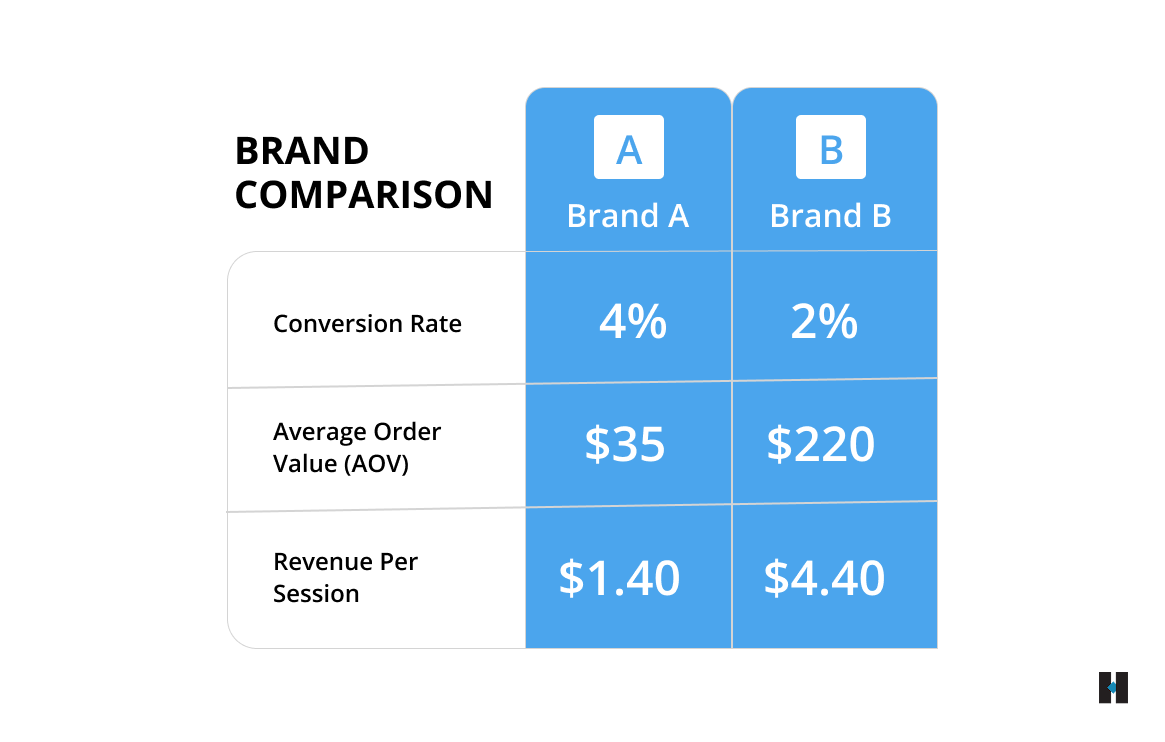
Brand A has a 4% conversion rate and a $35 AOV.
Brand B has a 2% conversion rate and a $220 AOV.
Brand B may generate more revenue and profit even with a lower conversion rate.
This is why revenue per session is so useful.
Revenue Per Session = Total Revenue ÷ Total Sessions
Revenue per session tells you how much money each website visit creates. If conversion rate improves but revenue per session does not, you may be increasing low-value orders through discounts. The strongest result is when both conversion rate and revenue per session improve together.
What Is a Good Add-to-Cart Rate?
Add-to-cart rate shows how many visitors show buying intent by adding a product to the cart. If many people view your product but few add it to the cart, the product page may not be convincing enough.
Possible issues include:
- Weak product images
- Unclear benefits
- Lack of reviews
- High price perception
- Missing size or variant clarity
- Weak call-to-action
- No delivery information
- Confusing product description
If many users add items to their carts but do not purchase, the issue may be closer to checkout.
Possible issues include:
- Unexpected shipping costs
- Long delivery timeline
- Limited payment options
- No express checkout
- Weak return policy
- Discount code confusion
- Payment failures
- Complicated checkout fields
This is why DTC brands should study the full funnel:
Product view → Add to cart → Checkout started → Purchase
A low conversion rate does not always mean the whole website is broken. Sometimes the issue is only one step in the journey.
How DTC Brands Can Improve Conversion Rate?
Improving conversion rate is not about randomly changing button colors. It is about finding what stops people from buying and removing that friction.
1. Improve the Product Page
The product page is where most buying decisions happen.
A strong product page should answer:
- What is the product?
- Who is it for?
- What problem does it solve?
- Why is it better?
- What proof supports the claim?
- What comes in the package?
- How does shipping work?
- What if the customer wants to return it?
Use clear images, benefit-led copy, reviews, FAQs, comparison blocks, usage instructions, and trust signals. Do not make customers search for basic information.
2. Make Mobile Buying Easier
Mobile users should be able to understand the product and complete their purchase without friction. A strong mobile experience starts with fast page loading, clear product images, visible pricing, and an easy-to-find CTA. The product options should be simple to select, the text should be easy to read, and the navigation should feel smooth. Features like sticky add-to-cart, a fast cart drawer, and payment options such as Apple Pay, Shop Pay, Google Pay, or PayPal can make checkout easier. At the same time, pop-ups should be limited because too many interruptions can slow down the buying journey. A simple and smooth mobile experience often converts better than a visually heavy one.
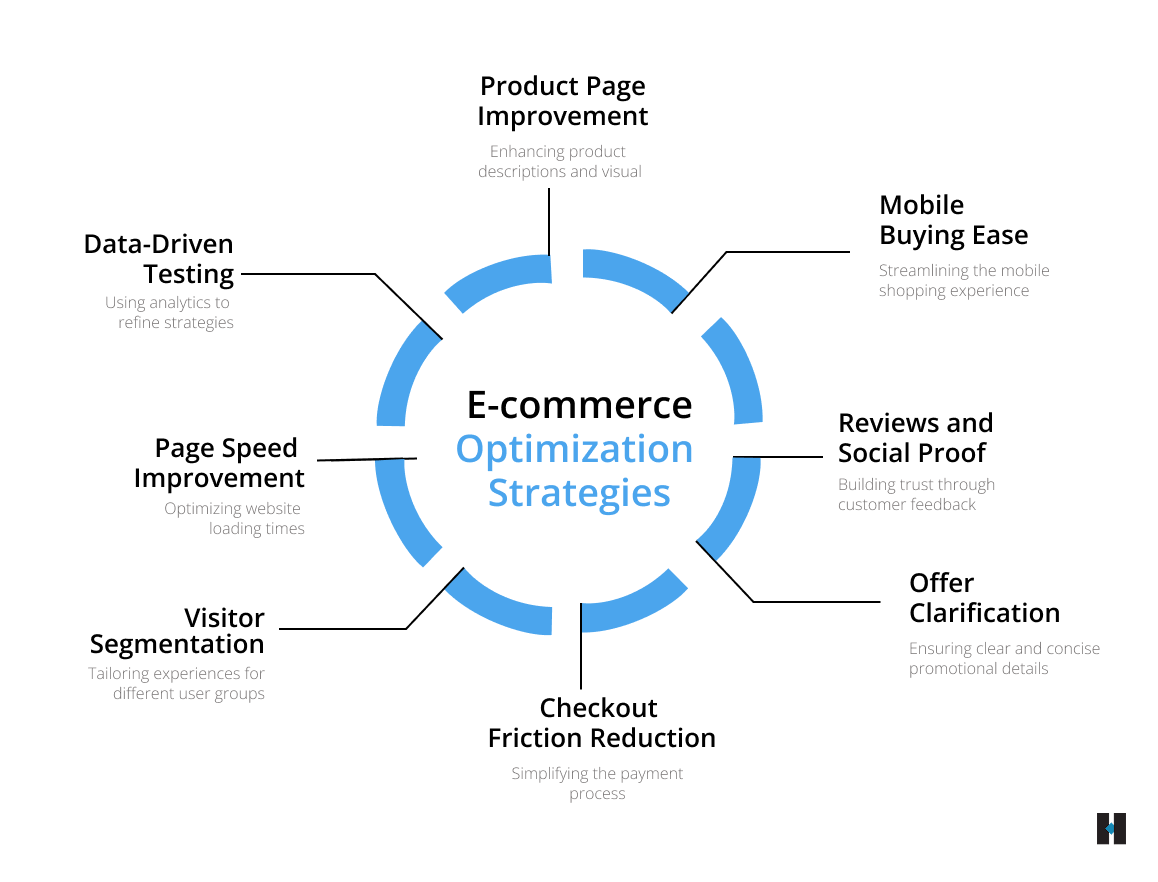
3. Strengthen Reviews and Social Proof
Reviews reduce uncertainty. They help customers feel that others have bought and trusted the product.
Use star ratings near the product title, customer photos, detailed reviews, UGC videos, before-and-after examples, press mentions, and expert comments where relevant.
Social proof should feel real. Over-polished testimonials can look less believable than natural customer language.
4. Clarify the Offer
Customers should quickly understand what they are getting and why it is worth buying now. A clear offer can include free shipping, a first-order discount, bundle savings, subscribe-and-save options, a gift with purchase, a money-back guarantee, loyalty points, or a limited-time bonus. However, discounts should be used carefully because they can improve conversion rate but also reduce profit margins. The best offer is one that increases buying confidence, gives customers a strong reason to act, and still protects the brand’s profitability.
5. Reduce Checkout Friction
Many DTC brands lose customers during checkout.
Improve checkout by offering guest checkout, express payment options, clear shipping costs, transparent delivery timelines, simple form fields, multiple payment methods, visible return policy, and financing for high-ticket products.
Unexpected costs are one of the biggest reasons users abandon checkout. Be clear before the final step.
6. Segment New and Returning Visitors
New visitors need education, proof, and trust. Returning visitors may need reminders, urgency, bundles, or a stronger reason to complete the purchase.
Do not treat every visitor the same. A first-time visitor may need product education. A returning cart abandoner may need a shipping reminder, review proof, or a limited-time incentive.
7. Improve Page Speed
Slow pages reduce conversion, especially on mobile.
Focus on compressed images, fewer unnecessary apps, lightweight theme code, optimized fonts, limited popups, lazy loading for below-the-fold content, and clean tracking setup. A faster site feels easier to use and easier to trust.
8. Test Based on Data
Good CRO is based on evidence.
Use analytics, heatmaps, customer surveys, session recordings, and A/B testing where possible.
Look for:
- High-traffic pages with low conversion
- Products with high views but low add-to-cart
- Checkout steps with high drop-off
- Traffic sources with poor conversion
- Mobile pages with weak performance
- Landing pages with high bounce rates
Test one change at a time so you know what actually worked.
Final Thoughts
A good conversion rate for a DTC brand in the US is usually around 2% to 4%. If your brand is converting above 3%, it is likely performing well. If it is above 4%, the store is in a strong position. If it is above 5%, that is excellent, depending on the category.
But the conversion rate should never be judged in isolation.
A smart DTC brand also asks:
- Are we attracting the right traffic?
- Are customers buying profitably?
- Is our average order value healthy?
- Are customers coming back?
- Is mobile performance strong?
- Are we improving revenue per session?
- Are we building long-term customer value?
The best conversion rate is not just a higher number. It is a number that supports profitable, sustainable growth.
For DTC brands, the goal is simple: bring the right people to the website, help them understand the product quickly, remove doubts, make buying easy, and give them a reason to come back.
At tecHindustan, we help DTC brands build stronger digital experiences, improve website performance, and create growth-focused strategies that support better conversions and long-term customer value. If you want to improve your DTC store’s conversion performance, you can contact tecHindustan to discuss your growth goals.
FAQs
