

Shopify makes it easier to launch an online store, but it does not automatically make that store visible in search results. A well-designed store can still struggle to attract organic traffic if Google cannot understand its structure, evaluate its content, or connect its pages with the way shoppers actually search.
That is where Shopify SEO becomes important. It helps search engines discover, understand, and rank your product pages, collection pages, blogs, and buying guides when potential customers search for products, categories, comparisons, or purchase advice.
The opportunity is significant. Shopify reported that its merchants generated $14.6 billion in global sales during Black Friday Cyber Monday 2025, a 27% increase from the previous year. The same report also noted that more than 81 million customers purchased from Shopify-powered brands during that shopping period. This shows how much buying demand exists online, especially during high-intent seasonal windows. For store owners, SEO helps capture that demand earlier, before ad costs rise and before competitors dominate the search results.
However, Shopify SEO is not just about increasing traffic. It is about attracting the right people at the right stage of the buying journey. A shopper searching for “solid wood dining table for six” is much closer to a purchase than someone casually browsing furniture inspiration on social media. A customer searching for “best LED face mask for home use” is already comparing options and looking for reasons to trust one product over another. If your Shopify store has the right page for that intent, SEO can turn search demand into measurable sales.
In 2026, effective Shopify SEO is not about keyword stuffing, thin collection copy, or generic blog posts written only for search engines. Google’s own guidance states that its ranking systems are designed to reward helpful, reliable, people-first content. For Shopify merchants, that means every important page should be built for both search understanding and customer decision-making.
What Is Shopify SEO?
Shopify SEO is the process of improving a Shopify store so it can appear in search results for relevant queries. These queries may include product names, product categories, materials, styles, use cases, comparisons, and customer questions.
For example, a skincare brand may want to rank for searches such as “vitamin C serum for dull skin” or “best serum for uneven skin tone.” A furniture store may want visibility for “custom dining room furniture,” “solid wood dining table,” or “extendable oak dining table for six.”
Each keyword reflects a different level of intent. Some users are ready to buy. Some are comparing brands. Some are still learning what type of product they need. Strong Shopify SEO maps each intent to the right type of page.
A product page should target specific product-level searches. A collection page should target broader category-level buying intent. A blog post should answer educational or comparison-based questions. A landing page can support a specific use case, audience, material, or seasonal campaign.
Shopify gives store owners several built-in SEO features, including automatically generated canonical tags, sitemap.xml and robots.txt files, title tags, SSL certificates, and other search-friendly defaults. But these features only create the foundation. They do not replace strategy. Store owners still need to decide which pages matter, what each page should rank for, and how the content supports the customer’s purchase decision.
How Google Understands a Shopify Store?
Google discovers and evaluates websites through three broad stages: crawling, indexing, and ranking.
Crawling means Google finds your pages. Indexing means Google stores and understands those pages. Ranking means Google decides which pages should appear for a specific search query. Google’s SEO Starter Guide explains SEO as the process of helping search engines understand your content and helping users decide whether they should visit your site from search results.
Shopify automatically creates useful technical assets, such as a sitemap, but Google still needs a clear path through your website. If important products are buried deep in the site, navigation is confusing, filters create thousands of low-value URLs, or collection pages have very little useful content, Google may struggle to evaluate the store properly.
A search-friendly Shopify store should have clear menus, crawlable collection pages, logical internal links, useful product pages, and clean URLs. Customers and search engines should be able to understand what the store sells without working too hard.
This is why SEO starts with structure before keywords. A poorly organized store with keywords added later will still struggle. A clean structure gives every product, collection, and content page a stronger foundation.
How to Help Google Discover and Rank Your Shopify Pages
Google does not rank a Shopify page based on one factor alone. It first needs to find and understand the page, then assess how useful, relevant, and trustworthy it is for a particular search. The following factors explain how that process works.
1. Build a Clear Store Structure
Your Shopify store structure should reflect how customers naturally shop.
A simple ecommerce structure usually looks like this:
| Homepage → Main collections → Sub-collections → Product pages → Blog guides → Support and policy pages |
For a fashion store, this might mean categories such as Women, Men, Shoes, and Accessories, followed by more specific collections like Summer Dresses, Work Bags, or Leather Sneakers. For a furniture store, it might mean Dining Room Furniture, Dining Tables, Dining Chairs, Benches, Cabinets, and Bar Stools.
The purpose of the structure is not only to keep the store organized. It also helps Google understand relationships between pages. A dining table listed inside a relevant “Solid Wood Dining Tables” collection has more context than a product that only appears under “All Products.”
URL structure also matters. Google’s ecommerce URL guidance explains that well-designed URLs help Google locate and retrieve ecommerce pages more efficiently. A readable URL such as /collections/solid-wood-dining-tables is stronger than a vague, cluttered, or parameter-heavy URL.
Keep URLs short, descriptive, and stable. Avoid changing URLs unnecessarily once they are indexed and receiving traffic. If a URL must change, use proper redirects so users and search engines are sent to the correct new page.
2. Do Keyword Research Around Search Intent
Keyword research for Shopify should not begin with the highest-volume phrase. It should begin with buyer intent.
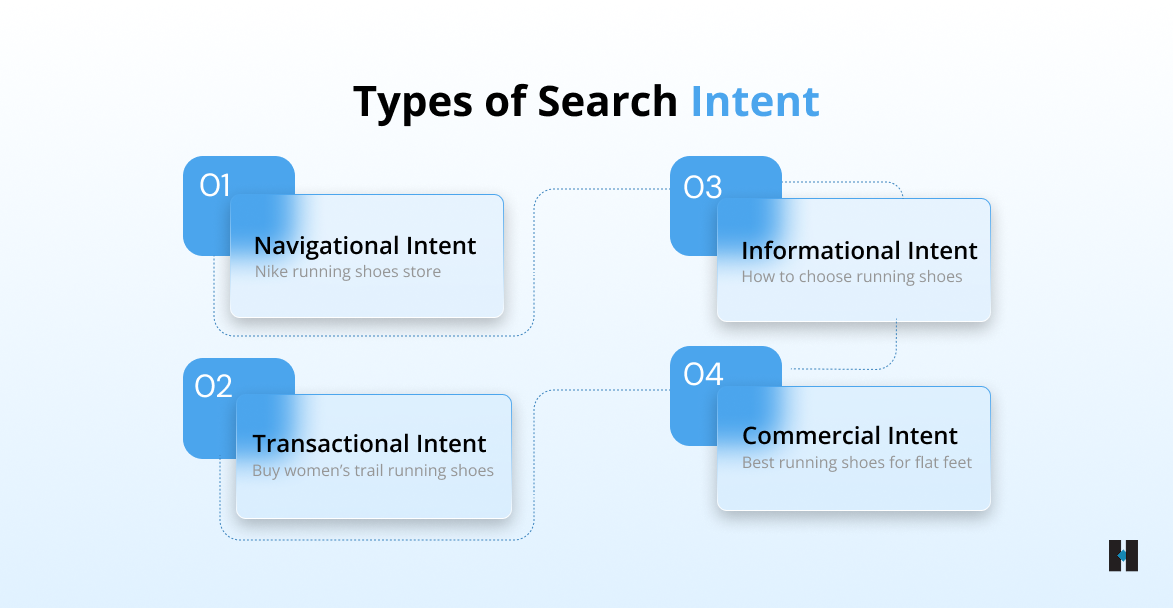
There are four common types of search intent:
Informational intent means the user wants to learn something, such as “how to choose running shoes.” Commercial intent means the user is comparing options, such as “best running shoes for flat feet.” Transactional intent means the user is ready to buy, such as “buy women’s trail running shoes.” Navigational intent means the user is looking for a specific brand or store.
Each intent needs a different page. A user searching “how to choose running shoes” may need a guide. A user searching “buy women’s trail running shoes” is more likely to need a collection page. A user searching for a specific product model should land on a product page.
This is where many Shopify stores make a strategic mistake. They target keywords without mapping them to the right page type. A keyword may bring traffic, but if the page does not match the user’s stage of decision-making, the traffic may not convert.
For Shopify SEO, keyword mapping is essential. Choose one primary keyword or topic for each important page. Then support it with related terms, FAQs, internal links, and useful buying information. Avoid making multiple pages compete for the same keyword unless they serve clearly different intents.
3. Treat Collection Pages as SEO Assets
Collection pages are often the most important SEO pages on a Shopify store. Customers usually search by category before they search by exact product name. They look for terms such as “linen shirts,” “organic baby clothes,” “solid wood beds,” “LED face masks,” “custom dining furniture,” or “women’s leather handbags.”
A weak collection page is only a product grid. A strong collection page explains the category, helps shoppers choose, and gives Google meaningful context.
A good collection page should include a clear H1, a concise introduction, useful filters, internal links to related categories, unique copy, optimized metadata, and FAQs that genuinely help the customer. The content should answer practical buying questions about fit, material, size, style, care, use case, and selection.
Avoid adding long generic SEO text at the bottom of the page just to include keywords. That approach rarely improves the customer experience. Instead, write a useful copy near the top and support it with well-placed sections further down the page.
For example, a collection page for solid wood dining tables could explain table shapes, seating capacity, wood types, finish options, room size considerations, and delivery expectations. This gives customers confidence while helping Google understand the page more clearly.
4. Make Product Pages More Useful
Product pages should do more than show a title, price, and short description. Their job is to remove doubt.
A strong Shopify product page includes original copy, product benefits, specifications, dimensions, materials, usage guidance, care instructions, delivery details, return information, reviews, FAQs, and related products. The page should make the customer feel informed before they click “Add to Cart.”
Avoid copying supplier descriptions. If many stores use the same manufacturer copy, your product page has very little unique value. Rewrite descriptions in your brand’s voice and explain what the customer needs to know before ordering.
Images also play a major role. Use clear product photos, close-ups, lifestyle shots, scale references, and variant-specific images. Add descriptive alt text for important images. Alt text should describe the image naturally. It should not be used for keyword stuffing.
For products with variants, make size, color, material, pricing, availability, and delivery details clear. Customers should not have to guess. Confusion creates hesitation, and hesitation often leads to exits.
5. Use Title Tags and Meta Descriptions Properly
Title tags help search engines and users understand what a page is about. Meta descriptions can influence whether users choose your result over a competitor’s result.
A good title tag is specific, readable, and aligned with the page’s intent. For a collection page, it may include the main category keyword and a meaningful qualifier, such as “Solid Wood Dining Tables for Modern Homes.” For a product page, it may include the product name and a key feature, such as “Oak Extendable Dining Table for 6.”
Avoid title tags that look spammy or repetitive. A title like “Dining Table, Buy Dining Table, Best Dining Table Online” does not build trust. It looks dated and weak.
Meta descriptions should summarize the benefit of the page and encourage action. Mention relevant details such as product type, material, range, customization, shipping, or use case. Keep the copy natural and customer-focused.
6. Add Structured Data Correctly
Structured data helps Google understand product information in a machine-readable format. For Shopify stores, this is important because ecommerce pages often include price, availability, reviews, variants, shipping, and return details.
Google’s Product structured data documentation explains that product markup can help product information appear in richer ways across Google Search, Google Images, and Google Lens. It can also support details such as price, availability, review ratings, and shipping information in search results.
Many Shopify themes include basic product schema, but it should still be tested. Use Google’s Rich Results Test to check for missing price, incorrect availability, duplicate schema, invalid review markup, or issues with variant handling.
If a product comes in multiple sizes, colors, materials, or finishes, the structured data should help Google understand those relationships clearly. Structured data does not guarantee rankings, but it improves clarity. In ecommerce, clarity can influence search presentation and click confidence.
7. Improve Site Speed and Core Web Vitals
A slow Shopify store can hurt both SEO performance and sales. Heavy images, too many apps, sliders, popups, review widgets, and tracking scripts can slow down product and collection pages.
Shopify’s web performance documentation explains that performance is measured through Core Web Vitals, including loading speed, interactivity, and visual stability. Shopify also notes that improving performance can enhance the shopping experience, discoverability, and conversion rates.
Google also confirmed that Interaction to Next Paint, or INP, replaced First Input Delay as a Core Web Vital in March 2024. This means responsiveness is now measured more broadly across user interactions, not just the first input.
For Shopify stores, the practical fixes are clear: compress images, remove unused apps, choose a lightweight theme, limit third-party scripts, lazy-load media below the fold, and avoid layout shifts. Test more than the homepage. Product pages and collection pages are where revenue is usually made. If those pages are slow, organic traffic may not convert.
8. Control Filters and Faceted Navigation
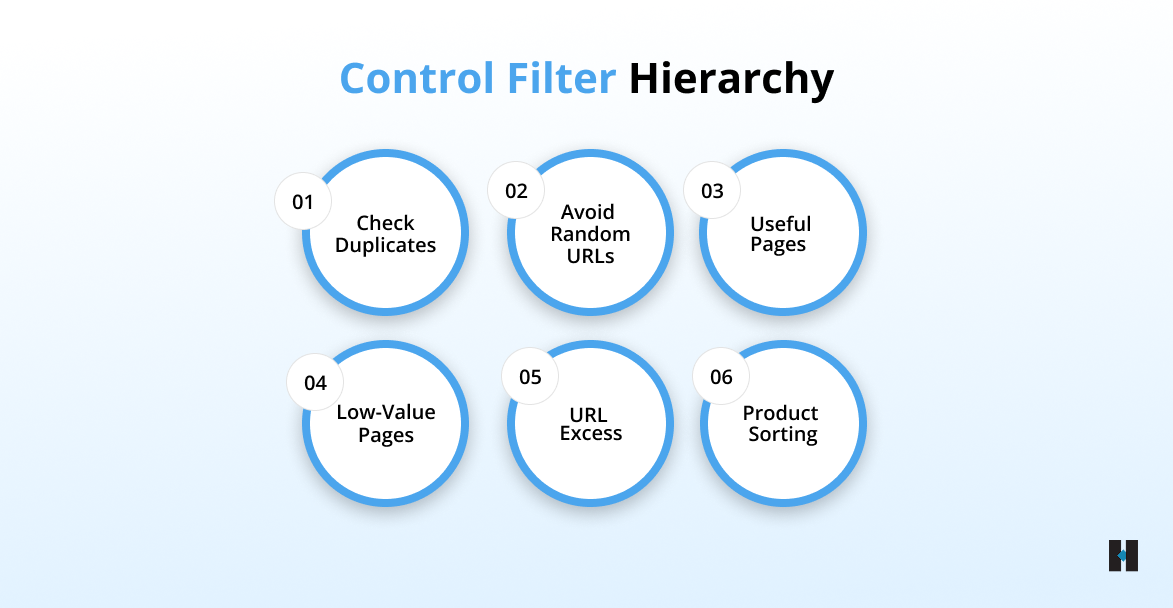
Filters help customers narrow products by size, color, price, material, brand, or availability. They are useful for shoppers, but they can create SEO issues if every filter combination becomes a crawlable URL.
Google warns that faceted navigation can generate a very large number of URLs, leading to overcrawling and slower discovery of useful pages. If crawlers spend too much time on low-value filtered URLs, they may spend less time discovering important products and collections.
The solution is to decide which filtered pages deserve search visibility. A page like “black leather sofas” may deserve a dedicated collection if people search for it. But a random filtered URL sorted by price or temporary availability usually should not be indexed.
Shopify store owners should review how filters behave, whether filtered URLs are crawlable, whether they create duplicate content, and whether Google is indexing pages with little search value.
9. Make Pagination and Load More SEO-Friendly
Many Shopify stores use pagination, infinite scroll, or “load more” buttons on collection pages. These features can improve browsing, but they must be implemented carefully.
If products only appear after a JavaScript action and there are no crawlable links, Google may not discover deeper products easily. Make sure paginated pages are accessible, internal links work, and product URLs are reachable without relying solely on user-triggered actions.
A good user experience should not block search engines. Design, development, and SEO need to work together.
10. Build Helpful Content Around Products
Shopify SEO is not limited to product and collection pages. Blog content can attract shoppers earlier in the buying journey.
A beauty store can write about routines, ingredient comparisons, product usage, and aftercare. A furniture store can publish guides on room layouts, wood types, sizing, maintenance, and interior styling. A fitness store can create content around home setups, equipment comparisons, and training goals.
The goal is to answer the questions customers ask before buying. Then, link naturally to relevant collections and products.
This content should not exist only to target keywords. It should help buyers make better decisions. Google’s people-first content guidance is useful here: content should be created primarily to benefit people, not to manipulate search rankings.
11. Strengthen Internal Linking
Internal links connect your store together. They help customers move from education to purchase and help Google understand which pages are important.
Link blog posts to relevant collections. Link collection pages to related categories. Link product pages to buying guides, care guides, accessories, and complementary products. Link the homepage to your highest-priority commercial pages.
Anchor text should be natural. Instead of forcing exact-match keywords everywhere, use helpful phrases such as “explore solid wood dining tables,” “see matching dining chairs,” or “compare LED face masks.”
Internal linking is one of the most underused Shopify SEO tactics. It costs nothing, improves discovery, and supports conversions.
12. Build Trust Into the Store
Trust is central to ecommerce SEO because customers need confidence before buying. A Shopify store should include clear contact information, an About page, transparent shipping details, return policies, reviews, guarantees, secure checkout messaging, and accurate product information.
Trust also comes from consistency. Product images should match the product delivered. Pricing should be clear. Delivery timelines should be realistic. Reviews should be genuine. Policies should be easy to find.
Avoid fake urgency, exaggerated claims, copied reviews, misleading discounts, or vague shipping information. These tactics may create short-term clicks, but they damage long-term trust.
13. Measure SEO Performance Correctly
Shopify SEO should be measured by visibility, traffic quality, and revenue impact.
Use Google Search Console, GA4, Shopify Analytics, Merchant Center, PageSpeed Insights, and Rich Results Test. Track organic clicks, impressions, click-through rate, indexed pages, top landing pages, revenue from organic traffic, conversion rate, Core Web Vitals, and structured data issues.
Do not measure SEO only by rankings. A lower-volume keyword with strong buying intent may be more valuable than a broad keyword that brings visitors who never purchase.
Good SEO reporting should answer three questions: Are more qualified customers finding the store? Are they landing on the right pages? Are those pages helping them buy?
Final Thoughts
Shopify SEO works when your store is easy for search engines to understand and easy for customers to navigate and trust. It is not achieved through one app, setting, or list of keywords. Strong organic performance depends on a connected system of site structure, original content, technical health, page speed, product data, internal linking, and useful customer information.
Start with the foundations. Organize collections clearly, write original product and category content, improve your highest-value pages, resolve crawling and indexing issues, add accurate structured data, and strengthen site performance. Support these improvements with content that answers the questions customers ask before making a purchase.
The most successful Shopify stores are built around the needs of shoppers, not search engines alone. When customers can easily discover products, compare options, find reliable information, and purchase with confidence, SEO becomes more than a source of traffic. It becomes a long-term growth channel that supports visibility, conversions, trust, and revenue.
tecHindustan helps Shopify businesses identify technical SEO gaps, strengthen their store structure, improve search visibility, and turn organic traffic into measurable business growth. Contact our Shopify SEO team to discuss your store’s challenges and build a practical strategy around your growth goals.
FAQs
