

Modern SEO is no longer limited to ranking a page on Google and waiting for traffic. Businesses now have to think about traditional search rankings, AI Overviews, ChatGPT-style answers, Gemini, Perplexity, voice search, featured snippets, local search, ecommerce discovery, and brand visibility across multiple answer engines.
That creates a real problem for business owners and marketing teams: which SEO platform should you actually use?
Some tools are excellent for keyword research. Some are better for technical SEO. Some are built for enterprise workflows. Others are designed mainly for AI content optimization, topic authority, or AI search visibility tracking. Choosing the wrong platform can lead to expensive subscriptions, messy dashboards, shallow content, and reports that look impressive but do not improve leads, sales, or revenue.
The best SEO platforms today do more than show keywords. They help businesses understand what to optimize, why it matters, where competitors are winning, how users search, and how AI systems may interpret your content. Google also continues to advise website owners to create helpful, reliable, people-first content and keep pages crawlable and understandable for search systems.
What Makes a Good AI SEO Platform?
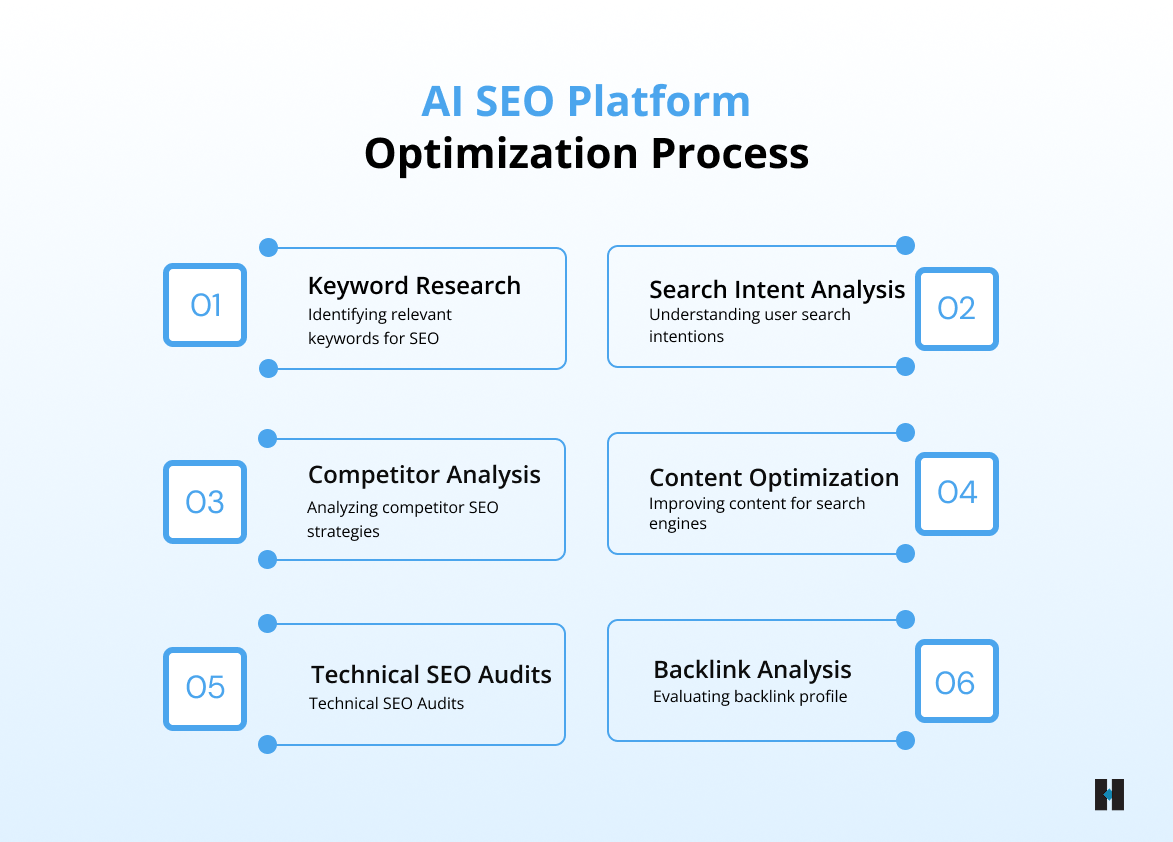
A strong AI SEO platform should help with more than writing content. AI can support SEO, but it should not replace strategy, expert judgment, or technical quality control. A good platform should help with:
- Keyword and search intent research
- Competitor analysis
- Content planning and optimization
- Technical SEO audits
- Backlink analysis
- Internal linking opportunities
- AI search visibility tracking
- Reporting and workflow management
- Content refresh and performance monitoring
The right tool should help your team move from data to action. If a platform only gives you scores but does not help you prioritize what to fix, it may not be the right fit.
The right tool should help your team move from data to action. If a platform only gives you scores but does not help you prioritize what to fix, it may not be the right fit.
Top 10 SEO Platforms for Smarter Search Visibility in 2026
1. Semrush
Semrush is one of the most complete SEO platforms for businesses that want keyword research, competitive analysis, technical audits, backlink tools, local SEO, PPC research, content planning, reporting, and AI visibility tracking in one place. Semrush positions itself around brand visibility across AI search, SEO, PPC, social, and other digital channels, and its AI SEO tools include AI visibility and search visibility features.
| Metric | Details |
|---|---|
| Best for | Agencies, ecommerce brands, SaaS companies, content teams, and businesses need an all-in-one SEO platform. |
| Why it stands out | It combines keyword research, site audits, competitor research, backlink tools, reporting, and AI visibility tracking. |
| Where it may not be enough | Very large enterprise teams may still need deeper workflow governance or enterprise-specific automation. |
Why Businesses Use Semrush?
Semrush works well for teams that want one central SEO dashboard. You can research keywords, audit a website, analyze competitors, track rankings, review backlinks, and build SEO reports without constantly switching platforms.
It is especially useful when SEO, content, PPC, and competitive research need to work together.
2. Ahrefs
Ahrefs is a strong platform for backlink analysis, competitor research, keyword research, content gap analysis, and SEO reporting. It has also expanded into AI-focused workflows, including AI Content Helper, which helps content teams match search intent, fill content gaps, and optimize for Google, ChatGPT, Perplexity, and other AI-led discovery environments.
| Metric | Details |
|---|---|
| Best for | SEO professionals, agencies, SaaS brands, content strategists, and businesses are focused on competitor research. |
| Why it stands out | It is strong for backlink data, competitor insights, content gaps, and search intent analysis. |
| Where it may not be enough | Teams needing enterprise workflow management or broad marketing-suite features may need additional tools. |
Why Businesses Use Ahrefs?
Ahrefs is useful when you want to understand why competitors rank. It helps you see which pages get traffic, which keywords they rank for, what backlinks support them, and where your content is weaker.
For content-led SEO teams, Ahrefs is also helpful for identifying missing topics and building stronger article structures.
3. BrightEdge
BrightEdge is an enterprise SEO and AEO platform built for large businesses that need AI visibility, search intelligence, automation, and reporting at scale. BrightEdge describes itself as an AI-powered SEO and AEO platform for visibility across Google, AI Overviews, ChatGPT, and Perplexity.
| Metric | Details |
|---|---|
| Best for | Enterprise brands, large ecommerce websites, global companies, and complex SEO teams. |
| Why it stands out | It combines enterprise SEO, AEO, automation, AI search visibility, and large-scale performance reporting. |
| Where it may not be enough | It may be too advanced or costly for small businesses or early-stage teams. |
Why Businesses Use BrightEdge?
BrightEdge is designed for scale. Large companies often have many stakeholders, thousands of URLs, multiple regions, and complex reporting needs. BrightEdge helps these teams manage SEO visibility, content performance, and AI search opportunities from a more enterprise-focused view.
It is a strong fit when SEO decisions need to be connected with executive reporting and large-scale digital strategy.
4. Conductor
Conductor is an enterprise SEO and AEO platform focused on AI visibility, content intelligence, website monitoring, technical insights, and search performance. Conductor highlights enterprise AEO and SEO intelligence, AI content generation, 24/7 website monitoring, native LLM apps, and AI-search workflows.
| Metric | Details |
|---|---|
| Best for | Enterprise content teams, B2B brands, large websites, and companies focused on SEO plus AEO. |
| Why it stands out | It connects search intelligence, AI visibility, content workflows, and website monitoring. |
| Where it may not be enough | Smaller businesses may find it more complex than necessary for basic SEO execution. |
Why Businesses Use Conductor?
Conductor works well for companies that want SEO to support content strategy, technical monitoring, and AI search visibility together. It is not just a keyword tool. It is built for teams that need to plan, monitor, optimize, and report across large websites.
For businesses investing seriously in AEO, Conductor can be a strong enterprise option.
5. seoClarity
seoClarity is an enterprise SEO platform focused on large-scale SEO data, AI-driven insights, automation, and workflow efficiency. Its platform highlights comprehensive SEO data, metrics, AI-driven insights, and faster time to action. Its AI assistant, Sia, is designed to streamline workflows, automate tasks, and support SEO execution.
| Metric | Details |
|---|---|
| Best for | Large websites, enterprise SEO teams, marketplaces, retailers, and global brands. |
| Why it stands out | It is built for scale, automation, enterprise SEO data, and AI-assisted workflows. |
| Where it may not be enough | It may be more than what smaller teams need if they only require keyword research and basic audits. |
Why Businesses Use seoClarity?
seoClarity is valuable when a website has thousands or millions of pages and manual SEO prioritization becomes difficult. It helps enterprise teams turn large datasets into practical actions.
For large websites, the challenge is not finding SEO issues. The challenge is knowing which issues matter most. seoClarity is built for that kind of prioritization.
6. Surfer
Surfer is best known for content optimization and on-page SEO. Its Content Editor helps writers optimize content with real-time metrics for structure, word count, NLP-ready keywords, and images. Surfer also positions itself as an AI visibility platform and provides AI-based content creation and optimization workflows.
| Metric | Details |
|---|---|
| Best for | Content writers, bloggers, SEO agencies, affiliate websites, and SaaS content teams. |
| Why it stands out | It gives real-time content optimization guidance based on SERP and topic signals. |
| Where it may not be enough | It does not replace technical SEO audits, backlink analysis, or a full SEO strategy. |
Why Businesses Use Surfer?
Surfer is useful when your main SEO challenge is content quality and on-page optimization. It helps writers understand what topics, terms, headings, and content depth may be needed to compete.
It is especially helpful for teams producing blog posts, landing pages, and educational content at scale.
7. Clearscope
Clearscope is a content optimization and discoverability platform built for visibility across Google and AI search. It supports topic research, prompt tracking, AI content generation, optimization, and discoverability monitoring. Clearscope also uses NLP and LLM technologies to support content optimization and internal linking workflows.
| Metric | Details |
|---|---|
| Best for | Editorial teams, B2B brands, SaaS companies, and content teams focused on quality. |
| Why it stands out | It helps improve content relevance, topic coverage, readability, and AI discoverability. |
| Where it may not be enough | It is not a full technical SEO, backlink, or enterprise crawl management platform. |
Why Businesses Use Clearscope?
Clearscope is strong when quality matters more than mass production. It helps teams create content that is complete, relevant, and easier for search engines and AI systems to understand.
For B2B and SaaS teams, it is useful for improving thought leadership articles, comparison pages, guides, and educational content.
8. MarketMuse
MarketMuse is built around AI content planning, topic authority, and content optimization. It helps teams understand where they already have topical strength, where content gaps exist, and which opportunities should be prioritized. MarketMuse describes its platform as a way to evaluate content inventory, topic authority, weak spots, and content opportunities.
| Metric | Details |
|---|---|
| Best for | Publishers, SaaS brands, B2B companies, and content-heavy websites. |
| Why it stands out | It helps teams plan topic clusters, build authority, and prioritize content updates. |
| Where it may not be enough | Teams still need separate tools for technical SEO, backlink audits, and rank tracking. |
Why Businesses Use MarketMuse?
MarketMuse is useful when a business wants to move beyond individual keywords and build topical authority. Instead of asking, “What keyword should we target next?” it helps answer, “Which topic should we own, and what content is missing?”
This makes it valuable for long-term content strategy.
9. SE Ranking
SE Ranking is an all-in-one SEO platform for keyword tracking, website audits, competitor research, backlink analysis, automated reporting, and AI SEO workflows. It positions itself as an AI SEO tool with accurate data, actionable insights, and automated reports. It has also expanded AI search-related capabilities, including AI visibility and AI search tracking features.
| Metric | Details |
|---|---|
| Best for | Small businesses, growing brands, agencies, local businesses, and mid-market teams. |
| Why it stands out | It offers a balanced SEO toolkit with strong usability and practical reporting. |
| Where it may not be enough | Large enterprises may need deeper automation, governance, and custom workflows. |
Why Businesses Use SE Ranking?
SE Ranking is a good fit for teams that need practical SEO tools without enterprise complexity. It can support keyword tracking, audits, reporting, competitor checks, and AI search visibility work.
For many growing businesses, it offers a strong balance between features and usability.
10. Google Search Console
Google Search Console is not a paid SEO platform, but it should be part of every SEO stack. It gives website owners direct data from Google, including performance, indexing, sitemap submission, crawl issues, URL inspection, and page indexing status. Google’s URL Inspection tool provides information about Google’s indexed version of a page and can test whether a URL may be indexable.
| Metric | Details |
|---|---|
| Best for | Every website, from small businesses to enterprise brands. |
| Why it stands out | It provides direct Google search, indexing, and URL-level diagnostic data. |
| Where it may not be enough | It does not provide full competitor research, content optimization, backlink strategy, or AI visibility tracking. |
Why Businesses Use Google Search Console?
Search Console is the baseline tool for SEO. Every paid platform should be compared with what Search Console shows. If a page is not indexed, losing clicks, dropping impressions, or facing technical issues, Search Console is often the first place to check.
No SEO stack is complete without it.
How to Choose the Right SEO Platform
The right SEO platform should match your business goals, website size, technical requirements, and team capabilities. Compare platforms based on the features you will actually use, the quality of their data, integration options, reporting flexibility, and whether they can support your SEO strategy as it grows.
For Small Businesses
Small businesses should start with tools that are easy to use and action-focused. Google Search Console, SE Ranking, Semrush, or Ahrefs can be enough in the beginning.
The goal should be to understand:
- Which pages get traffic
- Which keywords bring impressions
- Which pages need better titles and descriptions
- Which technical issues block indexing
- Which competitors rank for important terms
For Ecommerce Brands
Ecommerce businesses need platforms that handle product pages, category pages, technical SEO, speed, structured data, internal links, and competitor research.
A practical stack may include:
- Google Search Console
- Semrush or Ahrefs
- A content optimization tool like Surfer or Clearscope
For enterprise ecommerce, BrightEdge, Conductor, or seoClarity may be more suitable.
For SaaS and B2B Companies
SaaS and B2B companies should focus on topic authority, bottom-funnel content, competitor comparisons, product-led pages, and educational guides.
Good options include:
- Ahrefs
- Semrush
- Clearscope
- MarketMuse
- Conductor for enterprise teams
For Enterprise Teams
Enterprise teams need more than keyword reports. They need governance, workflows, automation, AI visibility, reporting, and large-scale prioritization.
Better options include:
- BrightEdge
- Conductor
- seoClarity
How AI Should Be Used in SEO?
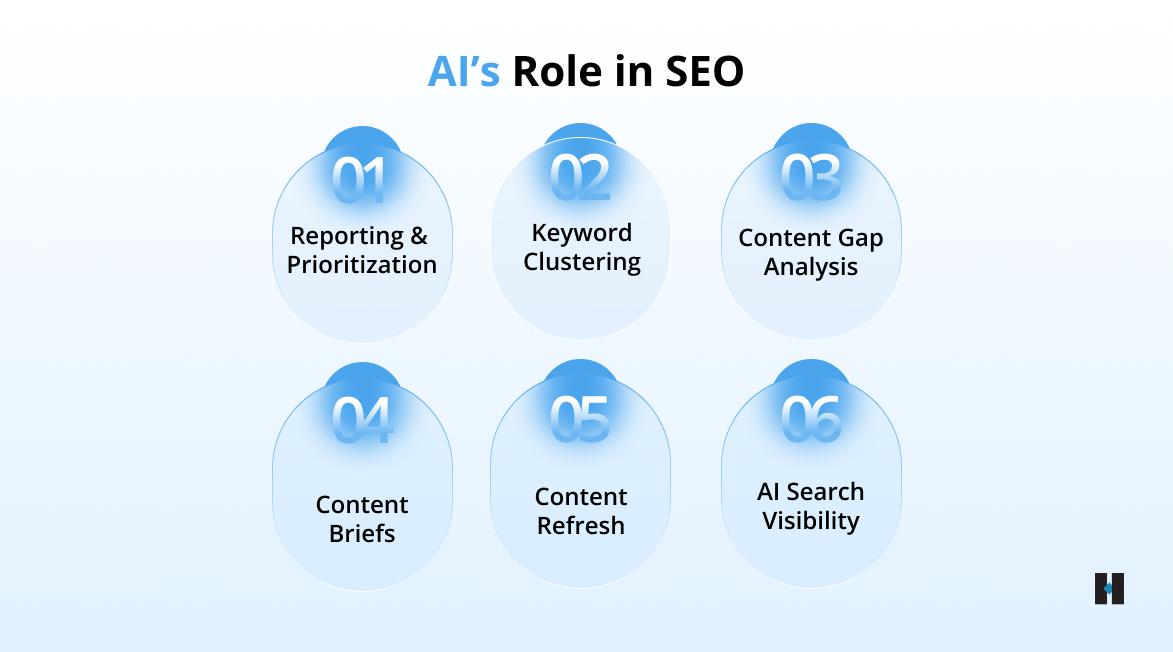
AI should make SEO faster and smarter, but it should not replace human expertise.
The best uses of AI in SEO include:
1. Keyword Clustering
AI can group related keywords by search intent, helping teams build better content clusters.
2. Content Gap Analysis
AI can compare your content with competitors and identify missing topics, FAQs, examples, and sections.
3. Content Brief Creation
AI can help create outlines, but the final structure should still be reviewed by an SEO strategist or subject matter expert.
4. Content Refresh
AI can identify outdated content, weak headings, missing answers, and unclear sections.
5. AI Search Visibility Tracking
Modern platforms are increasingly helping brands understand how they appear in AI-generated answers, not only in traditional rankings.
6. Reporting and Prioritization
AI can help summarize large datasets and recommend which SEO actions should be handled first.
Common Mistakes to Avoid When Choosing an SEO Platform
Choosing an SEO platform based only on popularity, pricing, or the number of features can lead to wasted investment and poor adoption. Before making a decision, businesses should evaluate how well the platform fits their goals, workflows, team capabilities, data requirements, and reporting needs.
1. Choosing the Most Popular Tool Without a Clear Need
A popular tool is not always the right tool. First, identify whether your biggest issue is technical SEO, content quality, backlinks, AI visibility, reporting, or keyword research.
2. Expecting AI to Replace SEO Strategy
AI can support research and execution, but strategy still needs human judgment. Your business model, margins, audience, product positioning, and sales cycle matter.
3. Ignoring Technical SEO
A content optimization tool cannot fix crawl problems, indexation issues, broken redirects, poor site architecture, or slow templates.
4. Tracking Too Many Metrics
SEO teams often drown in data. Focus on metrics that connect to business outcomes: organic leads, revenue, qualified traffic, indexed pages, ranking pages, conversions, and content performance.
5. Not Building a Workflow
Tools do not improve SEO by themselves. Someone must review the data, assign tasks, fix issues, update content, and measure results.
Final Recommendation
The best SEO platform depends on your business stage and SEO maturity. For most growing businesses, Semrush, Ahrefs, SE Ranking, and Google Search Console can form a strong SEO stack. For content-heavy teams, Surfer, Clearscope, and MarketMuse can improve content quality and topic coverage. For enterprise organizations, BrightEdge, Conductor, and SEOclarity are better suited for scale, governance, AI visibility, and reporting.
The future of SEO belongs to businesses that combine technical SEO, helpful content, AI-assisted workflows, strong brand authority, and human expertise. AI can speed up SEO, but strategy is still what turns search visibility into business growth.
If you want to choose the right SEO platform and build a strategy that actually supports rankings, traffic, and business growth, contact tecHindustan to discuss the best SEO approach for your business.
FAQs
