

Research from Nesta found that businesses that effectively collect, analyze, and use data are around 8% more productive than those that do not, highlighting the direct impact data can have on business performance.
Despite having access to large amounts of customer and sales data, many online stores still struggle to understand what drives conversions, why visitors leave without purchasing, or which marketing efforts deliver the best results. The problem is often not a lack of data but a lack of meaningful insights.
This is where eCommerce analytics becomes valuable. It helps you turn raw data into actionable information that supports better business decisions, improves customer experiences, and drives sustainable growth.
In this guide, you will learn what eCommerce analytics is, why it matters for online stores, the key eCommerce performance metrics you should track, common challenges businesses face, and how to use data to build a stronger and more effective eCommerce growth strategy.
What Is eCommerce Analytics and How Does It Work?
Before you can improve sales, marketing performance, or customer experience, you need to understand what is happening inside your online store. This is where eCommerce analytics helps by giving you clear visibility into how customers interact with your business.
What Does eCommerce Analytics Actually Measure?
eCommerce analytics is the process of collecting and analyzing data from your online store to understand customer behavior and business performance. It helps you track important information such as website traffic, conversion rates, product performance, sales trends, and marketing results.
For example, if hundreds of visitors view a product but very few make a purchase, eCommerce data analytics can help identify where customers are losing interest and what improvements may be needed.
Why Has eCommerce Analytics Become So Important?
As competition continues to grow, businesses need more than assumptions to make decisions. Reliable online store analytics helps you:
- Understand customer preferences and shopping behavior.
- Measure the effectiveness of marketing campaigns.
- Improve website and store performance.
- Discover new sales opportunities.
- Reduce unnecessary marketing expenses.
- Build a stronger data-driven eCommerce strategy.
Without proper analytics, it becomes difficult to understand why sales increase, decline, or remain unchanged over time.
How eCommerce Analytics Supports Business Growth
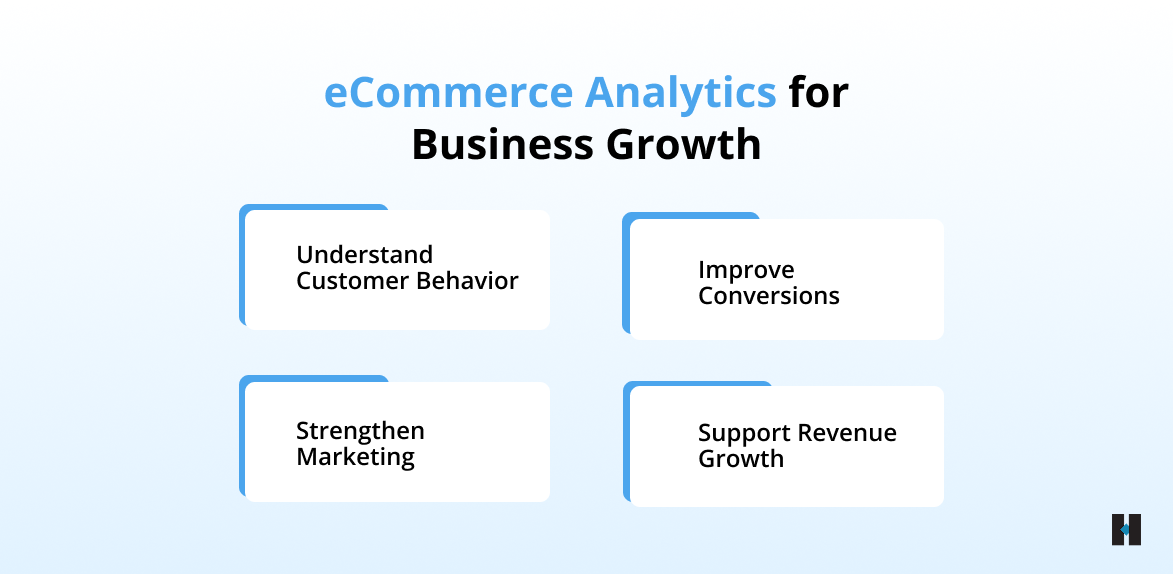
eCommerce analytics is not just about collecting data. It helps you understand what is happening inside your online store and gives you the insights needed to make better business decisions. When used correctly, it can improve customer experience, increase conversions, strengthen marketing performance, and support long-term business growth.
- Helps You Understand Customer Behavior
One of the biggest advantages of customer behavior analytics is understanding how visitors interact with your store. You can see which pages attract the most attention, how long customers stay on your website, which products they explore, and where they leave the buying journey. For example, if a product page receives a large number of visits but very few purchases, it may indicate issues with pricing, product information, or user experience. These insights help you make improvements that better match customer expectations.
- Improves Conversions and Marketing Performance
Many businesses successfully attract traffic but struggle to turn visitors into customers. eCommerce conversion analytics helps identify drop-off points, allowing you to optimize product pages, simplify checkout processes, and remove barriers that may affect sales. At the same time, eCommerce reporting helps you understand which marketing channels and campaigns are generating the best results. This allows you to focus your budget on strategies that deliver measurable returns.
- Supports Revenue Growth
Effective eCommerce analytics also helps you identify best-selling products, high-performing categories, seasonal buying trends, and opportunities for upselling or cross-selling. These valuable insights support a stronger eCommerce growth strategy, helping your business improve profitability and make more confident, data-driven decisions.
Key eCommerce Metrics Every Online Store Should Track
With so much data available today, it can be tempting to track every number and report. However, not all metrics contribute equally to business growth. The most effective approach is to focus on the eCommerce KPIs that provide meaningful insights into your store’s performance and help support better decision-making.
- Website Traffic: Website traffic shows how many visitors come to your online store and where they are coming from, such as search engines, social media, paid advertisements, or email campaigns. This data helps you evaluate your visibility and the effectiveness of your marketing efforts.
- Conversion Rate: Conversion rate measures the percentage of visitors who complete a desired action, such as making a purchase or submitting an inquiry. Among all eCommerce performance metrics, this is one of the most important because it reflects how effectively your store turns visitors into customers.
- Average Order Value (AOV): Average Order Value measures how much customers spend on average during each transaction. For example, encouraging customers to purchase complementary products can help increase AOV and boost revenue without increasing traffic.
- Cart Abandonment Rate: Cart abandonment occurs when customers add products to their cart but leave before completing their purchase. A high cart abandonment rate may indicate issues with pricing, checkout complexity, shipping costs, or user experience.
- Customer Acquisition Cost (CAC): CAC measures the cost of acquiring a new customer through marketing and advertising activities. Monitoring this metric helps businesses control spending and improve marketing efficiency.
- Customer Lifetime Value (CLV): Customer Lifetime Value estimates the total revenue a customer generates throughout their relationship with your business. Higher CLV often indicates stronger customer loyalty and long-term profitability.
- Return Customer Rate: This metric tracks how often customers return to make repeat purchases. A strong return customer rate is often a sign of customer satisfaction, trust, and a positive shopping experience.
Rather than tracking every available data point, successful businesses use online store analytics to focus on the metrics that align with their goals and support a stronger data-driven eCommerce strategy.
Common Challenges Businesses Face Without eCommerce Analytics
Many online stores collect sales and customer data every day, but without a structured approach to eCommerce analytics, that information often goes unused. As a result, businesses may struggle to identify problems, improve performance, and make confident decisions.
| Challenge | Business ImpactBusiness Impact |
| Limited visibility into customer behavior | It becomes difficult to understand how customers browse your store, what products interest them, and what influences their purchasing decisions. |
| Ineffective marketing investments | Businesses may continue spending money on channels or campaigns that are not generating meaningful traffic, leads, or sales. |
| Difficulty improving conversions | Without access to customer journey data, identifying why visitors leave without purchasing becomes much more challenging. |
| Poor inventory planning | A lack of reliable data can lead to overstocking slow-moving products or running out of high-demand items. |
| Missed growth opportunities | Valuable insights related to customer preferences, product performance, and sales trends often remain hidden. |
These challenges can directly affect revenue, profitability, and long-term growth. By using eCommerce analytics for online stores, businesses can gain clearer insights, make data-driven decisions, and uncover opportunities that may otherwise go unnoticed. If you are facing these challenges, the analytics experts at tecHindustan can help you implement the right tracking, reporting, and optimization strategies to improve performance and support sustainable business growth.
How to Use eCommerce Analytics for Better Results
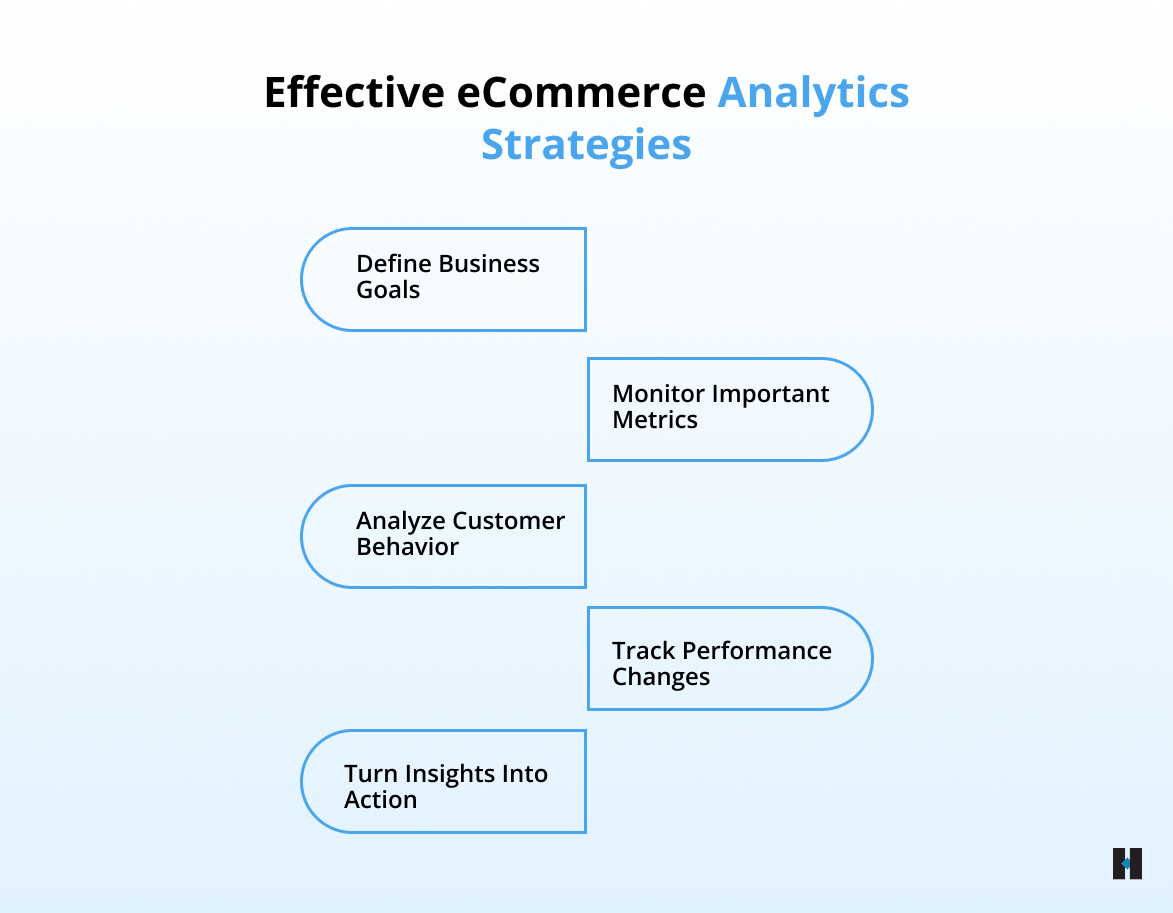
Collecting data alone will not improve your business. The real value of eCommerce analytics comes from understanding the data and using it to make smarter decisions that support growth. Following a structured approach can help you get the most from your analytics efforts.
Step 1: Define Clear Business Goals
Start by identifying what you want to achieve. Your goals may include increasing sales, improving conversion rates, reducing cart abandonment, or boosting customer retention. Clear goals help you focus on the right data instead of tracking everything.
Step 2: Monitor the Right Metrics
Not all data points are equally important. Focus on eCommerce KPIs and performance metrics that directly support your business objectives and growth strategy.
Step 3: Analyze Customer Behavior
Use customer behavior analytics to understand how visitors interact with your store, what products they explore, and where they leave the buying journey. These insights can reveal opportunities for improvement.
Step 4: Review Performance Regularly
Customer preferences and market trends change over time. Regularly reviewing your online store analytics helps you stay informed and respond quickly to new opportunities or challenges.
Step 5: Turn Insights Into Action
Use your findings to improve marketing campaigns, optimize customer experiences, and support better business decisions. The true purpose of eCommerce business intelligence is to transform data into actions that drive measurable results.
When analytics is used effectively, it becomes a powerful tool for improving performance and driving growth. If you want to gain deeper customer insights, improve decision-making, and build a stronger data-driven eCommerce strategy, you can connect with the experienced professionals at tecHindustan. Our team helps businesses implement effective analytics solutions, uncover growth opportunities, and turn data into actionable strategies that improve conversions, marketing performance, and long-term business success.
Essential eCommerce Analytics Tools for Online Stores
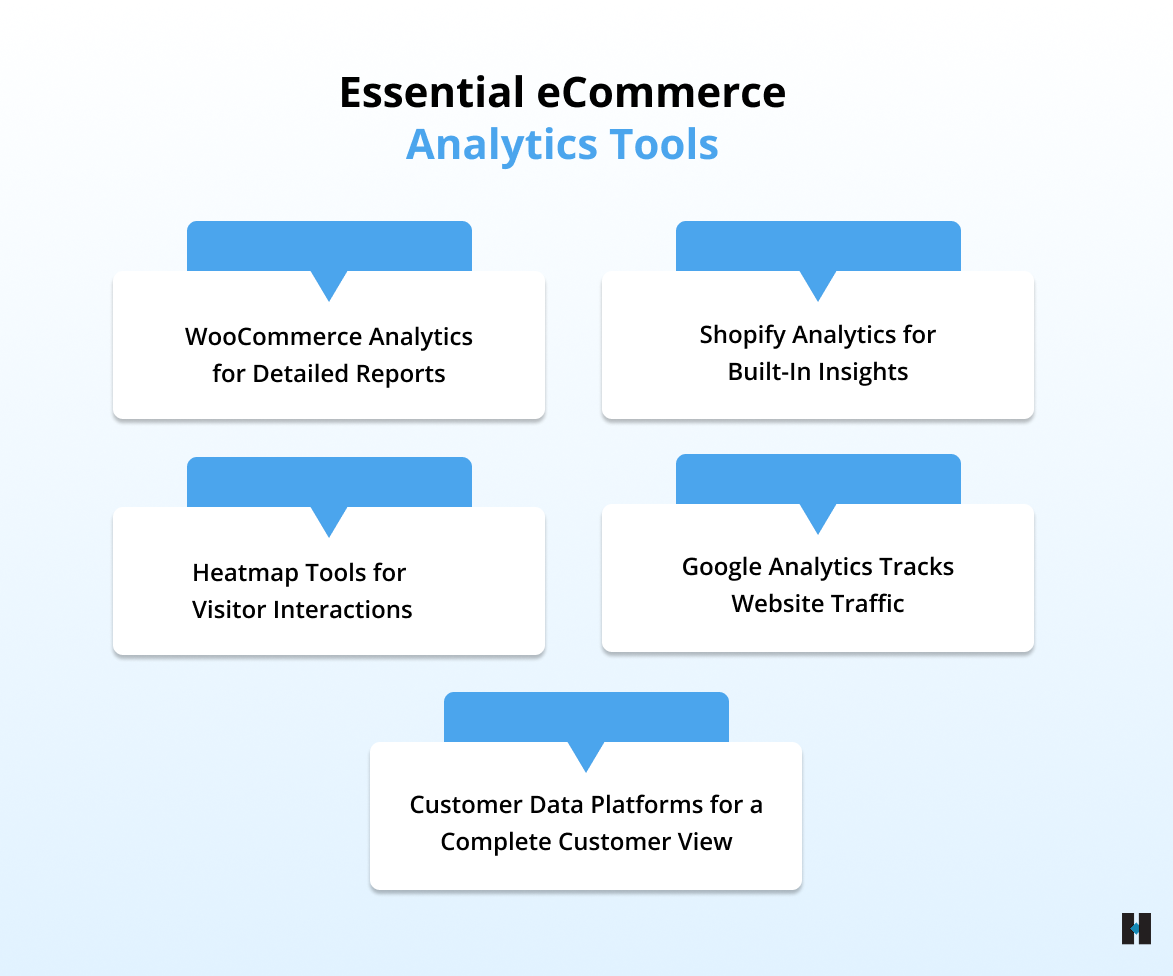
Choosing the right tools is an important part of building an effective eCommerce analytics strategy. Different tools provide different types of insights, helping businesses better understand customer behavior, sales performance, and overall store activity.
- Google Analytics helps track website traffic, visitor behavior, traffic sources, and conversion performance.
- Shopify Analytics provides built-in insights into sales, customer activity, product performance, and store operations for Shopify users.
- WooCommerce Analytics offers detailed reports on orders, revenue, customer trends, and product performance.
- Heatmap and user behavior tools show how visitors interact with your website by tracking clicks, scrolling patterns, and engagement levels.
- Customer data platforms combine information from multiple sources to create a more complete view of customer preferences and purchasing behavior.
Using the right mix of tools can help you build a stronger eCommerce analytics dashboard, make better business decisions, and support long-term eCommerce growth.
How tecHindustan Helps Businesses Use eCommerce Analytics Effectively
Collecting data is only the beginning. The real challenge is understanding that data and turning it into actions that improve business performance. At tecHindustan, we help businesses use eCommerce analytics to uncover opportunities, improve decision-making, and drive sustainable growth.
- Analytics Setup and Tracking
We implement reliable tracking systems that collect accurate data across your website, marketing campaigns, customer interactions, and sales channels.
- Performance Monitoring
Our team continuously tracks key eCommerce performance metrics to identify trends, measure results, and highlight areas for improvement.
- Customer Behavior Analysis
We analyze customer journeys, browsing patterns, and purchasing behavior to uncover valuable insights that help improve user experiences and engagement.
- Conversion Optimization
By identifying obstacles in the buying journey, we help businesses improve conversion rates, reduce cart abandonment, and maximize revenue opportunities.
- Reporting and Growth Insights
We provide clear, actionable reports that help businesses make informed decisions based on real data rather than assumptions.
Whether you are launching a new online store or looking to improve an existing one, tecHindustan helps you build a stronger data-driven eCommerce strategy that supports long-term growth and measurable business results.
The Future of eCommerce Analytics and Data Insights
The future of eCommerce analytics is becoming more intelligent, automated, and focused on helping businesses make faster and more accurate decisions. As technology continues to evolve, artificial intelligence is playing a larger role in analyzing customer behavior, identifying trends, and uncovering growth opportunities that might otherwise be missed.
At the same time, predictive analytics is helping businesses forecast customer demand, anticipate purchasing patterns, and improve planning. Modern analytics platforms are also enabling real-time decision-making, allowing businesses to respond quickly to changing customer preferences and market conditions.
Another major development is personalization. By using customer data more effectively, businesses can create tailored shopping experiences that improve engagement, customer satisfaction, and conversions. From personalized product recommendations to targeted marketing campaigns, data is becoming a key driver of customer experience.
As eCommerce continues to grow and become more competitive, businesses that invest in eCommerce analytics, customer insights, and data-driven strategies today will be better positioned to adapt, compete, and achieve sustainable growth in the future.
Conclusion
eCommerce analytics plays a critical role in helping online stores understand customer behavior, improve conversions, optimize marketing performance, and support long-term business growth. Instead of relying on assumptions, businesses can use real data to make smarter decisions and uncover new opportunities for improvement.
From tracking key eCommerce KPIs and understanding customer journeys to building a complete data-driven eCommerce strategy, analytics provides the insights needed to stay competitive in a rapidly changing digital marketplace.
If you want to improve your online store performance, uncover growth opportunities, and make more informed business decisions through analytics, get in touch with the experienced professionals at tecHindustan. Our team helps businesses implement analytics solutions, analyze customer behavior, optimize conversions, and build data-driven strategies that support sustainable eCommerce growth.
FAQs
