

Amazon is shifting toward AI-powered search, where over 50% of product discovery is now influenced by recommendation systems and personalization, including tools like Amazon Rufus. This means search results are no longer based only on keywords, but also on what users actually mean and intend to find.
Earlier, Amazon SEO was mainly about placing the right keywords in titles, descriptions, and backend fields to improve visibility. This approach worked well for a long time, and many sellers relied on it to drive traffic and sales. However, as user behavior evolves, this method is becoming less reliable.
The main problem is that keywords alone do not fully capture what your customers are actually looking for. When your listing does not clearly match user intent, it creates a gap between visibility and real performance, which directly impacts your conversions.
This is where Amazon Rufus AI is transforming the search experience by focusing more on intent rather than just search terms. To stay competitive, you need to understand this shift and adapt your strategy to improve rankings and overall store performance.
Understanding Amazon Rufus and Its Impact on Product Visibility
Amazon Rufus is an AI-powered system that is reshaping how customers search for and discover products on Amazon. Unlike traditional search methods that focus mainly on matching keywords, Amazon Rufus focuses on understanding the intent and context behind what users are looking for.
This AI system acts as a smart shopping assistant, delivering more personalized and relevant product recommendations. By analyzing user behavior, product details, and search patterns, Amazon Rufus helps shoppers find products that truly meet their needs, not just those with the right keywords.
For sellers, this change has a direct impact on visibility. Simply adding keywords to your listings is no longer enough. Your product descriptions, titles, and content must clearly communicate value, relevance, and usefulness. Listings that align with customer intent are more likely to appear in search results and gain visibility, while those relying solely on keywords may struggle.
Adapting to Amazon Rufus means focusing on quality content, clarity, and user-centric listings to stay competitive in the evolving Amazon marketplace.
How Amazon Rufus Works in Product Search
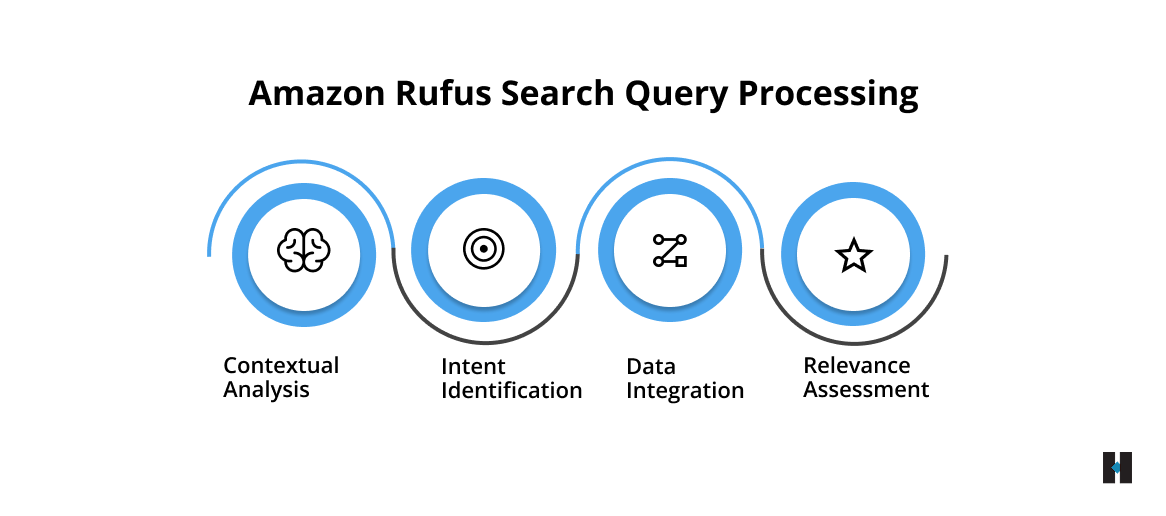
To understand how your rankings are changing, you need to see how Amazon Rufus AI actually processes search queries. Unlike traditional systems, it does not treat a search as a simple keyword match, but instead analyzes it in a more contextual and intent-driven way.When a user searches for a product, Amazon Rufus search looks beyond the words typed and tries to understand what the user really wants. It combines multiple data points to deliver more relevant and helpful results.To show the most relevant products, Amazon Rufus considers:
- User intent behind the search, not just the keywords used
- Past browsing and purchase behavior to personalize results
- Product relevance based on descriptions, features, and use cases
- Customer reviews and feedback to understand real product value
Because of this, Amazon AI search results are no longer just a list of keyword-matched products. Instead, users are guided toward options that best fit their needs.For you, this means your listings must clearly communicate value, relevance, and usefulness, so the system can confidently recommend your product to the right audience.
How Amazon Search Is Moving from Keywords to User Intent
Amazon is changing how products are discovered, and this directly affects how your listings perform. With the rise of Amazon Rufus, search is no longer just about matching keywords, but about understanding what your customers actually need.
Why Rankings Are Becoming Less Predictable
A major shift in Amazon search is that rankings are no longer driven only by keywords. With the introduction of Amazon Rufus search, the system focuses more on user intent instead of just the words used in a query.
Earlier, you could rank your product by placing the right keywords in titles and descriptions. While this approach worked in the past, it is now less effective with Amazon Rufus SEO. If your listing does not clearly match what the user is looking for, it may not appear in relevant results.
What This Means for Your Product Visibility
With Amazon Rufus AI, the system analyzes the purpose behind a search and prioritizes products that provide clear and helpful information.
This means you need to focus on explaining your product in a way that solves real customer needs. When your listing aligns with intent instead of just keywords, your visibility and conversions improve.
How Amazon Rufus Affects Product Rankings on Amazon
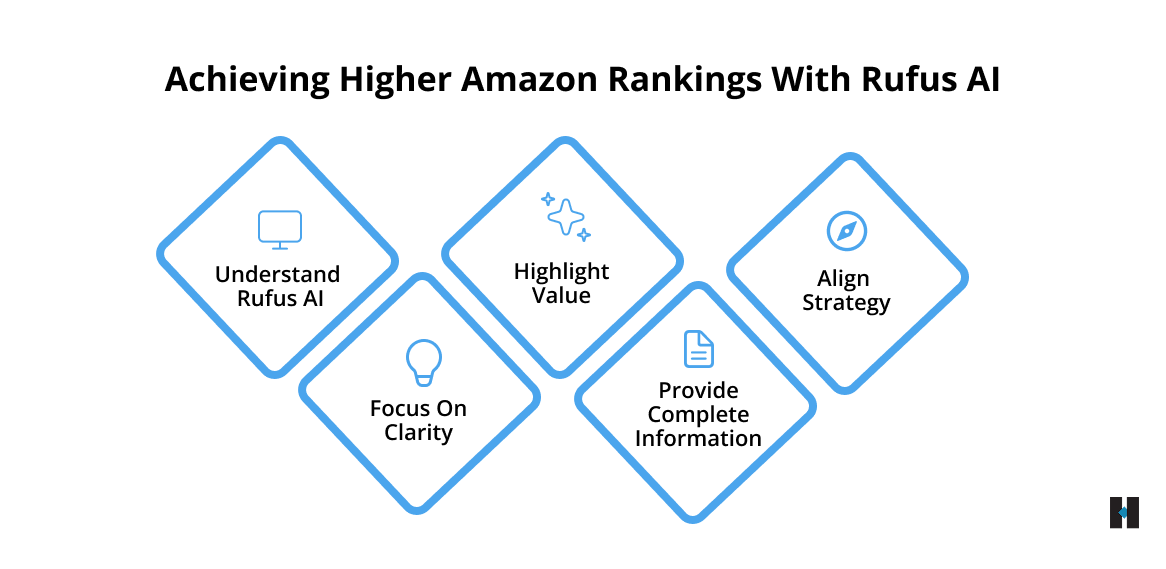
Amazon rankings are no longer controlled mainly by keywords, and this shift is already impacting how your products appear in search results. With the rise of Amazon Rufus AI, the system now focuses more on understanding user intent, which means your old optimization methods may not deliver the same results.
What Has Changed in Ranking Factors
Keywords still play a role in Amazon Rufus search, but they are no longer the main factor deciding visibility. The system now evaluates how well your product matches what the user is actually looking for. Listings that clearly explain the product and its value are more likely to perform better in Amazon AI search results, as they align more closely with user expectations.
What Amazon Rufus Focuses On
Amazon Rufus looks at how clearly your product is described and how relevant it is to a user’s search. It also considers whether your content helps users make decisions easily. When your listing provides useful and complete information, it improves the overall experience, which increases your chances of being recommended.
What This Means for Your Listings
The Amazon Rufus ranking impact is directly linked to content quality and clarity. Listings that address real customer needs are more likely to gain visibility. On the other hand, products with unclear or incomplete information may lose rankings, even if they are optimized with keywords. To stay competitive, you need to align your strategy with how Amazon Rufus SEO now works.
If you are finding it difficult to adapt to these changes or are not seeing improvement in your rankings, you can get in touch with the experts at tecHindustan, and they will help you refine your listings, improve content clarity, and build a strategy that aligns with Amazon Rufus to improve your visibility and performance.
How Ranking Signals Work in Amazon Rufus Search
Amazon rankings are now influenced more by user intent than just keywords, which means you need to focus on what actually helps your product get discovered. With the shift toward Amazon Rufus AI, understanding these key factors can help you improve visibility and performance.
- Content clarity plays a major role in Amazon Rufus SEO, so your listing should clearly explain what your product is, how it works, and why it is useful.
- Relevance is essential in Amazon Rufus search, which means your product must match what the user is actually looking for.
- Detailed descriptions improve your chances in Amazon AI search results because they help the system better understand your product.
- Customer reviews and ratings influence Amazon product ranking factors, as they reflect real user experience and trust.
When you focus on these elements, your listings become more aligned with how the system works, making it easier for your product to rank and perform better.
Common Challenges in Amazon Rufus Search Optimization
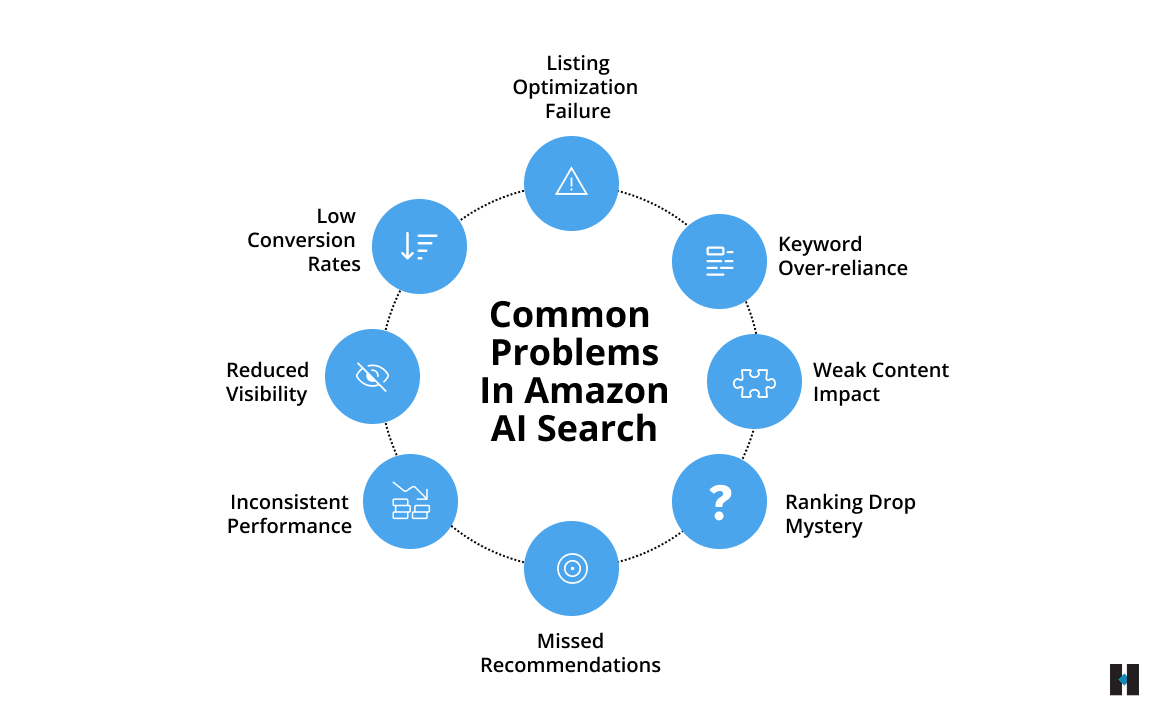
As Amazon continues to shift toward AI-driven search, many sellers are already facing new challenges in maintaining their rankings and conversions. With the growing influence of Amazon Rufus AI, your existing strategies may not deliver the same results as before.
- One common issue in Amazon Rufus search is that well-optimized listings no longer perform as expected, even when keywords are placed correctly.
- You may notice traffic coming to your product, but conversions remain low because the listing does not clearly match user intent.
- Another challenge is reduced visibility in Amazon AI search results, where your product may not appear if it is not aligned with what users actually need.
- Inconsistent performance makes it harder to understand what is working, which affects your overall Amazon Rufus ranking impact.
- Products may not appear in AI-driven recommendations, even if they rank for certain keywords.
- It becomes difficult to identify why rankings drop, as traditional metrics do not give complete clarity.
- Listings with weak or unclear content may lose trust signals, which impacts visibility and conversions.
- Over-reliance on keywords can lead to content that feels unnatural and less helpful to users.
These problems show that traditional methods are no longer enough. To improve performance, you need to focus on clarity, relevance, and user intent, which are now essential in Amazon Rufus SEO.
How to Improve Rankings with Amazon Rufus
Did you know that Amazon now uses AI-driven systems like Amazon Rufus to better understand what buyers are looking for? This means traditional keyword-focused strategies are no longer enough to boost your product rankings. To stay competitive, you need to optimize your listings with the user’s intent in mind and focus on the elements that truly influence visibility.
- Improve content quality: Write descriptions that clearly explain what your product is, how it works, and why it is useful. Avoid stuffing keywords; instead, focus on clarity and helpful information.
- Use natural language: Make your content easy to read and conversational. This helps Amazon Rufus SEO understand your product and match it with user intent.
- Provide real value: Ensure your listing answers common questions and helps users make confident purchasing decisions. A listing that genuinely solves problems will perform better.
- Leverage customer reviews: Encourage positive and detailed reviews. These not only build trust but also signal quality and relevance to Amazon Rufus search, boosting your visibility.
- Highlight key benefits: Clearly show what makes your product stand out. Focus on features that matter most to buyers and align with their needs.
By following these steps, you can make your listings more relevant, improve rankings, and get better results from Amazon Rufus SEO. The focus is no longer just on keywords; it is about creating listings that connect with users and deliver real value.
If you are still struggling with inconsistent rankings or not seeing the expected results from your listings, you can connect with the experts at tecHindustan. They will help you optimize your product content, align it with user intent, and build a strategy that improves your visibility and overall performance on Amazon.
Strategic Approach for Long-Term Success in Amazon Rufus
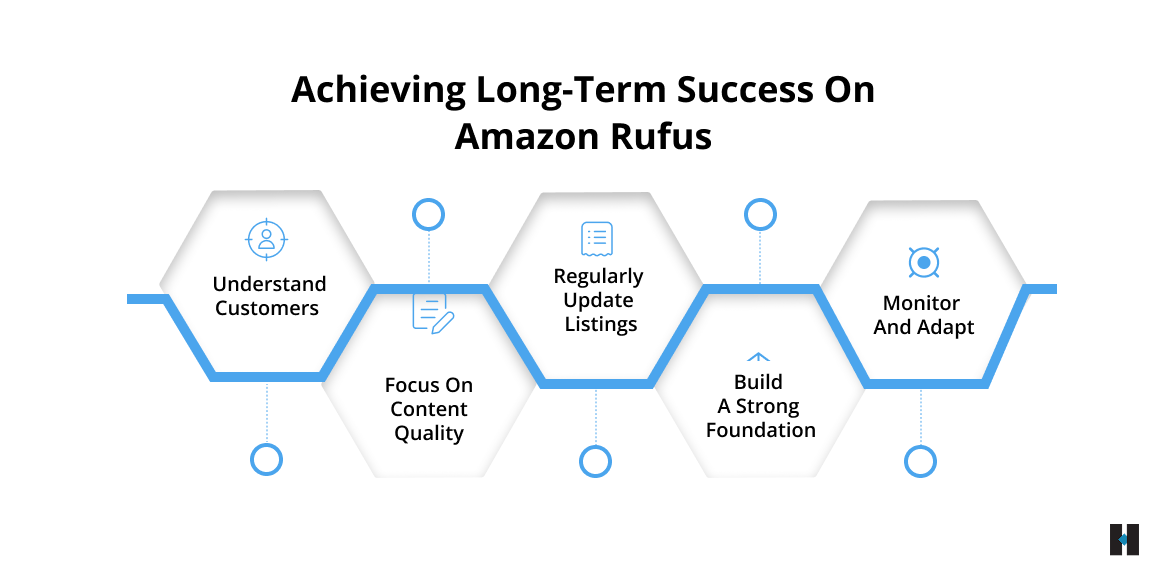
Adapting to Amazon Rufus is not a one-time effort. To achieve long-term success, you need a structured and continuous strategy that focuses on customer needs, content quality, and performance improvements.
- Understand Your Customers
Take the time to learn what your target audience is actually searching for and why. Analyze customer behavior, search queries, and reviews. This insight helps you create product listings that address real user needs, increasing relevance and engagement.
- Focus on Content Quality
Ensure your product descriptions, titles, and bullet points are clear, detailed, and user-friendly. Highlight features, benefits, and practical applications. Quality content builds trust and improves your chances of ranking higher under Amazon Rufus.
- Regularly Update Listings
Monitor performance data and make small, consistent updates. Adjust product information, images, and descriptions based on what works and what doesn’t. Continuous optimization keeps your listings aligned with evolving user intent and search trends.
- Build a Strong Foundation
Avoid shortcuts like keyword stuffing or misleading claims. Focus on clarity, relevance, and authenticity. Well-structured and honest listings create trust with buyers and with Amazon’s ranking system.
- Monitor and Adapt
Keep an eye on changes in Amazon search algorithms and user behavior. Stay flexible and be ready to refine your strategy as needed. By following this approach, you can achieve sustainable growth, maintain visibility, and remain competitive in the Amazon Rufus era.
Future of Amazon Search with AI
AI is rapidly transforming ecommerce, and Amazon Rufus is at the forefront of making search more personalized and intuitive. In the coming years, product discovery will focus less on exact keywords and more on understanding user intent and behavior.
This shift means sellers must remain flexible and adapt their strategies quickly. By creating high-quality, informative listings that address customer needs, you can improve visibility and increase conversions.
Early adopters who align their Amazon SEO strategies with AI-driven search will gain a competitive advantage. Continuous learning, testing, and refinement of your listings will be key to staying ahead in this evolving Amazon search landscape.
Conclusion
Amazon Rufus represents a major shift in how products are discovered and ranked on Amazon. It moves beyond traditional keyword-based strategies and focuses on understanding user intent.
This change may create challenges, but it also provides an opportunity to improve how you present your products. By focusing on clarity, relevance, and user experience, you can adapt to this new system and improve your performance.
If you want to better understand how to optimize your listings and align them with the latest changes, you can connect with the expert team at tecHindustan. They can help you refine your strategy, improve your content, and ensure your store is ready for the future of Amazon search.
FAQs
