

When someone lands on your website, they’re not thinking about how it’s built. They are there to find something: a product, a story, or a solution. And they expect it to work without any friction, delays, or confusion. Just a smooth, responsive experience.
Behind that simple expectation, there’s a quiet choice your website makes: should it load everything instantly, or reveal content only when it’s needed?
That’s where lazy loading and instant loading come in. Two different approaches to the same goal of creating a faster, better experience.
But the real question here is: what feels better for users? And what actually drives more conversions?
To understand it better, read through this blog, and it will help you understand both by showing how they work, where they fit best, and what they feel like in real-life situations.
What Lazy Loading Means and Why It’s Common
Many people confuse lazy loading with a slow site. But lazy loading isn’t about delay; it’s about smartly deciding what loads when. It means the site only loads essential content upfront, and holds back the rest until you scroll or interact on the website.
It’s a common approach in modern web design, mainly because it helps speed things up, especially on mobile or slower networks. And the best part is that users usually don’t even notice it. Everything just feels like it’s loading smoothly, in the right order.
But when it’s not done well, things can get clunky. Content might appear too late, or not at all. And that can throw users off, especially when they’re trying to get to something quickly.
So while lazy loading can improve speed and flow, it only works when the experience still feels natural, not like something’s missing.
How Lazy Loading Supports Conversions
If you have seen lazy loading as just a technical fix to speed up your website, then there’s more to it. It can entirely shape how users move through your page, and that can affect what they do next.
Here’s how lazy loading can help you with conversions:
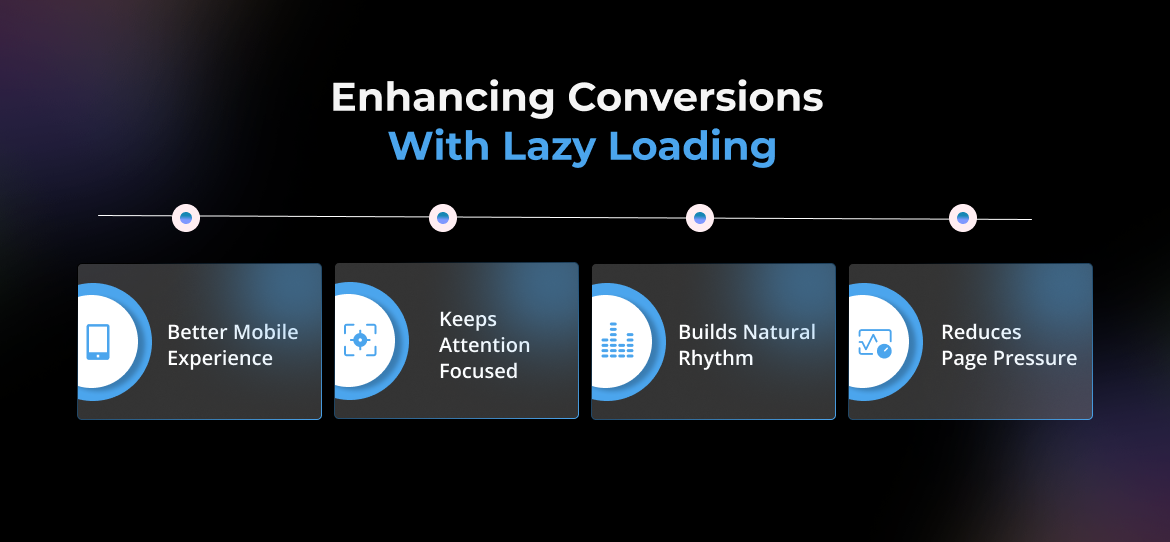
- Keeps attention where it matters most
Lazy loading helps by loading only what’s needed at the moment, which allows the user to stay focused. No distractions or jumpy page experience. Just a smoother flow that supports action.
- Reduces the pressure of a heavy page
It reduces the pressure of a heavy page as fewer elements are loading all at once, and the journey feels lighter. That means users can move through the page more comfortably and stay longer.
- Builds a natural rhythm
As content loads with scrolling, it becomes easier to absorb. There’s space to pause, scroll, and decide, instead of rushing or skipping past.
- Better mobile experience
Lazy loading comes with a better mobile experience, especially on slower networks. It can prevent friction that might otherwise push users away too soon.
When you use lazy loading with care, it not only helps with page speed but also shapes a more thoughtful path toward conversion.
Lazy Loading Isn’t Always Smooth; Here’s Why
Have you thought of lazy loading as a great choice when it comes to reducing initial page load time?
Well, it is true, but it also comes with its own limitations. They can affect how your site is performing, its ranking, or even how someone feels when they visit the website.
Here are a few situations that can help you get a better idea of where lazy loading can fall short:
- When critical content loads too late
When you are loading something important, like the main message or a key image, that only shows up after scrolling, the impact is lost.
- When search engines can’t read it
Lazy-loaded content might not get indexed properly if the setup isn’t done right. That means lost opportunities for ranking.
- When it breaks the user experience
It can break the user experience with jumpiness, flickers, or layout shifts during scroll, which can interrupt the flow and frustrate users.
- When devices don’t support it well
One of its limitations is that not all devices support lazy loading. Older browsers or limited devices may simply fail to load certain parts altogether.
If you’re struggling with slow page speed or low conversions, tecHindustan will help you fix what’s blocking growth. With a well-trained team and deep experience, we make websites feel smoother and perform stronger.
What Instant Loading Looks Like and When It’s Used
Instant loading means everything shows up the moment the page opens. No waiting or scroll triggers. It’s all there, ready from the start. And that’s the biggest difference from lazy loading, where things show up only when needed.
This works well when you want the user to see the full picture without any extra effort. Like on a landing page, a product page, or anywhere you want to make an immediate, no-friction impression. It feels sharp, clean, and fast, and that can leave a good mark.
But it’s not always perfect. When everything loads at once, especially on heavier pages, it can slow things down, especially on mobile networks. And if not handled well, it can feel a bit overwhelming. Like too much noise, all at once.
So while instant loading can work beautifully, it needs care. When done right, it helps people see what matters, without having to look for it.
How Instant Loading Improves the User Journey
Think of the moment when someone clicks on your product page and nothing happens for a second or two. That’s exactly where most visitors drop off. It’s not because your product isn’t good enough; it’s because they didn’t even get the chance to see it.
Here are some examples that can help you understand why and how instant loading can improve the user journey:
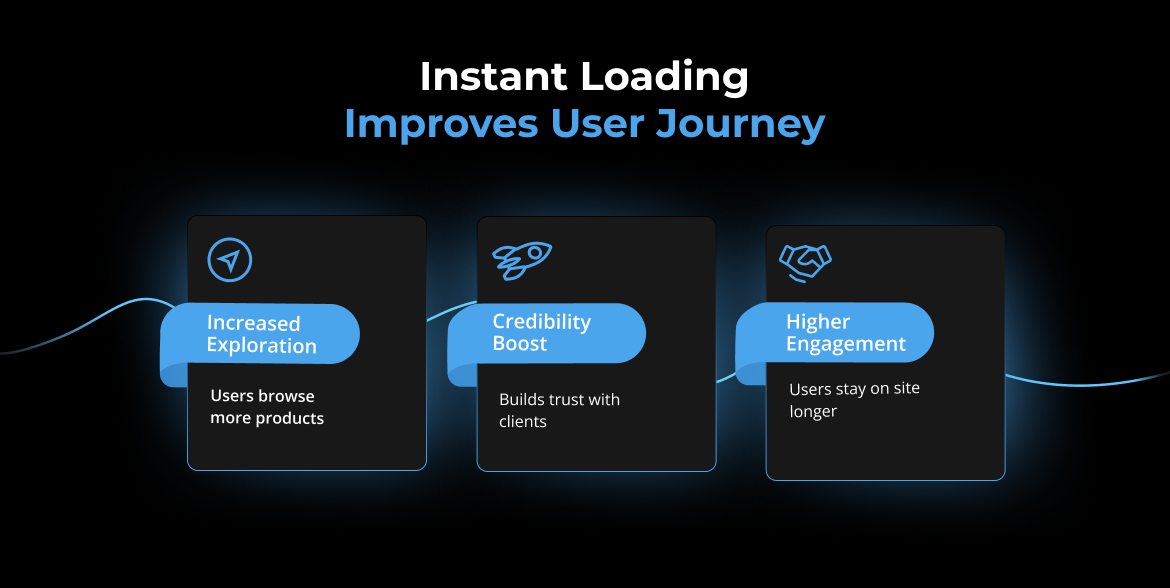
- If you have a skincare-based website, imagine this: a user visits your site and browses through your skincare products. They click on something they like, but the page is taking longer to load. In that tiny delay, they’ve already lost the connection, they close the tab, and move on. But if the product loads instantly, they’re more likely to explore, add to cart, and even complete the purchase.
- For someone running a service-based business offering custom design solutions, a potential client visits your portfolio. If your work images or case studies don’t load instantly, they won’t wait. They’ll just assume you’re not serious about what you do. But when your work appears instantly, it builds credibility and keeps them interested.
- Even for something as simple as a blog post site, if someone lands on a guide titled “How to Get Better Sleep” and the first scroll brings up a blank space instead of content, they’ll bounce. Instant loading delivers the value upfront, making people stay longer and engage more.
When everything loads instantly, it doesn’t just look good. It makes people stay. It makes them feel you’re trustworthy, professional, and ready, and that’s where conversions begin. Instant loading smooths the path from curiosity to action.
How We Helped a Furniture Brand Fix Its Slow Website (Real Results)
When you’re selling something as personal and visual as custom-made furniture, it’s even more important for your website to have a polished and thoughtful design.
But when the products take forever to show up, visitors lose patience even before they can see the unique pieces you’ve worked so hard to create.
That’s exactly what happened with one of our clients. Their custom furniture website had too many things unorganized and too many heavy elements loading all at once, making it painfully slow to open key pages.
- The Struggles They Were Facing
This brand offered made-to-order furniture for every space, from offices and bedrooms to patios and lounges. But their website didn’t reflect that quality. Each category had dozens of products, and both category pages and individual listings were taking far too long to load. The slow experience was pushing people away before they even got to explore what the brand had to offer.
- What We Did to Help
We started with a full performance audit to understand what was slowing things down. Uncompressed images, unnecessary scripts, too many plugins, and no proper loading structure, everything added up. We cleaned up the code, optimized all media, and implemented lazy loading. This allowed pages to load in layers, showing the most important parts first and reducing the overall wait time.
- The Results That Followed
The website’s speed improved drastically, especially for category and product pages. People could now browse effortlessly, explore more options, and actually get to the point of making a decision. More time spent on site, more interactions, and ultimately, more conversions, all from fixing what wasn’t letting the site breathe.
When a Slower Experience Adds More Value
Have you ever thought of slow page speed as something more than just a drawback, maybe even a better experience? Because sometimes, a touch of slowness can help create a stronger emotional connection.
For example, take a storytelling landing page for a luxury brand. Or a guided design walkthrough for something custom-made. In these cases, giving space between each interaction lets people breathe, it helps them absorb the story, admire the visuals, and connect more deeply with what the brand stands for.
This kind of slow works beautifully for lookbooks, inspiration galleries, or detailed feature explainers, where every scroll is a gentle invitation to explore, not a rush to the finish line.
And this only works where the slowness is intentional, beautifully designed, and supported by smooth transitions or engaging visuals.
So yes, faster websites are often better. But when you’re trying to create a moment, build trust, or tell a rich visual story, a slower experience can sometimes be the thing that actually sets you apart.
Choosing the Right Approach for Your Website
To be honest, having a good website speed is important, but so is the right kind of experience. It really matters when you’re offering the right value and how the visitors are interacting with your site.
Here’s how you can think about it:
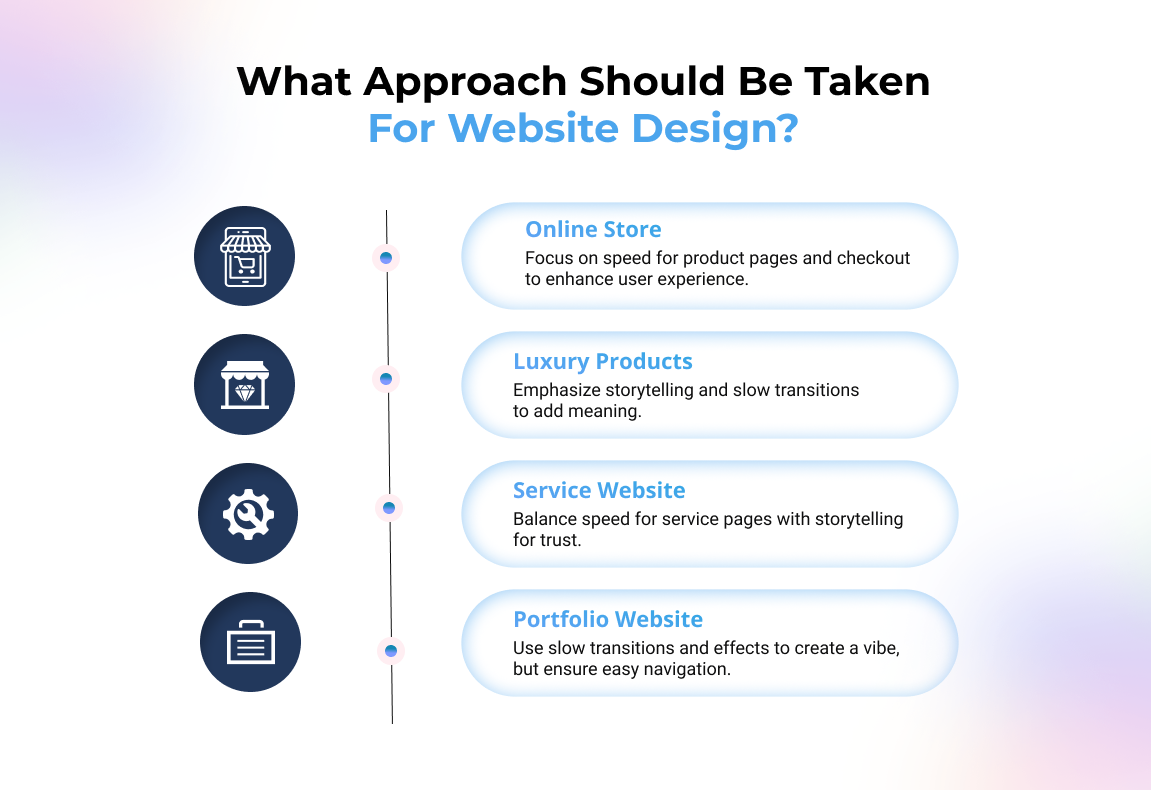
- When you are selling products online
When you are selling your products online, it is important to speed up the product pages, filters, add-to-cart, and checkout. These are decision moments; no one wants to wait when they’re ready to buy.
- Website for luxury or custom-made products
If you are running a website for luxury or custom-made products, you must go slow, as it adds meaning. Let the pages tell a story, guide users through the design, and give them time to take it in. But make sure the quote form or booking buttons still load fast.
- When you have a service or consulting site
You must keep the service and pricing pages quick, but let your story pages (like About or Process) breathe a bit. That’s where people decide if they trust you.
- When you have a portfolio or a creative showcase website
This is your chance to create a vibe. Slow transitions and scroll effects can work well here. But make sure not to make the user work too hard to navigate or view your work.
At the end of the day, it’s not always about making every page fast. It’s about knowing what your visitors are looking for and giving them the kind of experience that feels right in that moment. It’s not just speed, but the flow.
Final Thoughts on What Really Drives Conversions
Are you still wondering how page speed impacts conversions? Then this quick summary will help you understand what actually matters.
Conversions don’t fall through just because your site is slow everywhere; they fall through when it’s slow where it shouldn’t be. If someone clicks to buy or check pricing and hits a loading screen, that pause can cost you the sale. That’s where instant loading wins, in high-intent moments like product views, add-to-cart, filters, checkouts, and sign-up forms.
But when your site is meant to guide, inspire, or tell a story, like in portfolios, custom design walkthroughs, or service journeys, lazy loading gives breathing room. It helps pages feel lighter, more intentional, and keeps things flowing without overloading all at once.
So no, it’s not about making everything load instantly. It’s about knowing where speed matters and where experience matters more. That’s what actually drives conversions.
If you’re not sure whether lazy loading or instant loading is right for your website, tecHindustan is here to help you figure it out. We take a deeper look at how your users interact with your site and what really supports conversions. Whether you need speed, storytelling, or a smart balance of both, we’ll help you make it work.
FAQs
