

Running a Shopify store in 2026 is not just about uploading products, choosing a theme, and waiting for sales. The competition is much stronger now. More brands are selling online, product discovery is happening across Google, AI search, shopping feeds, social platforms, and marketplaces, and customers expect stores to be fast, trustworthy, and easy to use.
Global ecommerce sales are expected to reach $6.88 trillion in 2026, making up 21.1% of total retail sales worldwide. That means the opportunity is big, but so is the competition. More online stores are fighting for the same search visibility, product clicks, and customer attention.
Search behavior is also changing. Adobe reported that traffic from AI sources to U.S. retail websites grew 393% year over year in the first quarter of 2026. This shows that shoppers are not only using traditional Google searches anymore. They are also using AI tools to compare products, research brands, and make purchase decisions.
For Shopify merchants, this creates a simple but important message: SEO has to be stronger than before. Your store needs clean technical SEO, optimized product pages, fast loading speed, structured data, accurate product information, good images, internal links, and a smooth shopping experience.
Google’s own guidance also supports this direction. Google says the same foundational SEO best practices apply to AI features, including making pages technically accessible, following Search policies, and creating helpful, reliable, people-first content.
That is where Shopify SEO apps can help.
A good SEO app can save time, fix common issues, improve metadata, compress images, add structured data, detect broken links, and support better store performance. But the key is choosing the right app. Installing too many apps can slow down your store, create duplicate schema, or cause technical conflicts.
So, instead of adding every SEO app you find, choose based on what your store actually needs.
Below are 10 useful Shopify SEO apps that are still relevant for 2026.
1. Tiny SEO Speed Image Optimizer
| Best for: image optimization, speed improvements, alt text, metadata, and structured data. |
Tiny SEO Speed Image Optimizer is one of the most practical Shopify SEO apps for stores with many product images. If your store sells fashion, beauty, furniture, accessories, skincare, home products, or anything visual, image performance can directly affect both SEO and conversion.
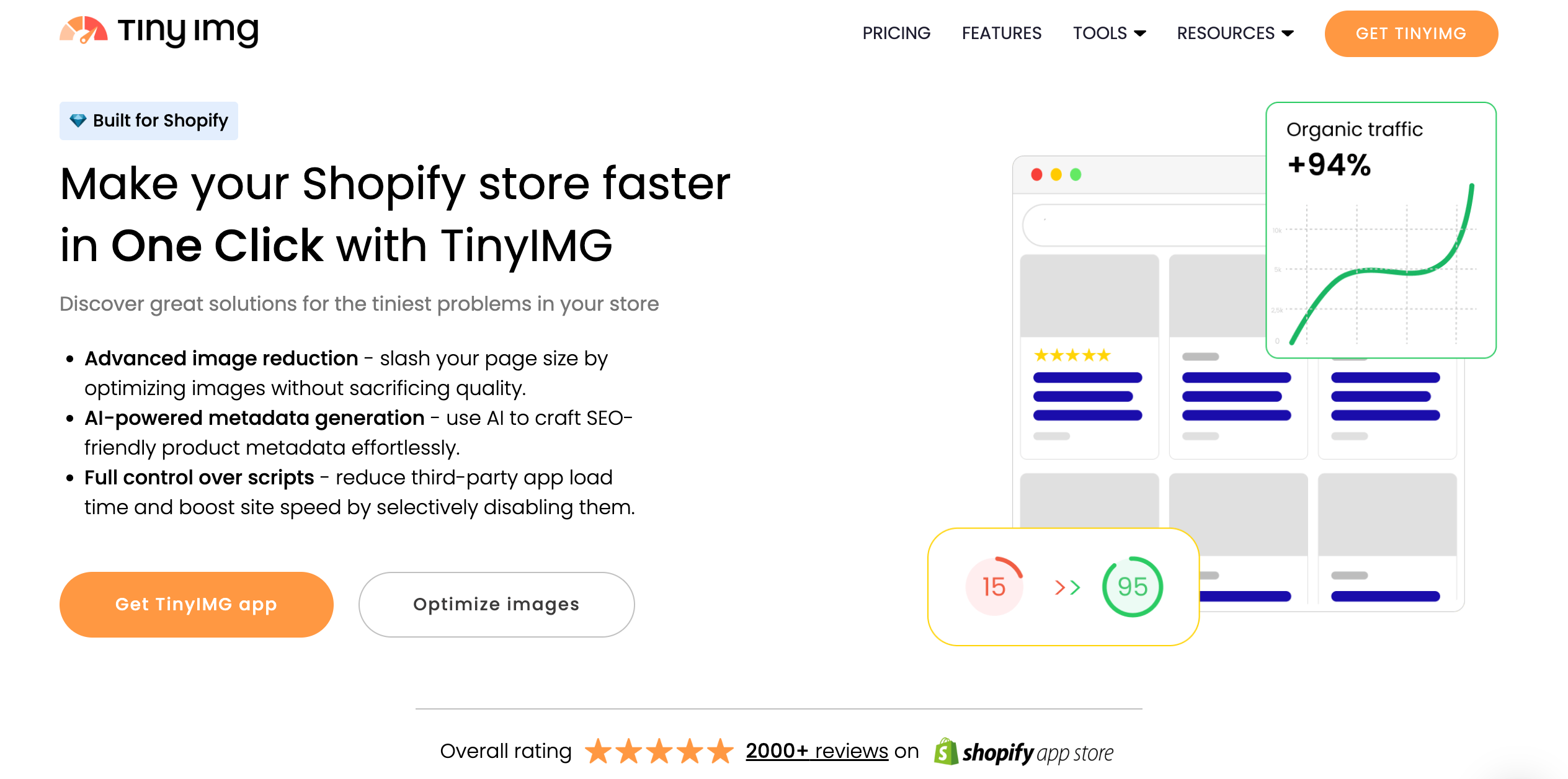
Large product images often slow down Shopify stores. Slow pages can frustrate users, increase bounce rates, and reduce the chance of purchase. Google recommends aiming for good Core Web Vitals, including LCP within 2.5 seconds, INP under 200 milliseconds, and CLS below 0.1.
Tiny SEO Speed Image Optimizer helps with:
- Image compression
- Image resizing
- Alt text optimization
- Filename optimization
- Metadata generation
- Lazy loading
- JSON-LD structured data
- SEO issue detection
- 404 and redirect support
The app listing highlights automatic image optimization, ALT text and filename optimization, metadata generation, lazy loading, and JSON-LD structured data support.
This app is useful because it covers two important areas at once: SEO and performance. Many Shopify stores lose speed because of heavy product images. TinyIMG helps reduce that problem without requiring manual image editing for every product.
2. SearchPie: SEO, Speed & Schema
| Best for: all-in-one SEO, schema, speed monitoring, image compression, and beginner-friendly optimization. |
SearchPie is a strong option for Shopify merchants who want one app to handle several SEO basics in one place. It is useful for store owners who do not have a technical SEO background but still want to improve their store’s organic visibility.

The app listing describes SearchPie as an all-in-one SEO manager that supports SEO, speed, schema markup, JSON-LD, backlinks, sitemap, image compression, 404 monitoring, Google Search Console, and Core Web Vitals monitoring.
That makes it useful for stores that need a broader SEO system, not just image optimization.
SearchPie can help with:
- Meta titles and descriptions
- Image compression
- Schema markup
- JSON-LD
- Sitemap support
- 404 monitoring
- Core Web Vitals tracking
- SEO issue detection
- Google Search Console support
The biggest advantage is that it gives store owners a guided SEO workflow. Instead of guessing what to fix, you can use the app to identify issues and work through them step by step.
This is especially helpful for new Shopify stores where the owner may not know whether the issue is metadata, schema, broken links, speed, or missing alt text.
3. Tapita AI SEO Optimizer, Speed
| Best for: SEO automation, speed optimization, AI-powered metadata, and multilingual SEO support. |
Tapita AI SEO Optimizer, Speed is another useful Shopify app for stores that want a mix of SEO automation and performance improvement. It is especially helpful for merchants who want quick optimizations without manually editing every product, collection, and image.
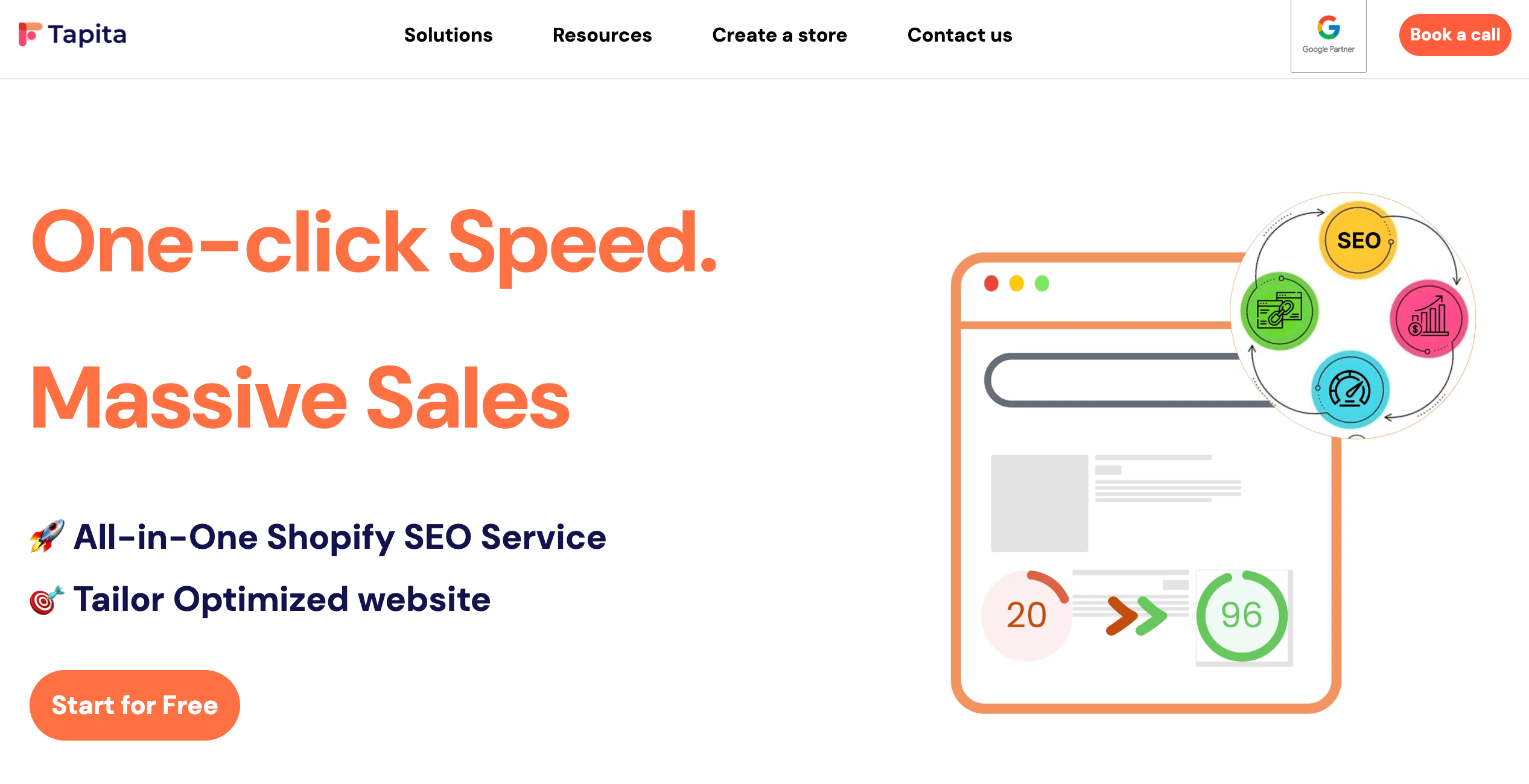
The app listing mentions SEO audits, image optimization, speed enhancements, one-click optimization, and AI-powered meta tags. Merchant feedback also highlights its user-friendly interface and usefulness for non-experts.
Tapita can help with:
- SEO audits
- Meta title and description optimization
- Image SEO
- Speed improvements
- AI-powered metadata
- Bulk editing
- One-click SEO fixes
- Multilingual SEO support
This app fits well for Shopify stores that want to move faster. For example, if you have 500 products and many of them have missing titles, weak descriptions, or poor image alt text, manually fixing everything can take weeks. A tool like Tapita can make the first round of optimization easier.
However, AI-generated metadata should still be reviewed. Do not blindly publish automated titles and descriptions without checking accuracy, tone, and keyword relevance.
4. Sherpas: Smart SEO
| Best for: bulk SEO management, structured data, image optimization, meta tags, and broken link detection. |
Sherpas: Smart SEO is a good choice for Shopify stores with larger catalogs. If you have dozens or hundreds of products, SEO can become repetitive very quickly. Product titles, meta descriptions, alt tags, structured data, and image optimization all take time.
Smart SEO helps reduce that workload.
Its Shopify listing mentions AI-generated product meta tags and alt tags, image and page speed optimization, JSON-LD structured data, broken link detection, and backlink reporting.
Useful features include:
- AI-generated meta tags
- AI-generated alt tags
- Image optimization
- Page speed support
- JSON-LD structured data
- Broken link detection
- Backlink reporting
- Bulk SEO management
This app is particularly useful when a store has grown beyond the early stage. In the beginning, you may be able to manually optimize 20 or 30 products. But when your catalog grows, you need a better system.
Smart SEO works well for ongoing SEO maintenance. It can help you keep metadata clean, detect broken links, and improve structured data without constantly touching the code.
5. Plug in SEO
| Best for: SEO audits, issue detection, keyword guidance, broken links, and beginner-friendly recommendations. |
Plug in SEO is a long-standing Shopify SEO app that focuses on identifying SEO problems and helping merchants fix them. It is useful for store owners who want to understand what is wrong before making changes.
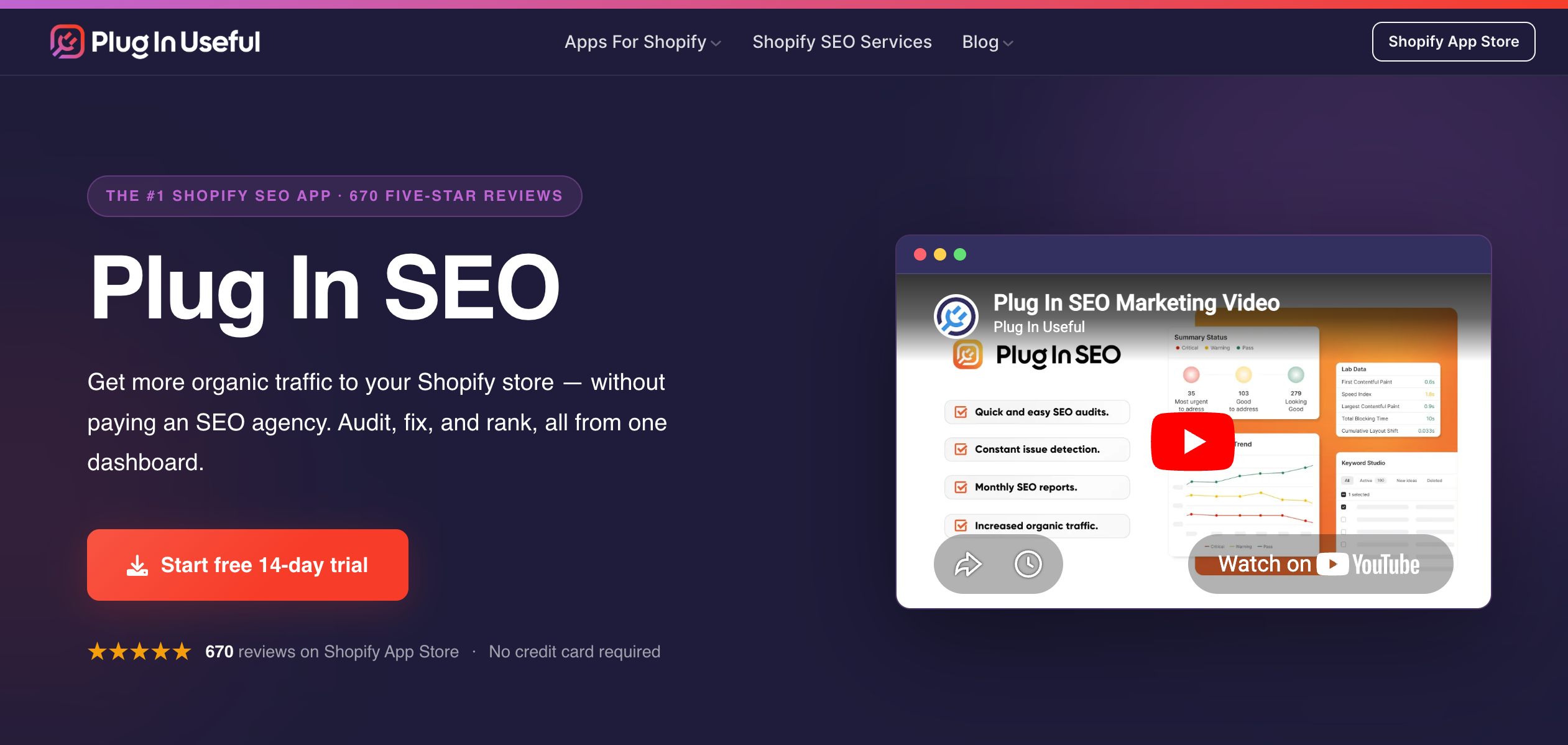
The app listing mentions SEO audits, AI-powered keyword research, issue detection, and one-click broken link fixes.
Plug in SEO can help with:
- SEO audits
- Missing titles
- Missing meta descriptions
- Broken links
- Keyword targeting
- Structured data support
- Content issue detection
- On-page SEO checks
This app is useful because many Shopify merchants do not know where to start. They may hear that SEO is important, but they do not know whether their main issue is duplicate metadata, missing alt text, slow speed, broken links, poor headings, or thin product content.
Plug in SEO gives a clearer starting point.
6. Yoast SEO for Shopify
| Best for: content optimization, metadata, readability, and structured SEO guidance. |
Yoast is well known in the SEO world, especially for WordPress. Its Shopify app brings a similar approach to Shopify merchants by helping them optimize content, metadata, and page structure.
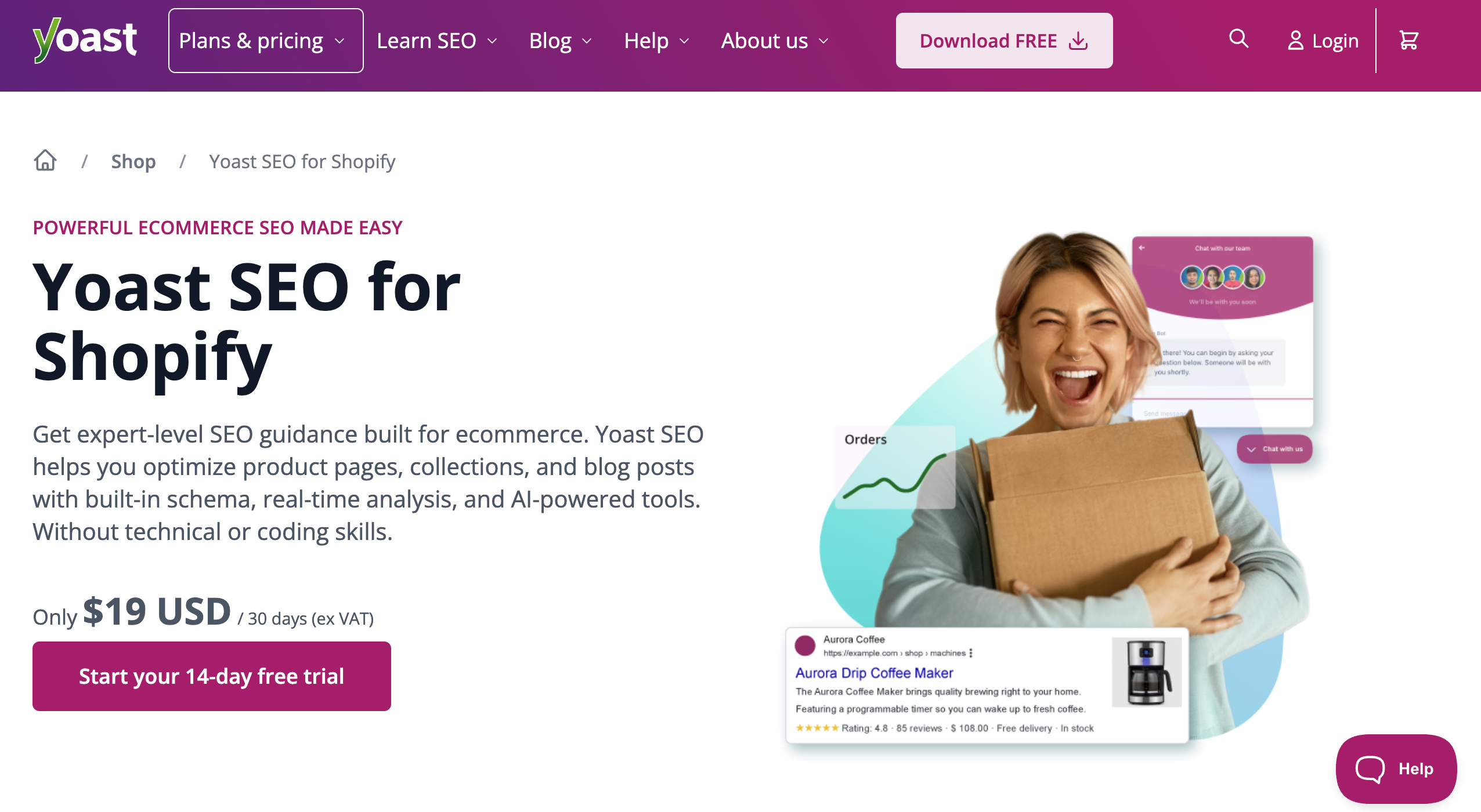
The Shopify App Store listing mentions title and meta description optimization, content structure, AI tools, and a traffic-light system that simplifies page optimization.
Yoast SEO can help with:
- SEO title optimization
- Meta descriptions
- Content readability
- Focus keyphrases
- Page-level SEO checks
- Content structure
- AI-supported SEO tasks
Yoast is especially useful for merchants who publish blog content, guides, educational pages, and detailed collection copy. It gives feedback on how readable and optimized a page is, which can be helpful for teams that create regular content.
For Shopify stores, Yoast is not just about products. It can help improve content quality across blog posts, landing pages, collection descriptions, and informational pages.
7. BOOSTER SEO
| Best for: automated SEO fixes, image compression, broken link detection, and beginner-friendly optimization. |
BOOSTER SEO OPTIMIZER is useful for merchants who want a simple SEO app that can handle common issues automatically. It is designed for store owners who may not want to spend hours manually checking each page.
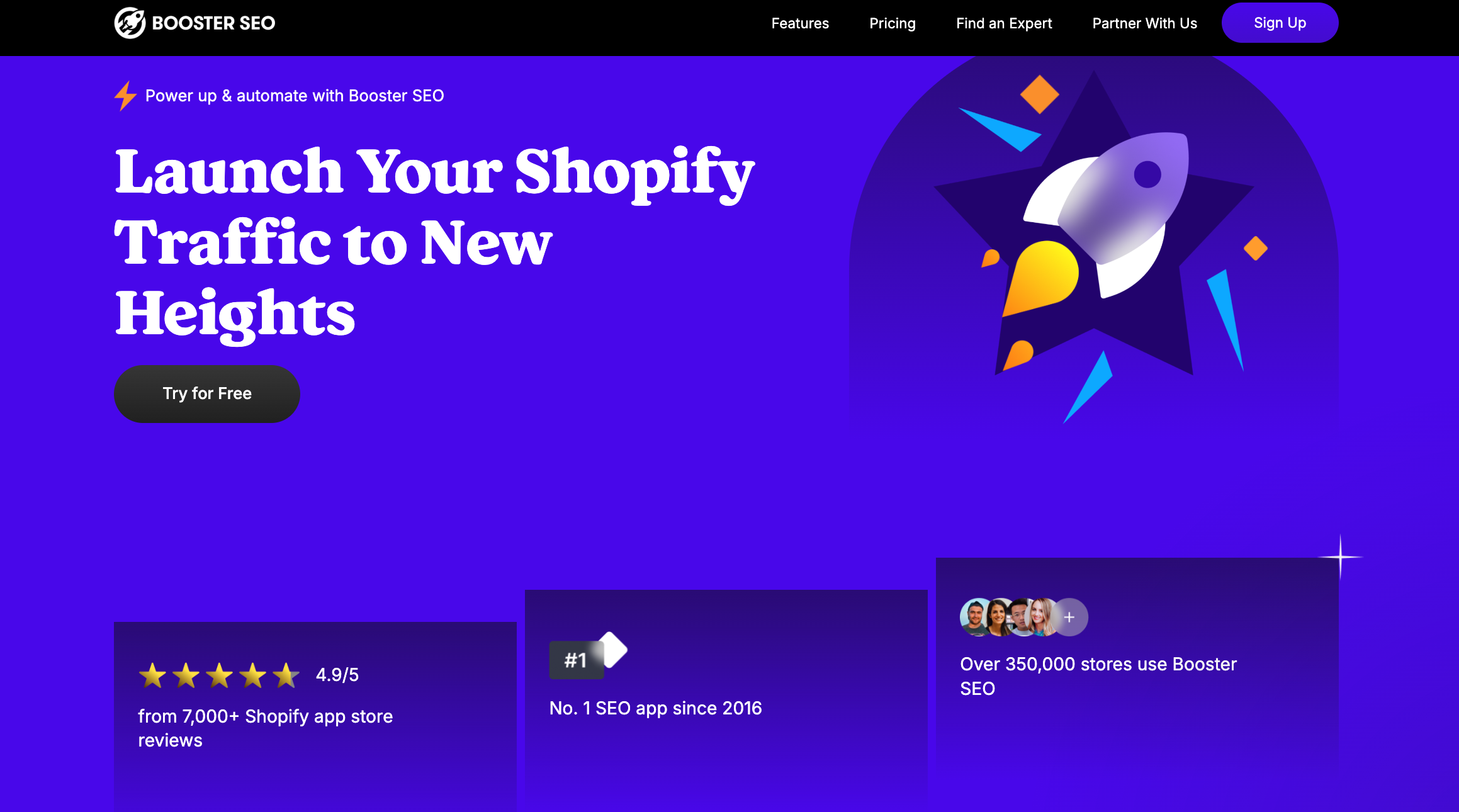
The app listing mentions automatic SEO issue fixes, AI support, image compression, broken link detection, optimized meta tags, and real-time SEO monitoring.
It can help with:
- SEO issue detection
- AI-powered fixes
- Image compression
- Broken link detection
- Meta tag optimization
- SEO monitoring
- Store structure improvements
The main benefit is convenience. If you are a small Shopify merchant or a lean team, you may not have a dedicated SEO person checking the store every week. Booster can help handle basic SEO maintenance in the background.
8. Schema Plus
| Best for: structured data, product schema, rich results, merchant listings, and schema error fixes. |
Schema Plus is not a general SEO app. It is more focused on structured data, which makes it very useful for Shopify stores that want better product understanding in Google Search.
Structured data helps Google understand product details such as price, availability, ratings, shipping, and returns. Google says product structured data can make product information appear in richer ways in Google Search, Google Images, and Google Lens.
Schema Plus focuses on JSON-LD structured data. Its app listing mentions advanced schema for products, reviews, merchant listings, videos, local business, FAQ, organization, collections, pages, and website schema. It also mentions Google Search Console performance reporting.
Schema Plus can help with:
- Product schema
- Review schema
- Merchant listing schema
- FAQ schema
- Video schema
- Organization schema
- Collection schema
- Google Search Console schema errors
- JSON-LD implementation
This is important because Shopify themes do not always handle schema perfectly. Some themes have an incomplete schema. Some apps create duplicate schema. Some review apps add ratings in a way that does not connect cleanly with product markup.
Schema Plus can help clean this up.
9. Hextom
| Best for: bulk image editing, image compression, alt text, resizing, and visual consistency. |
Hextom: Bulk Image Edit & SEO is one of the most useful apps for image-heavy stores. It is not a full SEO suite, but it solves a very real Shopify problem: managing product images at scale.
The app listing describes it as an all-in-one image editing app for SEO optimization, resizing, compression, watermarking, uploading, and backup. It also highlights compressed images for faster loading and improved search performance.
Hextom can help with:
- Bulk image resizing
- Bulk image compression
- Bulk alt text editing
- File renaming
- Format conversion
- Watermarking
- Image backup
- Visual consistency
This is especially useful for fashion, furniture, beauty, jewelry, home decor, and marketplace-style stores where images carry most of the buying decision.
If your product grid looks messy because images have different sizes, backgrounds, or proportions, this app can also improve the visual experience. Better image consistency can make your store look more professional.
10. SC Easy URL Redirects
| Best for: broken links, 404 errors, migrations, URL changes, and redirect management. |
SC Easy URL Redirects is not a traditional SEO app like Yoast or SearchPie, but it is extremely useful for technical SEO. Broken links and 404 errors can hurt user experience and waste traffic, especially after product deletions, collection changes, URL edits, theme rebuilds, or platform migrations.
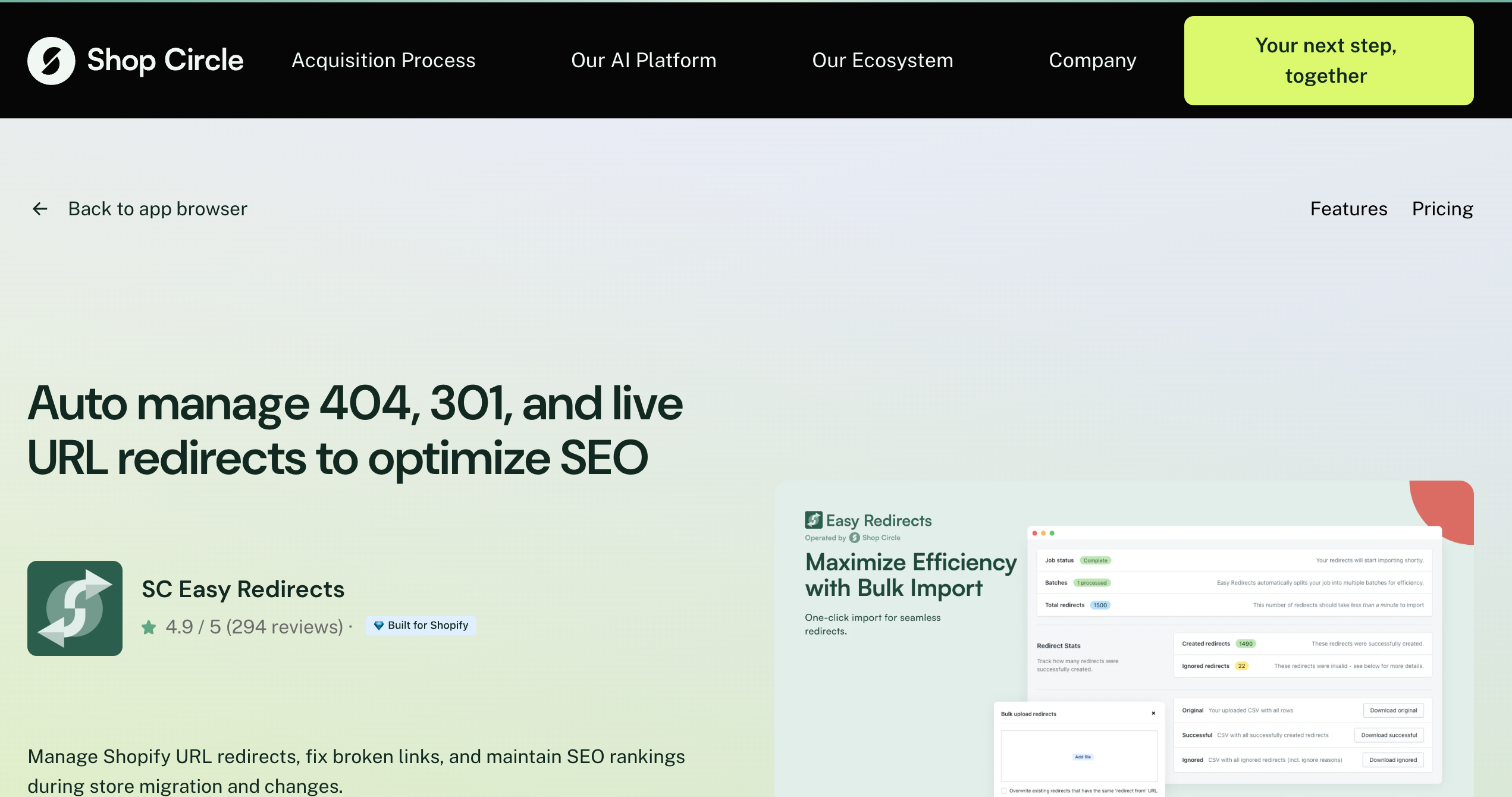
The app listing mentions bulk 301 redirects, 404 error resolution, live redirects, alerts for 404 pages, real-time broken link management, and redirect patterns.
This app can help with:
- 301 redirects
- 404 monitoring
- Bulk redirect uploads
- Migration support
- Broken link fixing
- Redirect pattern rules
- Real-time alerts
Redirects matter because Shopify stores often change. Products go out of stock. Collections are renamed. Seasonal pages are removed. Old campaign URLs disappear. If those URLs had backlinks or search visibility, deleting them without redirects can waste SEO value.
How to Choose the Right Shopify SEO App
The best app depends on your store’s biggest SEO problem. Do not install apps just because they are popular. Install based on need.
Here is a simple way to choose:
| Store Need | Best App Options |
| Image compression and alt text | TinyIMG, Hextom |
| All-in-one SEO support | SearchPie, Tapita, Smart SEO |
| SEO audits and issue detection | Plug in SEO, SearchPie |
| Content optimization | Yoast SEO |
| Product schema and rich results | Schema Plus |
| Broken links and redirects | SC Easy URL Redirects |
| Beginner-friendly automation | Booster SEO, Tapita |
| Large catalog SEO management | Smart SEO, Hextom |
A small Shopify store may only need one all-in-one SEO app. A large store may need one SEO app, one image optimization tool, and one redirect or schema app. The goal is not to install more apps. The goal is to build a cleaner, faster, better-optimized store.
Final Thoughts
The best Shopify SEO apps in 2026 are not the ones with the longest feature lists. They are the ones who solve real problems for your store.
If your pages are slow, focus on image and speed optimization. If your product-rich results are missing, focus on schema. If you have many deleted products or changed URLs, fix redirects. If your metadata is weak, use an app that helps with titles, descriptions, and bulk edits. If your content is thin, use SEO tools to improve its structure, but rewrite it with real customer intent in mind.
For most Shopify stores, the right setup is simple:
- One reliable SEO management app
- One image optimization app if your store is image-heavy
- One schema or redirect app only if your current setup needs it
Do not overload your store with apps. Too many apps can slow down performance and create technical conflicts. Keep your SEO stack clean, useful, and focused.
A Shopify SEO app can help you rank better, but only when it supports a strong foundation: helpful content, crawlable pages, accurate product data, fast performance, structured information, and a shopping experience that makes people feel confident enough to buy.
Need help identifying what is limiting your store’s search visibility? Contact tecHindustan for a detailed Shopify SEO review and a practical strategy focused on rankings, traffic, and conversions.
FAQs
