

Most ecommerce conversations revolve around one thing: acquiring new customers.
Brands invest heavily in Meta ads, hire influencers, try their chances on TikTok, and experiment with new acquisition channels every quarter. It works, but only to a point. Eventually, the cost of acquiring customers rises, advertising becomes less predictable, and profitability goes down.
Ask a profitable brand where their real money comes from, and you will hear a different answer.
Their profit comes from retention.
And retention is where email does the heavy lifting.
When email is done correctly, every dollar spent on acquisition compounds. Customers buy again. They stay loyal. They bring referrals. That is why email is not a support function. Email is the most profitable channel in the business, especially for ecommerce and DTC brands.
Among all email platforms, Klaviyo stands from the rest.
Klaviyo is not an email tool. It is a revenue operating system. It collects customer behavior, analyzes how individuals interact with your store, and converts that data into personalized communication. When used properly, Klaviyo becomes a silent revenue engine that works every minute without manual intervention.
Yet, in many stores, Klaviyo is sitting idle, with only a welcome email and an abandoned cart email running. It is not because Klaviyo lacks capability. It is because brands choose the wrong partner to run it.
This article will help you understand why Klaviyo is so effective, how the right agency uses it to directly influence revenue, and how to choose a Klaviyo partner who thinks like a growth strategist rather than an email sender.
Klaviyo Uses Customer Behavior to Drive Revenue
Most email tools operate on a simple logic. You select a list, write an email, pick a day, and send. This is standard broadcasting. Everyone receives the same thing at the same time. It does not matter where they are in their buying journey.
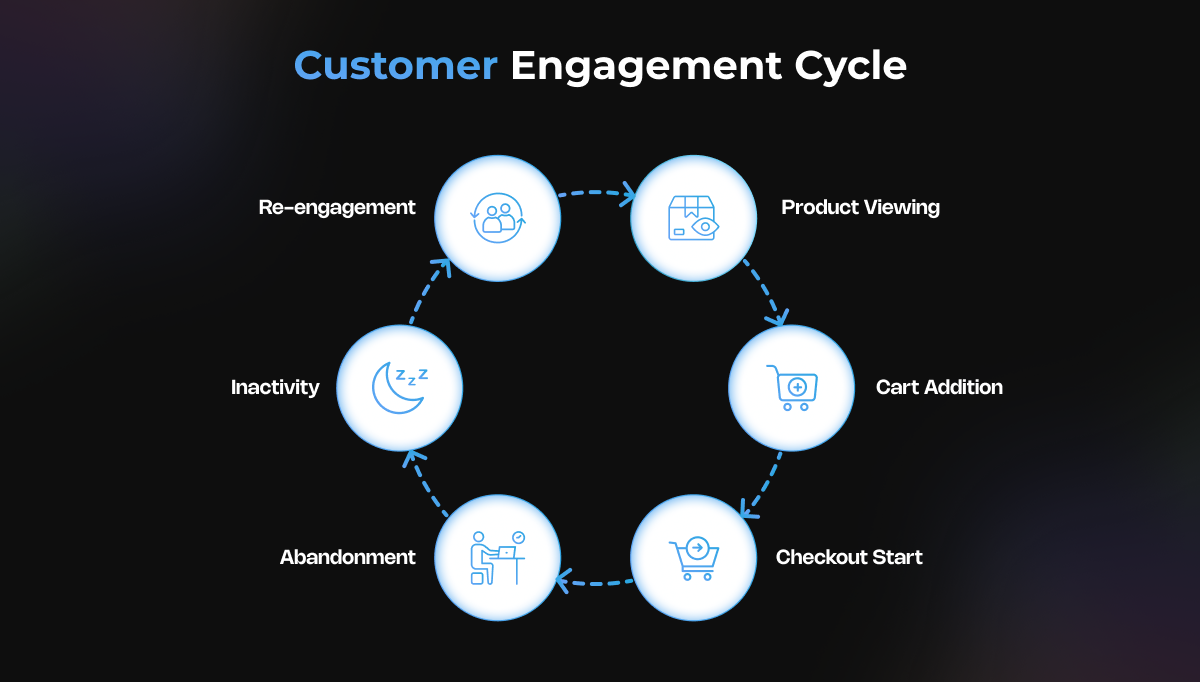
Klaviyo works differently. It tracks individual behavior and triggers communication based on actions.
If a customer:
- views a product multiple times,
- adds something to their cart,
- starts checkout and leaves,
- purchases and then disappears for sixty days,
Klaviyo reacts automatically.
For example, if someone views a product three times over two days but does not add it to cart, Klaviyo can send an email that showcases real customer reviews of that specific product. That message is far more relevant than a generic newsletter.
This matters because email works best when timing aligns with intent. Klaviyo understands intent. And because it tracks individual behavior deeply, it makes email feel personal without manual effort. In practice, this is the difference between sending emails and creating buying opportunities.
Klaviyo Is Powerful Because It Understands the Customer Lifecycle
Klaviyo stores every interaction as first-party data. The system can see patterns and predict what a customer might do next. With the rise of privacy restrictions and the decline of third-party cookies, having first-party data is no longer optional. It is the foundation of digital growth.
Klaviyo gives ecommerce brands an advantage because it uses this data intelligently.
For example:
- It can identify customers with a high likelihood of purchasing again within the next seven days.
- It can recognize subscribers who are losing interest and automatically suppress emails to avoid spam complaints.
- It can detect customers who repeatedly purchase from a specific collection and treat them differently in messaging.
In simpler words, Klaviyo understands commitment levels. It knows the difference between someone who is exploring and someone who is ready to buy. It uses that knowledge to send the right message at the right moment.
Why Most Klaviyo Implementations Fail
If Klaviyo is so powerful, why do so many brands see only average results?
The biggest reason is misunderstanding. Many agencies use Klaviyo the same way they use any basic email platform: as a place to design emails and send weekly promotions. Their mindset is “we need to send an email because it is Friday”. They focus on layout, images, and frequency, but not on how customers behave.
When Klaviyo is used this way, it becomes a broadcast tool. Emails go out, but they do not necessarily create revenue.
The real value of Klaviyo is not in sending campaigns.
The real value is in automated flows.
A campaign is something you plan and manually send. It might bring a one-time revenue boost, similar to running a weekend sale.
A flow is different.
A flow reacts automatically to what a customer does.
If a customer browses a product multiple times, a flow can send an email that highlights benefits or reviews.
If a customer adds an item to the cart but leaves, a flow can remind them or answer hesitation.
If a customer has not purchased in months, a flow can re-engage them with a personalized message.
You do not have to schedule flows.
You set them once, and Klaviyo continues working in the background every day.
This is the difference:
A campaign agency asks:
“What email should we send to everyone this week?”
A lifecycle-focused Klaviyo agency asks:
“What signal did this customer give, and what message would help them move one step closer to buying?”
Campaign-only agencies push messages out.
Lifecycle agencies respond to customer behavior.
That is why flows often generate 40 to 60 percent of all email revenue in a well optimized Klaviyo setup. They reach the customer at the right moment, instead of trying to force attention.
Flows create consistency.
Campaigns create spikes.
Brands that rely only on campaigns experience unpredictable results.
Brands that build flows enjoy steady and repeatable revenue.
What a High Performing Klaviyo Agency Actually Does
A skilled Klaviyo agency sees email as customer psychology, not a task.
They understand that customers go through predictable emotional phases:
- Curiosity
- Comparison
- Decision
- Purchase
- After purchase reassurance
- A second purchase
- Brand loyalty
- Referral or advocacy
Most email strategies only communicate at phase one. They engage when customers are curious but disappear once the purchase is done.
A strong agency maps emails across all eight phases.
When someone subscribes, Klaviyo introduces them to the brand.
When someone browses, Klaviyo sends product education or proof.
When someone abandons their cart, Klaviyo helps resolve hesitation.
After purchase, Klaviyo nurtures confidence and encourages a second purchase.
This is not email marketing.
This is relationship design.
An Example of Lifecycle Email Strategy in Action
Consider the Abandoned Checkout Flow. Almost every brand has one. Most agencies configure a single email that says something like:
You left something in your cart. Complete your purchase.
A high performance Klaviyo partner goes deeper. They explore why the customer did not convert and design a sequence that addresses hesitation at each emotional stage.
A stronger abandoned checkout sequence might look like this:
- Email one:
A reminder that the item is still available
- Purpose:
Capture the customer while the product is still top of mind
- Email two:
A message that answers concerns about shipping, returns, or sizing
- Purpose:
Remove doubts and make the decision easier
- Email three:
A message that includes testimonials or real customer stories
- Purpose:
Replace hesitation with confidence and trust
- Email four:
A message that selectively offers a small incentive if the customer shows lower purchase intent
- Purpose:
Protect margins while improving conversion
This is persuasion.
It is not design.
And this is what separates an email sender from a Klaviyo strategist.
Cost Is Not the Real Question
Many founders compare Klaviyo agencies based on retainers.
One agency may charge five hundred dollars per month and provide attractive emails but no strategy.
Another agency may charge several thousand but improve repeat purchases and increase lifetime value.
The correct question is not:
How much does a Klaviyo agency cost?
The correct question is:
How much revenue are we losing by treating email as a weekly newsletter instead of a retention asset?
Email is the only channel that increases profit without increasing ad spend. If a Klaviyo partner increases retention even slightly, the return is massive.
Why Brands Work With tecHindustan
tecHindustan does not treat email as creative output. We treat email as a revenue practice.
When we take on a Klaviyo engagement, we begin at the source. We analyze patterns in Shopify, GA4, and Klaviyo to understand how customers interact. We look for points where revenue slips away, where customers hesitate, and where small interventions can nudge them forward.
Next, we build flows that match emotional stages.
Flows are written to answer questions and guide decisions, not push promotions.
From there, we continuously optimize. We test subject lines, send times, order of emails, and degree of personalization. Testing is not optional. Testing is the only path to improving conversion.
Most importantly, we measure outcomes in terms of revenue. Not opens. Not clicks. Not design approval.
Revenue.
Our responsibility is not to send more emails.
Our responsibility is to help brands earn more from the customers they already paid to acquire.
The Right Klaviyo Agency Thinks in Relationships, Not Campaigns
If you remember only one point from this article, let it be this:
The best Klaviyo agencies do not focus on sending emails.
They focus on nurturing relationships that produce revenue repeatedly.
Klaviyo is capable of improving:
- Conversions
- Repeat purchases
- Customer lifetime value
- Customer loyalty
But none of this happens automatically. It only happens with a partner who understands customer behavior deeply and uses it to shape email journeys.
When Klaviyo is executed correctly, emails stop feeling like promotions. They feel like assistance, guidance, and dialogue.
That is the moment email starts making money.
Your Revenue Is Not Missing. It Is Hiding.
If your brand is sending emails consistently but the revenue stays flat, the issue is rarely Klaviyo itself. Most of the time, the real problem lies in how the flows are designed and whether they align with how customers actually behave.
If you find yourself:
- sending campaigns regularly but not seeing measurable revenue,
- depending on discounts to drive purchases,
- getting repeat buyers by coincidence rather than intention, then something in the email lifecycle is breaking the momentum.
At tecHindustan, we don’t treat Klaviyo as an email tool. We treat it as a retention and revenue engine.
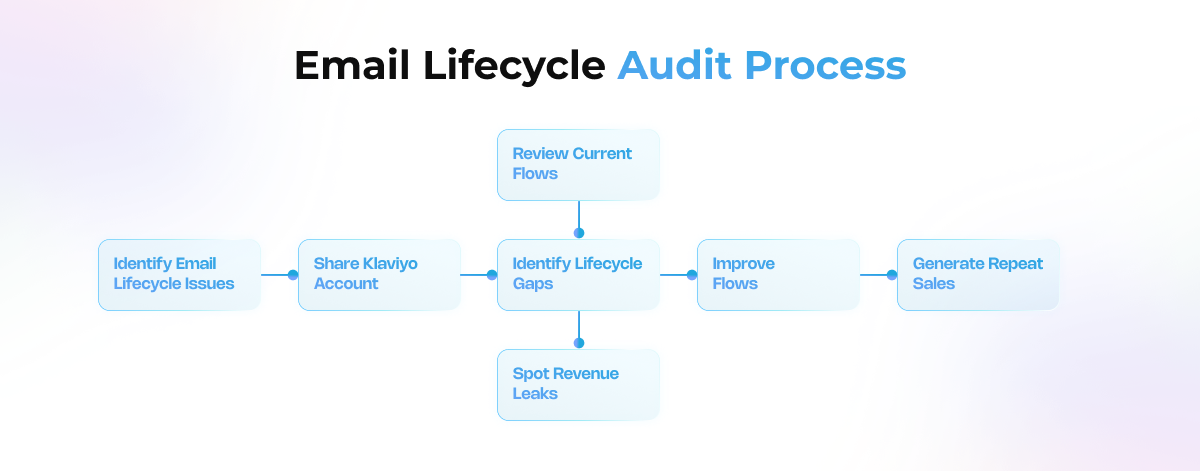
Our Klaviyo audit gives you:
- A clear breakdown of lifecycle gaps
- Flow-by-flow revenue leak identification
- Customer intent vs messaging alignment insights
- Opportunities to increase repeat purchases, LTV, and retention
- A roadmap for flows that make money on autopilot, not by chance
No pressure. No sales follow up. Just answers.
Because sometimes, you do not need to add more tools or run more campaigns.
You simply need clarity on what is blocking revenue.
If you’re ready to stop guessing and start growing, we can help.
Request your Klaviyo Revenue Audit with tecHindustan
(Find the revenue hiding in your email lifecycle, not in your discount budget.)
FAQs
