

Choosing between WooCommerce and Shopify is not just a technology decision. For a DTC brand, these factors directly affect launch speed, customer experience, conversion rate, marketing flexibility, operating costs, SEO control, and the ease of scaling.
Both platforms can run successful DTC stores. Shopify powers many fast-growing ecommerce brands because it offers a managed, ready-to-sell environment with hosting, checkout, payments, themes, apps, and support built into one system. WooCommerce, on the other hand, is built on WordPress and gives brands greater ownership, flexibility, and control over customization. WooCommerce is free and open-source, while Shopify is a hosted subscription platform. That difference shapes almost everything else.
The right choice depends on how your brand operates. A lean skincare, fashion, supplements, or accessories brand that wants to launch quickly, test paid ads, add subscriptions, and scale without managing servers may find Shopify easier to use. A content-heavy brand, a complex catalog business, a custom product brand, or a company already invested in WordPress may find WooCommerce a better long-term fit.
A Quick Comparison On Shopify vs WooCommerce for DTC Brands
Shopify and WooCommerce can both support a growing DTC business, but they differ in ease of use, customization, maintenance, and overall cost. This quick comparison highlights how each platform performs across the factors that matter most to DTC brands.
| Factor | Shopify | WooCommerce |
|---|---|---|
| Best for | Fast-moving DTC brands that want simplicity, speed, and managed infrastructure | Brands that want deep customization, ownership, and WordPress flexibility |
| Setup | Faster and more guided | Requires more setup decisions |
| Hosting | Included in Shopify plans | You choose and manage hosting |
| Cost structure | Monthly plan + apps + payment/card fees | Free core platform + hosting + extensions + development |
| Customization | Strong, but within Shopify’s structure | Very flexible, including source-code-level customization |
| Checkout | Highly optimized, especially with Shop Pay | Flexible, but performance depends on setup and plugins |
| SEO/content | Good for standard ecommerce SEO | Strong for content-led SEO because it runs on WordPress |
| Maintenance | Mostly handled by Shopify | Store owner/team manages updates, hosting, security, and backups |
| Scalability | Easier operational scaling | Highly scalable with the right technical setup |
| Ownership | Hosted platform model | More ownership over store, code, and data |
What DTC Brands Actually Need From an Ecommerce Platform?
DTC brands are different from traditional ecommerce retailers. They are not only selling products; they are building direct customer relationships. That means the platform must support more than product listings and checkout.
A DTC brand usually needs:
- Strong landing pages for paid campaigns
- Fast mobile shopping experience
- Reliable checkout
- Easy product bundling and upselling
- Subscription or repeat purchase options
- Email, SMS, and loyalty integrations
- SEO-friendly content sections
- Analytics and conversion tracking
- Smooth inventory and fulfillment workflows
- Room to test creatives, offers, pricing, and product positioning
For example, a DTC haircare brand may need quiz-based product recommendations, subscription refills, bundles, influencer landing pages, before-and-after galleries, and a strong mobile checkout. A furniture or customized product brand may need complex product options, custom forms, quote workflows, shipping logic, and detailed content pages. Both are DTC businesses, but their platforms need to differ significantly.
That is why the question should not be “Which platform is better?” The better question is: “Which platform fits the way this DTC business sells, markets, and scales?”
When is Shopify the Right Choice for a DTC Brand?
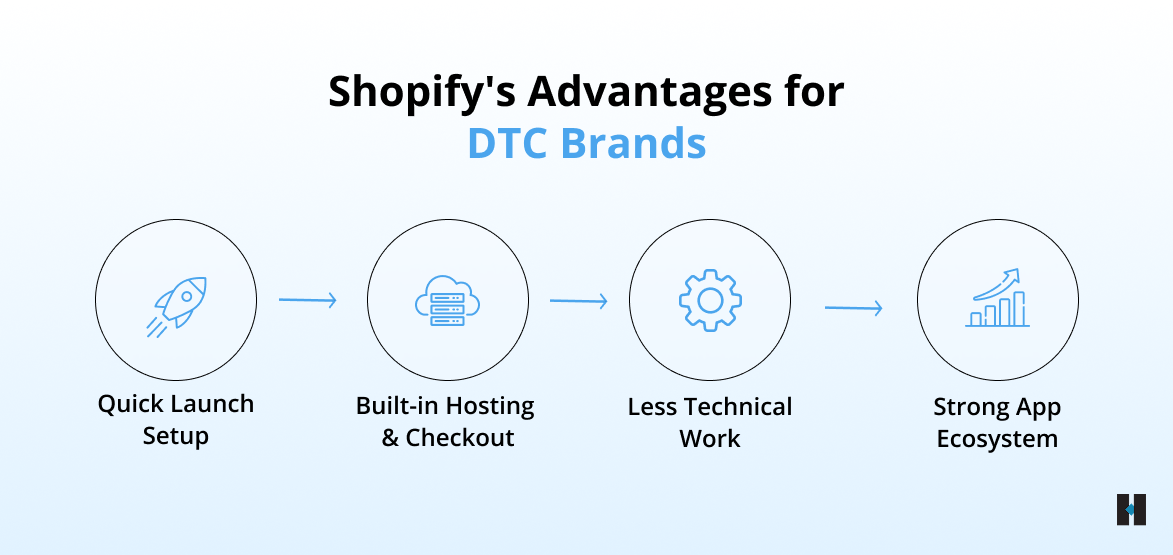
Shopify is a hosted ecommerce platform. Hosting, security infrastructure, core ecommerce tools, themes, checkout, payments, app integrations, and admin workflows are all part of the same ecosystem. Shopify states that every plan includes quick, reliable, unmetered hosting, secure hosting, automatic updates, and a CDN to help stores load quickly across locations.
This makes Shopify attractive for DTC brands that do not want to spend too much time managing technical infrastructure. The team can focus on products, creatives, ads, customer acquisition, retention, and conversion rate optimization instead of plugin conflicts, hosting plans, server performance, and manual updates.
Shopify’s biggest strength is operational simplicity. A brand can select a theme, add products, connect payments, install marketing apps, set up shipping, and launch relatively quickly. For many DTC startups, speed matters. When a brand is testing product-market fit, the platform should not slow down campaign launches or product drops.
Shopify also has a large app ecosystem. The Shopify App Store lists apps for store design, marketing and conversion, sales channels, orders, shipping, SEO, subscriptions, bundles, reviews, and more. Shopify says its App Store has over 16,000 apps and that apps go through a review process before being listed.
For DTC brands, this means many common needs can be handled without custom development. Reviews, loyalty, subscriptions, bundles, upsells, SMS, email, influencer marketing, affiliate tracking, returns, and post-purchase surveys can usually be added through apps.
The downside is that apps can increase monthly costs. A brand may start with a basic Shopify plan but soon add paid apps for reviews, subscriptions, product filtering, bundles, landing pages, email popups, loyalty, and analytics. The platform feels simple at first, but the total monthly cost can increase as the store becomes more advanced.
When WooCommerce Is the Right Choice for a DTC Brand?
WooCommerce is the ecommerce layer for WordPress. It is free and open-source, which means the core platform has no monthly subscription. WooCommerce’s official pricing page states that the core platform is free, there is no revenue share, hosting is purchased separately, and extensions are added based on the store’s needs. It estimates hosting for most stores at around $25–$350 per month and many extensions at $29–$299 per year.
This gives WooCommerce a different type of strength: control. WooCommerce says its open-source model gives store owners full ownership over the online store and data, with customization possible down to the source code.
That matters for DTC brands with complex requirements. For example, a custom furniture brand may need customers to choose wood type, finish, fabric, hardware, dimensions, delivery method, and custom notes before placing an order. A Shopify store can support many of these things with apps or custom development, but WooCommerce may offer more control when the buying journey needs to be highly tailored.
WooCommerce is also strong for content-led brands because it runs on WordPress. If a DTC brand plans to invest heavily in blogs, guides, comparison pages, educational content, ingredient pages, local SEO pages, or resource hubs, WordPress gives more flexibility over content structure, taxonomy, internal linking, and SEO plugins.
For example, a wellness brand that sells supplements may want detailed guides around ingredients, health goals, use cases, FAQs, research summaries, and product education. WooCommerce allows the ecommerce store to live inside a strong content ecosystem, rather than making content feel like an add-on.
The trade-off is responsibility. With WooCommerce, the brand or development team must manage hosting, updates, backups, plugin compatibility, security, caching, performance, and technical troubleshooting. WooCommerce provides documentation around security and compliance topics, but the store owner still has more responsibility compared with Shopify’s managed environment.
Comparing Shopify’s Fixed Costs With WooCommerce’s Flexible Pricing
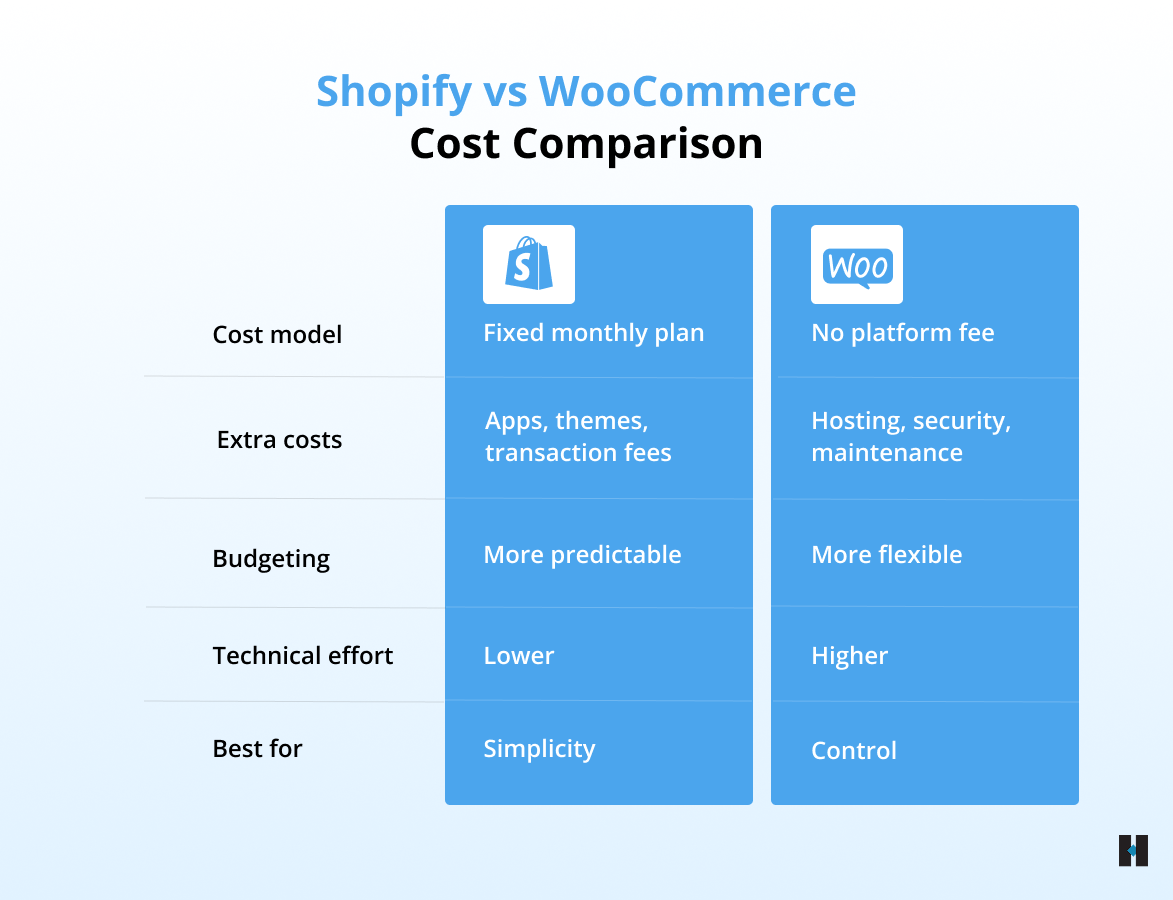
Shopify and WooCommerce have very different cost models.
Shopify is subscription-based. You pay for a plan, and then you may pay for apps, premium themes, payment processing, and third-party transaction fees if you do not use Shopify Payments. Shopify’s pricing page notes that third-party transaction fees apply when using third-party payment providers, while Shopify Payments removes third-party transaction fees for eligible orders processed through Shopify Payments, Shop Pay, PayPal Express, and manual payment methods.
WooCommerce has no core platform fee. But it is not “free” in the full business sense. You still pay for hosting, domain, SSL if not included by your host, premium theme, extensions, payment processing, security tools, development, maintenance, and optimization. WooCommerce can be very cost-effective if the brand has the right technical setup. It can also become expensive if the store requires ongoing developer support.
For a small DTC brand, Shopify may feel more predictable. You know the plan cost, app costs, and payment fees. For a technically mature brand, WooCommerce may offer better long-term cost control because there is no platform revenue share and the business can choose its own hosting, tools, and development stack.
A simple way to think about it:
Choose Shopify if you want a managed platform where most things are easier, but costs may rise with apps.
Choose WooCommerce if you want more control over costs and architecture, but can manage the technical responsibility.
Shopify vs WooCommerce Across the Factors That Matter Most to DTC Brands
Choosing between Shopify and WooCommerce requires more than comparing features. DTC brands must consider how each platform performs across usability, design, checkout, SEO, customization, payments, and long-term scalability. The following comparison explains where each platform offers the greatest value.
1. Ease of Use and Launch Speed
Shopify is usually easier for non-technical teams. The admin is clean, product management is straightforward, themes are designed for ecommerce, and many features can be added with apps. A founder, marketer, or ecommerce manager can make many changes without depending on a developer every time.
This is important for DTC brands because speed is part of growth. If the team wants to launch a new product page, run a limited-time bundle, test a new homepage hero, add reviews, or create a campaign landing page, Shopify often makes that faster.
WooCommerce is easy if the team already knows WordPress, but it requires more decisions. Which host? Which theme? Which page builder? Which caching setup? Which SEO plugin? Which payment plugin? Which backup system? Which security layer? These decisions give flexibility, but they also add complexity.
For teams without technical support, WooCommerce can be difficult to work with when something breaks. A plugin update may affect the layout. A hosting issue may slow the store. A theme conflict may affect checkout. None of this makes WooCommerce weak; it simply means WooCommerce works best when the brand has access to reliable technical help.
2. Design and Brand Storytelling
DTC brands need more than a standard product grid. They need a store that communicates brand positioning, trust, product benefits, social proof, and lifestyle value.
Shopify has strong ecommerce themes. Its theme store includes both free and paid themes across categories such as clothing, beauty, jewelry, accessories, and home. Many premium themes are built with product merchandising, mobile shopping, collection filters, promotional banners, and conversion sections in mind.
This is useful for DTC brands that want a polished store quickly. A beauty brand can start with a modern Shopify theme, add product benefit blocks, reviews, icons, video sections, and bundle cards, then improve the experience over time.
WooCommerce offers greater design freedom because it runs on WordPress. With the right theme or custom build, a brand can create highly unique layouts, long-form landing pages, editorial-style content, product education hubs, custom comparison tables, and advanced product pages.
For design-led brands, both platforms can work. Shopify is often better when the goal is to build quickly using proven ecommerce patterns. WooCommerce is better when the brand needs a more custom website structure or content experience.
3. Checkout and Conversion
Checkout is one of Shopify’s strongest advantages for DTC.
Shopify has invested heavily in checkout performance and Shop Pay. Shopify says Shop Pay is a one-tap accelerated checkout and cites an external study showing that Shop Pay can lift conversion by up to 50% compared with guest checkout and outpace other accelerated checkouts by at least 10%. Shopify also states that even the presence of Shop Pay can increase lower-funnel conversions by 5%.
For DTC brands spending heavily on paid ads, checkout performance matters. If a brand pays for traffic from Meta, Google, TikTok, influencers, or email, every checkout drop-off affects return on ad spend. A faster checkout can make a noticeable difference.
WooCommerce checkout can also convert well, but it depends heavily on setup. The theme, hosting speed, checkout plugin, payment gateway, caching, and mobile optimization all affect performance. WooCommerce offers greater freedom to customize checkout, but that freedom also means more responsibility.
For standard DTC checkout needs, Shopify is usually easier. For highly customized checkout logic, WooCommerce may offer more flexibility, but it must be built carefully.
4. SEO and Content Marketing
WooCommerce has a natural advantage for content-heavy SEO because it runs on WordPress. WordPress is widely used for publishing, blogging, content architecture, and SEO workflows. Brands can build detailed content hubs, pillar pages, blog categories, author pages, internal linking structures, and custom schemas with more control.
This matters for DTC brands that depend on education. A skincare brand may need articles around skin concerns, ingredient guides, routines, comparisons, and FAQs. A food brand may need recipes, nutrition guides, use cases, and category education. A furniture brand may need buying guides, material guides, room inspiration, and care content.
Shopify can also do SEO well. Product pages, collection pages, blogs, redirects, meta titles, descriptions, image alt text, and structured data can all be managed. But Shopify’s content system is not as flexible as WordPress for brands that want a deep publishing engine.
For pure ecommerce SEO, Shopify is enough for many DTC brands. For content-led organic growth, WooCommerce gives more room to build.
5. Customization and Development Flexibility
This is where WooCommerce stands out.
WooCommerce is open-source, which means developers can modify the store more deeply. WooCommerce also provides REST API documentation for working with store data, including orders, products, and customers, enabling integration with custom systems and workflows.
This is valuable for brands with custom logic. For example:
- A made-to-order brand may need custom production workflows.
- A furniture brand may need advanced product configuration.
- A B2B-DTC hybrid brand may need quote-based pricing.
- A subscription brand may need custom renewal rules.
- A marketplace-like business may need vendor logic.
- A content-led brand may need custom taxonomies and page templates.
Shopify also supports custom development, especially through Liquid, Shopify APIs, Shopify Functions, custom apps, and headless builds. However, Shopify still operates inside a hosted platform structure. That structure provides stability, but it can limit certain types of customization unless the brand is on a higher-tier plan or uses advanced development.
For most standard DTC use cases, Shopify’s customization is enough. For unusual workflows, WooCommerce may be more adaptable.
6. Payments and Transaction Fees
Payments are an important part of platform choice because they directly affect margins.
Shopify Payments is deeply integrated into Shopify. Shopify says it removes the need to set up a third-party provider or merchant account and automatically allows stores to accept major payment methods once the store is created. However, Shopify Payments is only available in certain countries and regions.
If a Shopify store uses third-party payment providers, Shopify says third-party transaction fees may apply, depending on the plan and payment setup.
WooCommerce gives more freedom to choose payment processors. WooPayments, the official WooCommerce payment solution, supports credit/debit cards and local payment methods with no setup or monthly fees, and it lets merchants manage transactions from the WooCommerce dashboard.
For DTC brands, the decision depends on payment availability, geography, preferred gateway, transaction cost, and operational convenience. Shopify is simpler when Shopify Payments is available and suitable. WooCommerce is more flexible when the brand wants more control over payment providers.
Which Ecommerce Platform Is Right for Your DTC Brand?
Shopify is usually the better fit when the brand wants to launch fast, sell through paid ads, use proven checkout flows, manage products easily, rely on apps, and avoid technical maintenance. It is especially suitable for beauty, fashion, supplements, accessories, home goods, packaged food, and lifestyle brands with relatively standard ecommerce needs.
WooCommerce is usually the better fit when the brand wants deep customization, strong content-led SEO, complete ownership, custom product logic, advanced WordPress publishing, or more control over hosting and development. It is especially suitable for brands with complex catalogs, custom products, quote-based flows, educational content strategies, or existing WordPress websites.
A simple rule:
| Choose Shopify If… | Choose WooCommerce If… |
| Speed is the priority. | Control is the priority. |
| Simplicity is the priority. | Customization is the priority. |
| Checkout performance is the priority. | Content depth is the priority. |
| Managed ecommerce operations are the priority. | Ownership is the priority. |
Conclusion
There is no universal winner between WooCommerce and Shopify for DTC brands. The better platform is the one that fits the brand’s growth model, technical capacity, marketing strategy, and long-term ecommerce needs.
At tecHindustan, our recommendation is simple: choose the platform based on how your DTC business needs to operate, not just on which platform is more popular.
For most early-stage and growth-stage DTC brands, Shopify is often the more practical choice. It is faster to launch, easier to manage, and gives teams a reliable ecommerce foundation without heavy technical involvement. For brands focused on paid ads, product testing, conversion optimization, subscriptions, bundles, and faster go-to-market execution, Shopify usually provides a smoother path.
However, for DTC brands that need deeper control, advanced customization, content-led SEO, complex product structures, or more ownership over the store environment, WooCommerce can be the stronger long-term option. It gives businesses more flexibility over design, functionality, hosting, data, and content architecture. But it also requires the right technical support to maintain performance, security, and scalability.
From an expert perspective, we do not recommend choosing Shopify or WooCommerce in isolation. A DTC brand should evaluate its product complexity, content strategy, checkout needs, marketing channels, team resources, and future scaling plans before making the decision.
If the goal is to move fast with a managed, conversion-ready ecommerce system, Shopify is the better fit. If the goal is to build a highly customized, content-rich, and fully controlled ecommerce experience, WooCommerce is the better fit.
The right platform should not just support where your DTC brand is today. It should support where the brand is going next. For brands evaluating that next step, tecHindustan can assess the technical, operational, and growth requirements behind the decision and recommend a platform aligned with the business.
FAQs
