

Quick Verdict for Busy Readers
Choose Klaviyo if:
- You are an e-commerce-first brand running on Shopify, WooCommerce, or BigCommerce.
- You want advanced segmentation such as predictive lifetime value, churn risk, or product affinity.
- You rely heavily on automated lifecycle flows like cart recovery, replenishment, and post-purchase journeys.
- You aim to increase the share of revenue coming from email and SMS marketing.
Choose HubSpot if:
- You are a service-based, B2B, or SaaS business that needs an all-in-one CRM and marketing system.
- You focus on building long-term relationships instead of one-time purchases.
- You need alignment between marketing, sales, and customer service.
- You want detailed analytics, automation, and campaign tracking within one central hub.
Pro Insight:
At tecHindustan, we have worked with hundreds of businesses that started small and scaled faster by choosing the right platform. Klaviyo helps ecommerce brands grow faster through precision marketing, while HubSpot gives B2B and service brands the structure they need for consistent growth. The right choice depends on your business model, team needs, and customer journey.
Why This Comparison Matters
Email marketing and automation are no longer side projects in a marketing plan. They are often the main engines driving revenue and customer engagement. Studies have shown that email can deliver returns as high as thirty-six dollars for every dollar spent. That is why choosing the right tool matters so much.
But here is the problem many businesses face: not all platforms are built for the same purpose. A brand that sells fashion products online has very different needs from a software company offering annual contracts. Their customers behave differently, buy differently, and expect different kinds of communication.
That is exactly where Klaviyo and HubSpot diverge.
Both are excellent platforms, but they were created for two distinct worlds. Klaviyo is laser-focused on ecommerce. It helps you turn browsers into buyers through smart emails and predictive analytics. HubSpot, on the other hand, is a full-scale business platform that helps you manage everything from marketing and sales to customer service and CRM.
This guide will help you understand how both tools work, what makes them special, and which one fits your business best. Let us begin.
Understanding Each Platform
Klaviyo: Built for Ecommerce Success
Klaviyo is a marketing automation platform created for online retailers. It connects directly with ecommerce systems such as Shopify and WooCommerce, pulling data like purchase history, browsing behavior, and order frequency. This data becomes the foundation for personalized communication.
In simpler words, Klaviyo allows you to talk to each customer like you already know them. If someone buys sneakers from your store, Klaviyo can automatically remind them when it is time to reorder socks or show them new arrivals in footwear.
What makes Klaviyo special:
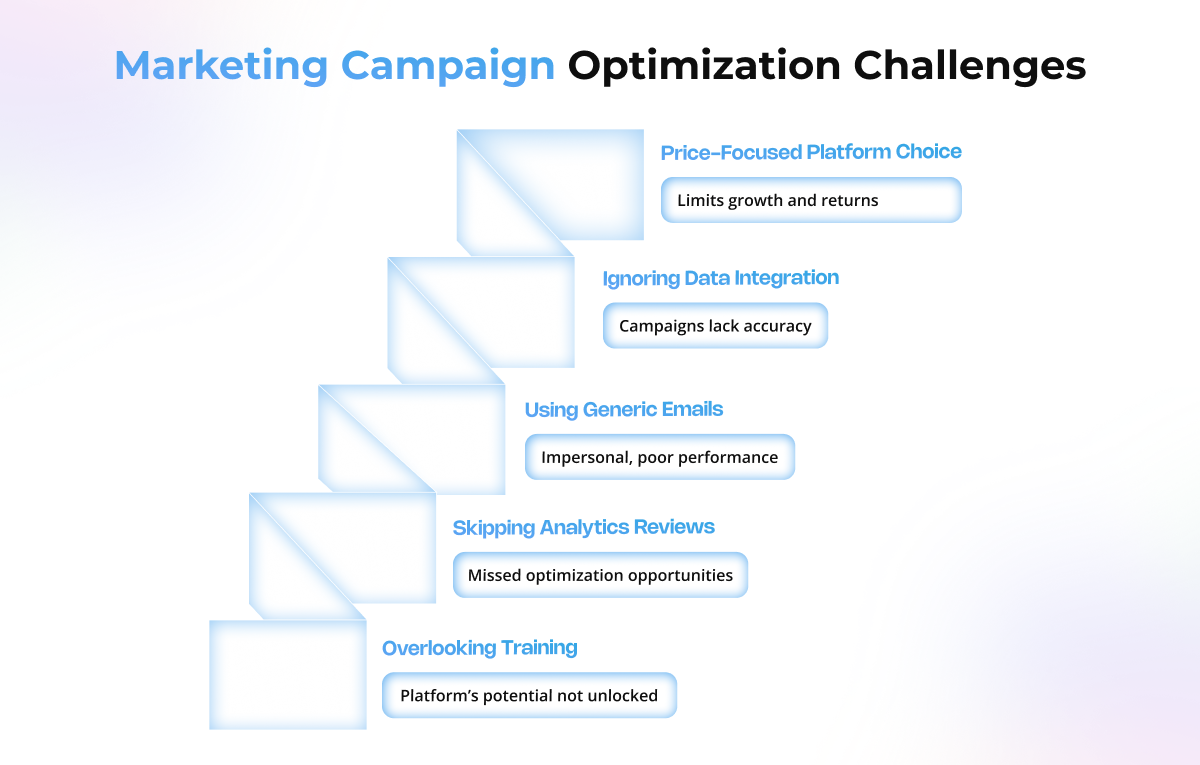
- Real-time integration with ecommerce stores
- Pre-built automation flows for every stage of the customer journey
- Predictive analytics for understanding who is likely to buy again
- Unified dashboard for both email and SMS campaigns
- Clear revenue tracking that connects each message to actual sales
Klaviyo does not just send emails; it drives measurable results. For ecommerce brands, that is the biggest advantage.
HubSpot: The All-in-One Growth Platform
HubSpot takes a completely different approach. It is not limited to email or SMS marketing. Instead, it brings your entire business workflow under one roof.
At its core, HubSpot is a CRM (Customer Relationship Management) platform. It helps you capture leads, nurture them, close deals, and offer ongoing support, all in a single connected system.
If you run a B2B company or a SaaS brand, this integration becomes invaluable. You can see where each lead came from, what content they engaged with, and when they are ready to buy.
What makes HubSpot special:
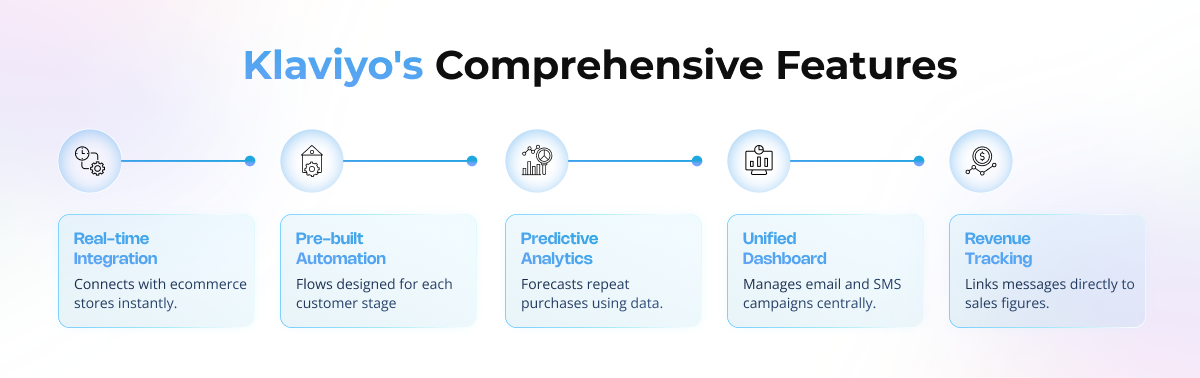
- Centralized CRM that connects marketing, sales, and service teams
- Lead scoring and automated follow-ups
- Built-in CMS and blog tools for content-driven growth
- Detailed reporting that links every campaign to revenue outcomes
- Integration with hundreds of business tools, from Salesforce to Slack
HubSpot’s strength lies in helping you manage the full customer lifecycle, not just parts of it.
Klaviyo vs HubSpot: At a Glance
| Feature | Klaviyo | HubSpot |
|---|---|---|
| Core Purpose | Ecommerce marketing automation | Complete CRM and marketing platform |
| Best For | Online stores and D2C brands | B2B, SaaS, service-based businesses |
| Main Channel | Email and SMS | Email, CRM, ads, chat, and service |
| Integrations | Shopify, BigCommerce, WooCommerce | Salesforce, Slack, Gmail, LinkedIn, CMSs |
| Automation Style | Behavior-based ecommerce flows | Workflow-based across departments |
| Data Focus | Purchase and product-level data | Lead and lifecycle data |
| Pricing | Based on contact volume | Tiered by hub and features |
| Reporting | Revenue and campaign-based | Funnel and pipeline-based |
| Ease of Use | Quick and intuitive for marketers | Broader and requires onboarding |
| ROI Focus | Ecommerce revenue growth | Lead-to-revenue visibility |
Real-World Examples
Example 1: How an Apparel Brand Doubled Its Email Revenue
An online apparel brand using a basic email tool noticed that most of its customers never returned after their first purchase. After switching to Klaviyo, they built automated flows such as abandoned cart reminders, thank-you emails, and restock alerts.
Within ninety days, the brand’s email revenue jumped from 12 percent to 28 percent of total sales. The marketing team did not send more emails; they simply sent smarter ones based on customer behavior.
That is Klaviyo in action: automation that feels personal and drives real revenue.
Example 2: How a SaaS Startup Scaled Its Lead Management
A B2B software startup faced a common problem: they had leads but lacked visibility into how those leads moved through the funnel. After implementing HubSpot, they connected their website forms, emails, and sales pipelines into one system.
Marketing could now see which campaigns generated the most qualified leads, while sales teams received automatic notifications when a lead was ready for outreach. Within six months, their lead conversion rate improved by 38 percent.
HubSpot did not just organize its marketing. It made their entire business more coordinated.
Automation: How Each Tool Helps You Scale
Klaviyo Automation: Selling Without Manual Effort
Klaviyo’s automation revolves around customer actions. For example:
- If someone adds a product to the cart but leaves without buying, Klaviyo can send a reminder within hours.
- If a customer buys skincare products, it can automatically send a reorder reminder in thirty days.
- If a loyal buyer goes silent, it can trigger a win-back discount or survey.
All of these flows can run simultaneously, without daily intervention. The result is a system that feels like it works on autopilot while you focus on strategy and creative ideas.
HubSpot Automation: Aligning Teams and Touchpoints
HubSpot takes automation to a broader level. Instead of focusing only on transactions, it looks at relationships.
For instance:
- A visitor downloads a whitepaper from your website. HubSpot automatically tags them as a new lead, adds them to a nurture sequence, and notifies sales once they reach a specific engagement score.
- A customer submits a support ticket. HubSpot can assign it to the right representative and track resolution time.
- A new deal is closed. HubSpot can trigger a customer onboarding workflow and a feedback survey.
Where Klaviyo excels at ecommerce behavior, HubSpot excels at connecting departments.
Personalization and Data Power
Klaviyo’s Predictive Intelligence
Klaviyo’s personalization comes from its deep ecommerce data. It knows what customers buy, how often they buy, and what they might buy next. It can even predict which customers are likely to stop purchasing, so you can win them back early.
Imagine having a segment of “VIP customers who have not ordered in sixty days.” Klaviyo updates this list automatically. You can create an exclusive campaign just for them in minutes. This kind of predictive intelligence can dramatically improve retention and repeat sales.
HubSpot’s CRM-Driven Personalization
HubSpot uses data differently. It collects everything about a lead, from their first visit to the website to every email interaction and call logged by sales. This creates a complete customer history that any team member can access.
That data fuels highly relevant communication. For example, if a prospect has viewed your pricing page multiple times, your next email can focus on specific pricing benefits. It feels less like marketing and more like a personalized conversation.
HubSpot makes personalization scalable across large teams and long sales cycles.
Pricing: Understanding Value Beyond Cost
Klaviyo Pricing
Klaviyo’s pricing depends on the number of active profiles and message volume. Every key feature: automation, segmentation, and reporting, is available from the start, so you are never forced to upgrade to unlock something essential.
There is a free plan for small stores with up to 250 contacts. For growing businesses, plans usually start around $45 per month and scale with audience size. A store with 20,000 subscribers might pay around $500 monthly, but that investment often returns ten to twenty times more in email-driven sales.
In short, Klaviyo is not about being the cheapest. It is about maximizing revenue through smart automation.
HubSpot Pricing
HubSpot offers a free CRM forever, which is great for small teams. Paid plans begin at around $20 per month, but advanced automation and analytics come in the Professional or Enterprise tiers, which range from a few hundred to over a thousand dollars per month, depending on contact count and hubs added.
While the upfront cost may seem higher, HubSpot delivers immense long-term value by centralizing data, aligning teams, and reducing dependence on multiple tools.
If your goal is to manage the entire customer lifecycle, not just marketing, HubSpot often ends up saving both time and cost in the bigger picture.
Integration and Ecosystem
Klaviyo integrates deeply with ecommerce platforms like Shopify, WooCommerce, Magento, and BigCommerce. These connections pull product, order, and customer data in real time, allowing you to segment audiences based on what they actually bought or viewed.>
It also connects with advertising channels such as Facebook and Google, enabling you to create audiences for retargeting directly from your email segments.
HubSpot, on the other hand, connects broadly across business tools. From Salesforce and Slack to LinkedIn Ads and Zapier, it brings data from marketing, sales, and service into one place. It is ideal if you want every department to see the same picture of the customer journey.
The difference lies in depth versus breadth. Klaviyo integrates deeply within ecommerce ecosystems, while HubSpot integrates broadly across entire organizations.
Reporting and Insights
Klaviyo Reporting
Klaviyo tells you exactly how much money each campaign or automation has earned. You can track revenue per recipient, conversion rates, and product-level performance. For marketers who want direct visibility into financial impact, this level of clarity is empowering.
For instance, you can open the analytics dashboard and see that your abandoned cart flow alone made $2,000 last month. This direct link between marketing actions and revenue outcomes makes optimization far more practical.
HubSpot Reporting
HubSpot’s analytics go beyond revenue. They connect marketing, sales, and service metrics to show the complete customer journey. You can track how leads enter the funnel, what campaigns generate conversions, and how quickly deals move through pipelines.
This holistic reporting helps leadership teams understand not just marketing performance, but business performance as a whole. If your goal is to manage growth at scale, HubSpot’s reporting gives you that strategic visibility.
SMS, Ads, and Omnichannel Reach
Klaviyo includes native SMS integration, allowing you to manage both email and text campaigns in one place. You can easily set up coordinated flows, such as sending a sale announcement via email and following it up with an SMS reminder later in the day.
HubSpot does not include built-in SMS, but it connects with third-party apps for that functionality. However, it offers stronger native integration with paid ad channels and chatbots, which helps in omnichannel lead generation.
The takeaway is simple: If you are in ecommerce and want to combine email and SMS seamlessly, Klaviyo excels.
If your business runs multi-touch campaigns across content, ads, and CRM, HubSpot is more comprehensive.
Which Platform Fits Different Business Types
- Ecommerce or D2C brands:
Klaviyo wins because it is purpose-built for data-driven selling.
- B2B or SaaS companies:
HubSpot wins for its CRM, lead scoring, and lifecycle management.
- Agencies and service providers:
HubSpot helps organize clients, pipelines, and content strategies.
- Hybrid businesses with online sales and client services:
Combining both often delivers the best of both worlds.
Many growing companies start with Klaviyo for ecommerce automation and later integrate HubSpot for CRM and long-term relationship management.
Common Mistakes to Avoid
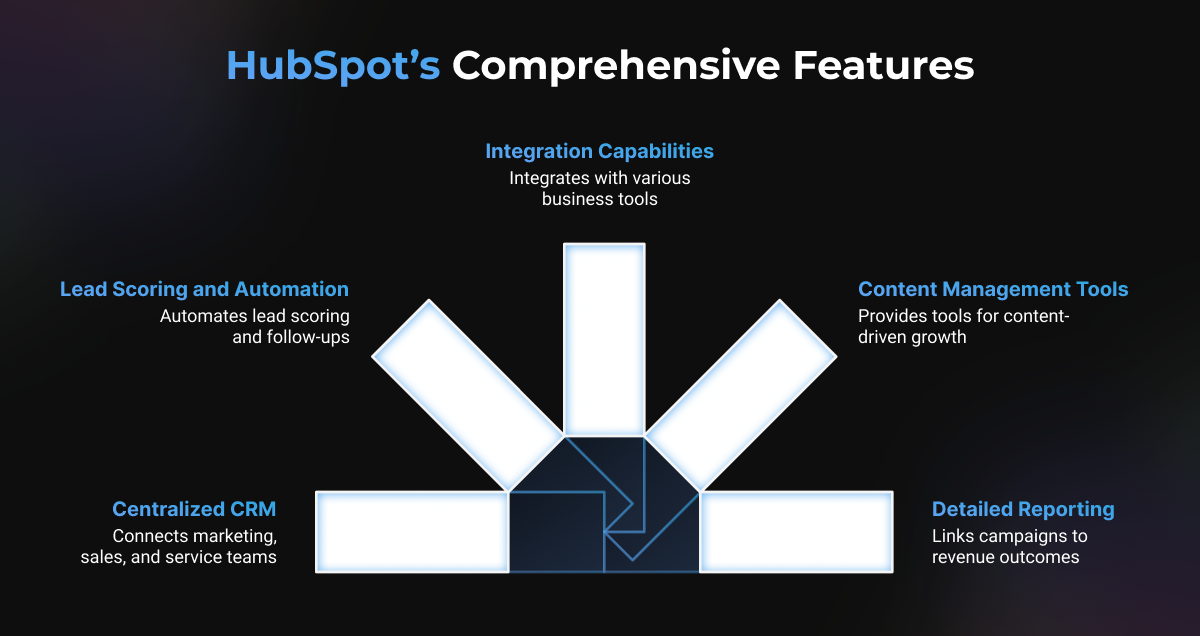
- Choosing a platform based solely on price instead of potential ROI:
A lower subscription may save money today, but it often limits growth and long-term returns.
- Ignoring data integration when planning campaigns:
Without connected systems, your campaigns lack accuracy and fail to reflect real customer behavior.
- Using generic emails instead of segment-based communication:
Mass messaging feels impersonal; tailored campaigns always perform better.
- Skipping analytics reviews leads to missed optimization opportunities:
Neglecting reports means you miss valuable insights that could improve performance.
- Overlooking training and onboarding, especially with larger systems like HubSpot:
Without proper setup and learning, teams rarely unlock a platform’s full potential.
- A quick reminder:
The best results come when technology and customer understanding move together.
Why tecHindustan Is the Right Partner for You
At tecHindustan, we help businesses move beyond tool selection into measurable transformation.
As a Klaviyo Gold Partner, we bring deep expertise in ecommerce automation and performance marketing.
We also have extensive experience implementing, integrating, and optimizing HubSpot for businesses that need CRM-centered marketing workflows.
We help clients:
- Build automation that genuinely drives revenue
- Integrate Klaviyo and HubSpot for hybrid setups
- Clean and migrate data without losing customer history
- Train teams for long-term success with each platform
Whether you are scaling an ecommerce brand or managing a service business, we ensure that your marketing technology works as hard as you do.
Conclusion
Both Klaviyo and HubSpot are exceptional, but they serve different kinds of growth stories.
If you are an ecommerce brand focused on repeat purchases, personalized offers, and measurable ROI, Klaviyo will help you grow faster and smarter.
If you are a B2B or SaaS company that thrives on lead nurturing, long-term relationships, and connected workflows, HubSpot is your strategic advantage.
The real question is not “Which tool has more features?” but “Which tool aligns with how your business actually grows?”
At tecHindustan, we help businesses answer that question confidently and implement the right system for long-term success.
FAQs
